
Fuel Prices Breach P100 Mark as Retailers Roll Out P5 Hike

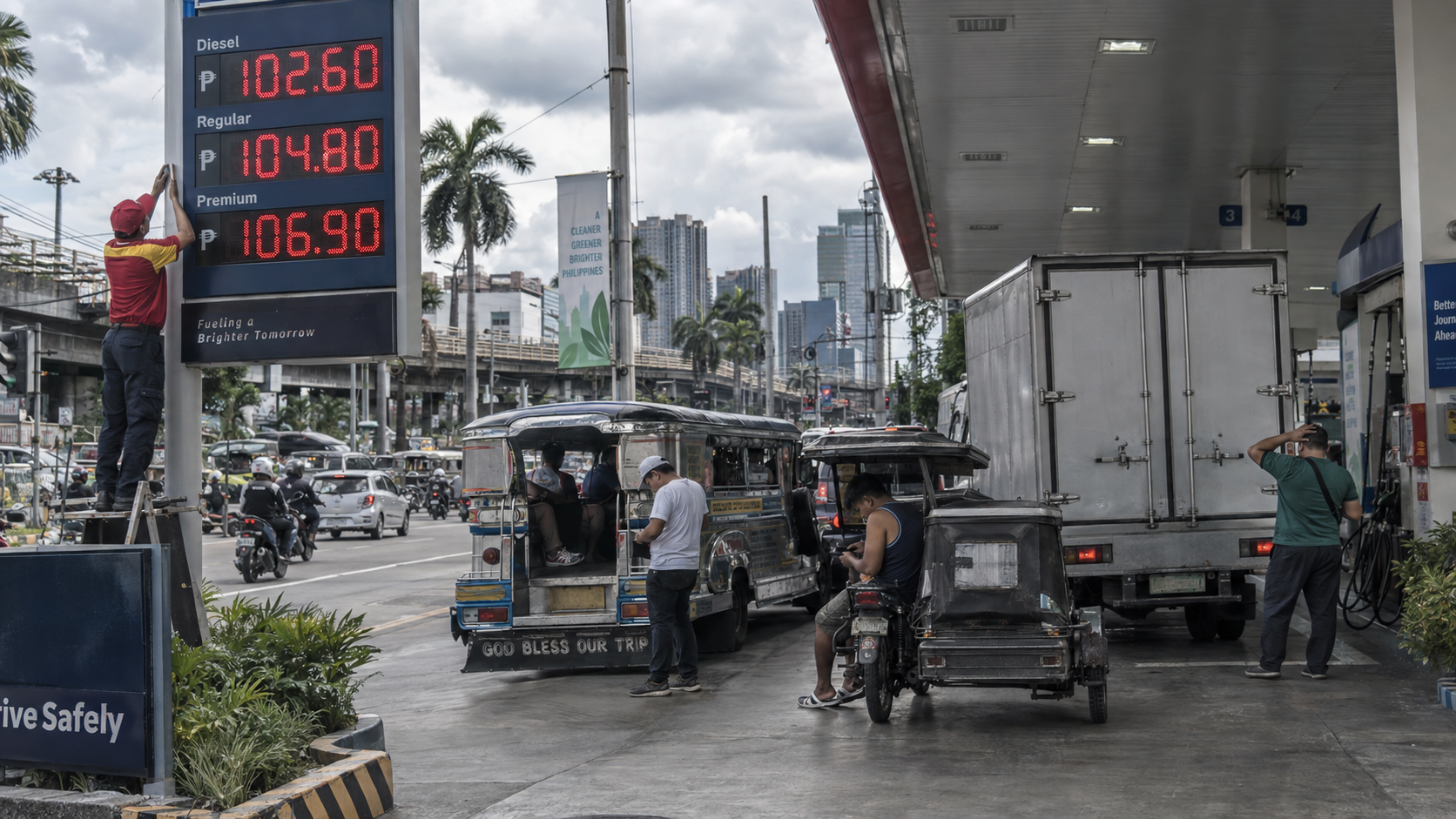
Domestic oil retailers enforced massive upward adjustments across all refined petroleum products on Tuesday, September 8, 2026, putting an abrupt end to weeks of marginal rollbacks and pushing pump prices across Metro Manila back past the P100-per-liter threshold.
In separate advisories, fuel companies including Shell Pilipinas, Seaoil Philippines, Petro Gazz, and Unioil confirmed that diesel retail prices surged by P5.18 to P5.20 per liter. Gasoline prices jumped by P4.69 to P4.70 per liter, while kerosene registered the steepest climb with an increase of up to P5.60 per liter. The adjustments took effect at 6:00 a.m. for most domestic stations.
Sharp Increases Across All Petroleum Products
The Department of Energy (DOE) confirmed the nationwide price escalation, noting that the latest adjustments push prevailing retail prices in Metro Manila to elevated territories. Gasoline prices now range between P98.50 and P102.04 per liter, while premium diesel variants have surged to as high as P102.68 per liter in major urban corridors.
This week’s heavy adjustment effectively erases the cumulative relief that public utility vehicle (PUV) operators and private motorists experienced over recent weeks. According to industry monitoring data from the DOE Oil Industry Management Bureau, domestic oil companies are mirroring rapid shifts in the Mean of Platts Singapore (MOPS)—the benchmark for regional refined oil pricing.
Geopolitical Conflict and Forex Pressures
Energy Secretary Sharon Garin explained that the simultaneous price shocks stem primarily from heightened volatility across global energy supply routes. Escalating geopolitical tensions across major Middle Eastern crude production hubs have spurred speculative buying and elevated shipping insurance premiums, choking global product availability.
Compounding the international supply constraints is the continued weakness of the Philippine peso against the United States dollar. Because the Philippines remains a net importer of finished petroleum products, foreign exchange depreciation amplifies the landed cost of imported barrels, transferring immediate pressure to local pumps.
“The convergence of supply risk premiums in the global market and local currency headwinds left domestic retailers with no choice but to adjust wholesale and pump prices accordingly,” the energy department noted in its market advisory.
Inflationary Ripple Effects and Consumer Outlook
The sudden return of triple-digit fuel costs raises immediate concerns over secondary inflationary effects across the transportation, logistics, and agriculture sectors. Transport groups and logistics operators are expected to feel the initial brunt of the P5.20-per-liter diesel adjustment, which typically feeds into higher retail prices for basic commodities and food supplies within subsequent billing cycles.
Economists and market watchers will closely monitor the Bangko Sentral ng Pilipinas (BSP) and the National Economic and Development Authority (NEDA) for potential policy responses if global crude benchmarks sustain their upward trajectory. Meanwhile, the DOE continues to encourage transport cooperatives to utilize existing discount arrangements with participating oil firms to mitigate operating burdens.
With international crude markets remaining on edge, domestic consumers face an uncertain pricing environment where global volatility dictates everyday retail costs.