
Diesel Prices Slashed by ₱7.57/L Starting Sept 29

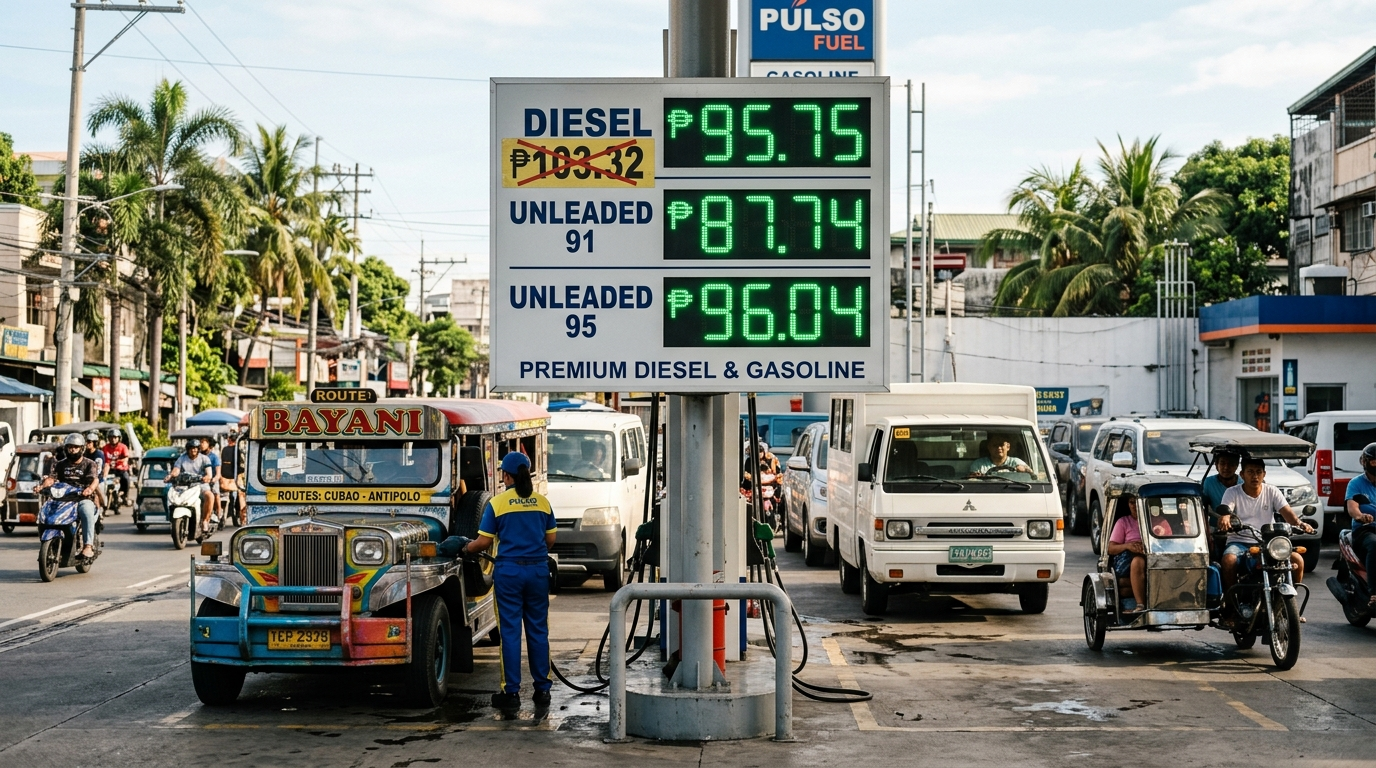
Philippine motorists, commercial freight haulers, and public utility vehicle operators will receive substantial financial breathing room as domestic oil firms implement a major downward price adjustment effective Tuesday, September 29, 2026.
According to an advisory confirmed by the Department of Energy (DOE) and downstream oil industry players, retail prices will drop by ₱7.57 per liter for diesel and ₱5.85 per liter for kerosene. Meanwhile, gasoline prices will see a modest rollback of ₱0.24 per liter, reflecting mixed trading dynamics across refined petroleum benchmarks.
Global Benchmark Cooling and Supply Relief
The massive downward adjustment snaps three consecutive weeks of steep domestic fuel increases, which had exerted heavy pressure on transport operations, agricultural distribution, and food logistics across the country.
Industry analysts attribute the sharp rollback to easing supply concerns in international crude markets. Geopolitical risk premiums that previously drove up Mean of Platts Singapore (MOPS) pricing have softened amid diplomatic progress that cooled tensions in the Middle East. Furthermore, market liquidity received a substantial boost following Saudi Arabia’s resumption of partial crude export operations, balancing regional crude and distillate inventories.
“The heavy downward movement in middle distillates, particularly diesel and kerosene, reflects the rapid correction in international product cracks after temporary export bottlenecks normalized,” the DOE Oil Industry Management Bureau (OIMB) noted in its weekly pricing monitoring assessment.
Economic Cushion for Transport and Logistics
The hefty reduction in diesel—the primary workhorse fuel of the Philippine economy—provides much-needed cost stabilization for fleet operators and everyday consumers. Diesel-dependent public utility jeeps (PUVs), logistics providers, and commercial cargo fleets had faced shrinking operational margins following the prior string of upward price adjustments.
Economic observers point out that the ₱7.57-per-liter drop will help temper freight-related inflationary pressures on essential goods. Agricultural producers transporting produce from regional farming hubs to Metro Manila trading centers are expected to see immediate reductions in trip fuel outlays.
Kerosene, widely utilized in aviation and rural household lighting and cooking, will also see its largest single-week reduction in several quarters, offering direct relief to off-grid communities and provincial consumers.
Market Outlook and Implementation
Most oil companies are scheduled to implement the price adjustments by 6:00 AM on Tuesday, September 29, while select automated and 24-hour retail stations may adjust pump meters slightly earlier at midnight.
The DOE continues to advise consumers to monitor pricing differentials across retail stations, as retail price adjustments may still vary slightly based on localized dealer margins and transport logistics. With international oil benchmarks remaining sensitive to global economic output signals and refining runs, industry watchers will closely track whether this significant price correction establishes a sustainable trend or marks a temporary lull in fuel market volatility.