
Meralco Announces Lower Electricity Rates for June Despite Slight Rise in Transmission Costs
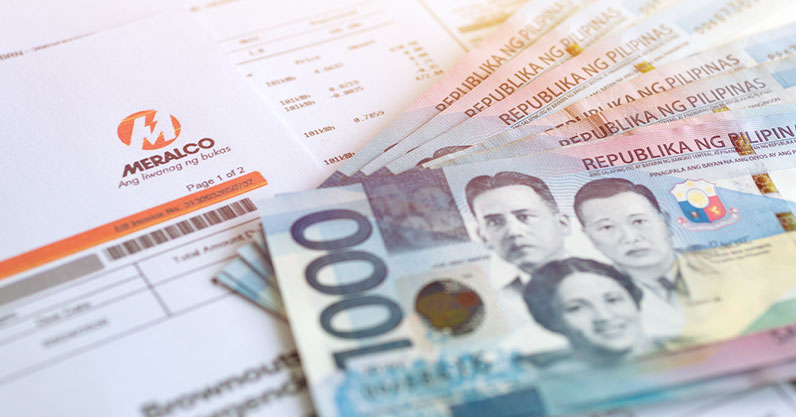
Electricity customers of Meralco can look forward to lower bills this June, as the power distributor has announced a fresh ₱0.11 per kilowatt-hour (kWh) reduction in household electricity rates. The rate cut—driven primarily by lower generation charges—marks the second straight month of relief for consumers, even though there was a minor increase in transmission charges. According to Meralco, this adjustment will reduce the bill of a typical residential user (consuming 200 kWh) by about ₱22. The total rate for June will drop from ₱12.2628 per kWh in May to ₱12.1552, reflecting a decrease of ₱0.1076 per kWh. “This month’s reduction is mostly due to lower generation charges,” said Meralco spokesperson Joe Zaldarriaga. The generation charge declined by ₱0.1099 per kWh, settling at ₱7.3552 per kWh. This was attributed to lower costs from Power Supply Agreements (PSAs), Independent Power Producers (IPPs), and the Wholesale Electricity Spot Market (WESM): PSA charges dropped by ₱0.3699 per kWh IPP rates fell by ₱0.1034 per kWh WESM prices decreased by ₱0.6342 per kWh, thanks to improved power supply conditions in Luzon Meralco noted that although average demand rose by 527 MW, this was offset by a 533 MW reduction in generation outages, easing pressure on supply. For this billing period, energy sources were split as follows: 48% from PSAs, 33% from IPPs, and 18% from WESM. However, transmission charges saw a ₱0.0214 per kWh increase, mainly due to higher costs from ancillary services provided under NGCP’s procurement agreements and reserve market operations. Despite that, the savings from generation charges were enough to offset the increase. Other charges, including taxes, also registered a ₱0.0191 per kWh net reduction. Meralco reiterated that generation and transmission costs are passed directly to power suppliers and grid operators, while taxes and fees are remitted to the government. The utility’s own distribution charge has remained unchanged since a cut in August 2022. On top of that, customers are still benefitting from an ongoing distribution-related true-up adjustment, amounting to a ₱0.2024 per kWh reduction for residential users. Meralco is also urging qualified households to apply for subsidies, such as the lifeline rate program and senior citizen discounts. Those enrolled in the 4Ps or certified as low-income by their local Social Welfare and Development Office may be eligible for these benefits—but only with an approved application.
President Marcos Eyes Alternative Power Provider for Siquijor Amid Energy Crisis

President Ferdinand “Bongbong” Marcos Jr. expressed openness to the idea of allowing a new electricity provider to operate in Siquijor, as the province continues to experience severe power shortages. In an interview on Wednesday, Marcos responded to questions about whether another provider could take over from the Siquijor Island Power Cooperative (SIPCOR), which is currently under scrutiny following his directive to investigate its operations. “Everything is on the table. We just have to examine what is the best solution,” the President said. “We have some very good ideas na. The NEA administrator is here and he has put out a framework on what we need to attend to, what would come first, etc. We will give you more detail after the detailed planning for that.” Marcos noted that the government has set a six-month timeline to implement interim solutions, including the use of generator sets to restore electricity. He stressed the urgency of addressing the power supply failure and its impact on residents. “We have given ourselves a deadline of six months for the short-term solution,” he said. “By six months from now, we will then impose whatever new arrangements that we have to do, so that six months from now, we do not have to resort to emergency genset.” The President also reminded SIPCOR of its obligation to deliver reliable electricity to the people of Siquijor. As part of the response, two generator sets from Palawan are set to arrive in the province soon to augment the current power supply. The local government of Siquijor has declared a state of calamity due to the ongoing energy crisis. The declaration will allow the province to access emergency funds from the Local Disaster Risk Reduction and Management Fund (LDRRMF), including the Quick Response Fund (QRF), to support immediate interventions. Marcos visited the SIPCOR power facility to assess the situation firsthand and ensure that necessary actions are being taken. Meanwhile, National Electrification Administration (NEA) Administrator Antonio Mariano Almeda assured residents that concrete steps are underway. He has ordered the activation of the two generator sets as a temporary fix while SIPCOR works on repairing three of its damaged power units.
Negros Power, naghatid ng malaking pagbabago sa electric service sa loob lamang ng 9 na buwan
Sa loob lamang ng siyam na buwan mula nang itakeover ang electric service sa Central Negros, malawakang pagbabago sa impraktrakstura at kalidad na serbisyo ang agad na naipatupad ng Negros Electric and Power Corporation(Negros Power). Sa isang pressconference, inilatag ni Negros Power President at CEO Roel Castro ang comprehensive report na nagdedetalye ng mga nagawa nang proyekto mula nang magsimula ang kanilang operasyon noong August 2024. “From day one, our goal has been to modernize the system, restore public confidence, and extend reliable, responsive electric service to all. The progress we’ve made is just the beginning of a broader transformation,” ani Castro. Ilan sa naisagawa na ng Negros Power ay kumpletong rehabilitasyon ng Alijis Substation at 30-kilometer Bacolod–Silay 69kV subtransmission line kung saan pinalitan ang mga poste at electric line. Naglagay din ng Automatic Circuit Reclosers, Load Break, Disconnect Switches, paglalagay ng rubber inserts upang hindi mapasok ng mga hayop, paglalagay ng mga energy-efficient na distribution transformers at pinalakas ang kampanya laban sa anti-electricity pilferage. Libo libong mga digital electric meters din ang ipinalit sa mga kabahayan nang walang dagdag singil gayundin ay naglagay ng mahigit sa 100 payment centers upang maging mabilis ang pagbabayad. Pinabilis din ang proseso ng aplikasyon ng kuryente at 24/7 ang customer service team na maaaring mahingan ng tulong o impormasyon. Ayon kay Castro, isa sa kanilang malaking tagumpay sa nakalipas na 9 na buwan ay ang pagbibigay ng kuryente sa mga lugar na wala pang supply sa ilalim ng Sitio Electrification Program, “No one should be left in the dark. The Sitio Electrification Program is about progress and inclusion. We did it in 17 sitios and invested nearly 26 million pesos, benefiting 1,671 households,” paliwanag ni Castro. Patuloy pa ang modernisasyon na gagawin ng Negros Power kasama na dito ang paglalagay ng centralized control center, Supervisory Control and Data Acquisition (SCADA) systems, paggamit ng drones para sa aerial surveys, thermal scanning at Geographic Information System (GIS) para sa asset mapping. Nilinaw ni Castro na bagamat mayroong mga bagong imprastrakstura ay nanatili pa rin na “affordable” ang singil sa kuryente ng Negros Power. Pinuri naman ng mga business groups ang malakingSet featured image pagbabago na ginawa ng Negros Power, sinabi ni Wennie Sancho, Presidente ng Alliance of Concerned Consumers in Electricity and Social Services (ACCESS) na matagal na taon nagtiis sa palyadong electric supply ang mga residente ng Negros na ngayon ay isa isa nang sinosolusyunan ng Negros Power. Kumpiyansa naman si Frank Carbon ng Bacolod Chamber of Commerce and Industry na kasunud na ang economic growth ng rehiyon bunsod ng maasahang supply ng kuryente. “Stable and modern power is essential to economic growth. The direction Negros Power is taking is exactly what Bacolod and the rest of Central Negros need.” Ani Carbon. Tiniyak ng Negros Power na tuloy tuloy pa ang pag-invest nila ng malaking halaga hanggang sa tuluyang maisaayos serbisyo sa buong Central Negros sa loob ng susunud na 4 na taon. “The journey has just begun. We owe it to our consumers to deliver reliable, accessible, and affordable electricity for years to come. We are asking for the patience and understanding of consumers as we need four more years for consumers to feel the improvements of our full rehabilitation and modernization plan.”pagtatapos pa ni Castro.
Safe Power, Low Rates, Green Future: The MORE Power Way

At a time when rising electricity costs and environmental issues affect many communities, one company in Iloilo City is quietly making a big difference. MORE Electric and Power Corporation, or MORE Power, isn’t just keeping the lights on—it’s leading the way with safety, affordability, and sustainability at its core. Since starting operations in 2020, MORE Power has grown into more than just a utility provider. It has become a trusted partner in the city’s development, earning the distinction of offering the most affordable electricity rates in Western Visayas at P11.3263/kWh. This is thanks to the company’s smart energy sourcing strategy. By securing long-term contracts that cover 66% of its electricity supply, MORE Power has reduced its reliance on the more expensive spot market. This approach helps More Power keep prices stable, even when the energy market is unpredictable, said Niel V. Parcon, Vice President for Corporate Energy Sourcing and Regulatory Affairs. Affordability, however, is only part of the story. MORE Power also places a strong focus on safety. The company recently became a member of the Safety Organization of the Philippines, Inc. (SOPI), a national group that promotes workplace health, safety, and environmental protection. As of October 2024, the company has recorded an impressive 1.9 million safe man-hours—proof of its commitment to keeping employees and the community safe. “This membership in SOPI is a testament to MORE Power’s unwavering commitment to safety, health, and environmental protection. We are proud to join this esteemed organization and contribute to its mission of promoting a culture of safety across the Philippines,” said Roel Castro, MORE Power President and CEO. MORE Power’s commitment to the community goes beyond electricity. On November 5, 2024, the company organized a mangrove planting and coastal cleanup in Barangay Hinactacan. In partnership with local agencies, 200 mangrove saplings were planted—part of a bigger goal to plant 10,000 trees and mangroves across Iloilo City. So far, over 1,000 mangroves and nearly 9,500 trees have been planted. “This mangrove planting is part of our ongoing commitment to environmental sustainability and reflects our integrated approach to create a cleaner, greener Iloilo City,” said Castro. “By investing in these green initiatives, we are demonstrating our dedication to being responsible stewards of the environment,” he added. From lowering power bills to planting trees, MORE Power is proving that being a reliable electric company also means caring for the people and the planet. In Iloilo City, it’s setting an example—one kilowatt and one tree at a time.
Meralco Optimistic About Nuclear Energy Progress Under New Energy Chief
MANILA, Philippines — The Manila Electric Co. (Meralco) expressed confidence in the advancement of the country’s nuclear energy initiatives under interim Energy Secretary Sharon S. Garin, citing her previous leadership of the Department of Energy’s (DoE) nuclear energy division. “With her leading the department, we believe the nuclear agenda will move forward,” said Ronnie L. Aperocho, Meralco’s executive vice president and chief operating officer, during the company’s annual stockholders’ meeting. Secretary Garin was recently appointed as officer-in-charge of the DoE following a Cabinet reshuffle initiated by President Ferdinand R. Marcos Jr. Her predecessor, Raphael P.M. Lotilla, was reassigned to head the Department of Environment and Natural Resources. “Although we haven’t had a formal discussion yet, we believe nuclear energy will be among her top priorities,” Aperocho added. “With the upcoming opening of Congress, we’re hopeful that nuclear power will take center stage.” The Department of Energy aims to integrate nuclear energy into the country’s power grid by 2032. Current efforts are focused on aligning with international safety standards. Meralco is also anticipating the passage of legislation that would establish an independent nuclear regulatory body, which is expected to be deliberated when Congress resumes in June. As outlined in the country’s nuclear energy roadmap, the government plans to achieve 1,200 megawatts (MW) of nuclear power capacity by 2032, scaling up to 2,400 MW by 2040, and reaching 4,800 MW by 2050. A legal and regulatory framework to support these goals is targeted for completion by 2025. Meralco is majority-owned by Beacon Electric Asset Holdings, Inc., which is partly owned by PLDT Inc.
DOE Clears Five Renewable Energy Projects for Grid Impact Study
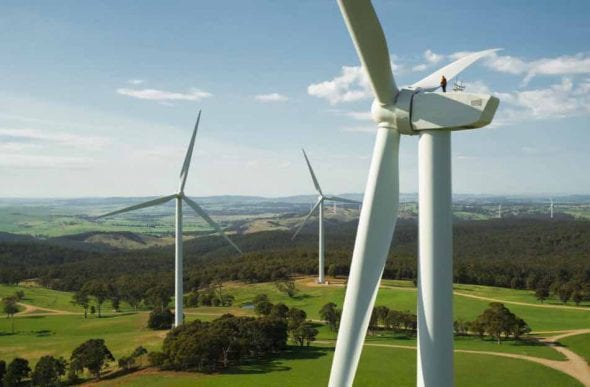
The Department of Energy (DOE) has greenlit five new renewable energy projects with a combined capacity of over 500 megawatts (MW) to proceed with a crucial system impact study (SIS) in coordination with the National Grid Corporation of the Philippines (NGCP). The SIS, a mandatory step for all major power projects, will determine if the current grid infrastructure can handle the additional energy load from these new sources. Among the approved projects is JBD Water Power Inc.’s 200-MW wind farm in the Abra-Kalinga region. Also in the pipeline is a 160-MW wind project in Negros Occidental by Freya Renewables Inc., and an 80-MW wind installation in Camarines Sur proposed by Amihan Power Inc. Two other projects include the 30-MW Botong-Rangas geothermal facility in Sorsogon by Energy Development Corp. and a 50-MW solar power plant in Camarines Sur by PAVI Green Camsur Renewable Energy Inc. These approvals are part of a broader national push to accelerate clean energy development. As of April, the DOE has endorsed 40 projects for SIS in 2025 alone—30 of which are in the renewable sector. Surge in Clean Energy The Philippines is eyeing a significant surge in renewable energy capacity, with more than 11 gigawatts (GW) targeted for rollout by 2030. According to the DOE, solar power will lead the charge with an estimated 8,431 MW in new installations, most of which are expected to go online between 2024 and 2026. Wind energy is expected to follow with 2,233 MW in projected capacity, while hydropower, geothermal, and biomass projects are estimated to contribute 847 MW, 122 MW, and 50 MW respectively. The Marcos administration has pledged to reduce the country’s reliance on coal-fired power plants and increase the renewable share in the energy mix from 22 percent to at least 35 percent by 2030. Private sector participation is seen as a key component in meeting this ambitious goal. “The growing number of renewable project endorsements underscores our commitment to a cleaner, more resilient energy future,” the DOE said in a statement.
Power Interruptions Scheduled in Five Provinces on April 6 for Maintenance
Several areas across five provinces in the Philippines will experience power interruptions on Sunday, April 6, due to scheduled maintenance, according to advisories from the National Grid Corporation of the Philippines (NGCP) released on Thursday. The affected areas are as follows: AlbayPower outages will occur on April 6 from 6 a.m. to 8 a.m. and again from 5 p.m. to 6 p.m., affecting ALECO. This is due to the load shifting of ALINDECO and ALECO from the Tiwi C Substation to the Daraga Substation. AntiquePower interruptions will happen from 5 a.m. to 7 a.m. on April 6, impacting ANTECO (Culasi and Bugasong Substations) and VHPP SUWECO. The outage is due to load transfer and normalization work on the Nabas-Culasi 69kV line following preventive maintenance at the Nabas and Culasi substations. Quezon ProvinceOn April 6, power will be cut from 6 a.m. to 6 p.m. affecting QUEZELCO 1. This is related to general maintenance and corrective measures along the Pitogo-Mulanay 69 kV line. South CotabatoPower disruptions will take place from 8 a.m. to 10 a.m. on April 6, affecting SOCOTECO II (Polomolok, Tupi, and Dole Philippines Substations). The interruption is due to the disconnection of loop jumper conductors at the Gensan-Poblacion Tupi 69kV line. Southern LeytePower outages will be in effect at different times on April 6: 6 a.m. to 5 p.m. at Himay-angan Substation 6 a.m. to 8 a.m. at Maasin, Sogod, and St. Bernard Substations 4 p.m. to 5 p.m. at Sogod and St. Bernard SubstationsThese outages are due to SOLECO’s request for relay testing and resetting of 69kV protection, along with hotspot correction at the Nasaug Substation.
Meralco Aims for P50 Billion Profit Following Record-Breaking 2024
The Manila Electric Co. (Meralco) is setting its sights on a P50 billion net income this year, following its strong financial performance in 2024. The company’s record-breaking growth has positioned it for further expansion, with strategic investments in renewable energy, infrastructure, and smart technologies driving its ambitions. Record-High Earnings in 2024 Meralco recorded a core net income of P45.5 billion in 2024, marking a significant increase from the previous year. The company’s impressive financial results were fueled by higher electricity sales, improved operational efficiency, and growth in its power generation business. According to Meralco Chairman and CEO Manuel V. Pangilinan, the company is confident in its ability to achieve its P50 billion profit target for 2025. He emphasized that sustainability and innovation will be key drivers of Meralco’s long-term success. Strategic Plans for 2025 To reach its P50 billion goal, Meralco is focusing on several key initiatives: Expanding Renewable Energy – The company is ramping up its clean energy projects, including solar, wind, and hydroelectric power, in line with its commitment to sustainability. Infrastructure Development – Meralco is investing in grid modernization to improve service reliability and reduce power outages. Enhancing Customer Experience – The company is adopting smart grid technology and improving digital services to provide better customer support. Exploring New Business Opportunities – Meralco is venturing into electric vehicle (EV) charging stations and other emerging technologies as part of its long-term strategy. Commitment to Sustainability Pangilinan stressed that Meralco’s growth must align with global sustainability efforts. The company aims to provide reliable and affordable energy solutions while minimizing its environmental impact. Investments in renewable energy and smart grid technology are expected to play a crucial role in achieving this balance. Looking Ahead With its record earnings in 2024 and ambitious targets for 2025, Meralco remains a key player in the Philippine energy sector. By embracing innovation, sustainability, and infrastructure improvements, the company is positioning itself for continued growth in an evolving energy landscape. As Meralco moves forward, the focus will remain on delivering long-term value to consumers, shareholders, and the environment.
ERC Approves FIT-All Increase, Higher Electricity Bills Expected
Consumers should brace for higher electricity costs next month as the Energy Regulatory Commission (ERC) has approved an increase in the feed-in tariff allowance (FIT-All). The adjustment follows the depletion of the FIT-All Fund, attributed to persistently low prices in the Wholesale Electricity Spot Market (WESM). In a statement, the ERC confirmed that it granted approval to the National Transmission Corporation (TransCo) to raise the FIT-All rate from P0.0838 per kilowatt-hour (kWh) to P0.1189 per kWh during its regular commission meeting on February 19. The FIT-All is a uniform charge applied to all on-grid electricity consumers, ensuring continued support for the renewable energy (RE) sector. “In approving the increase, the ERC noted the depletion of the FIT-ALL Fund due to sustained low prices in the Wholesale Electricity Spot Market (WESM),” the statement read. “The lower-than-expected WESM prices adversely affected the fund’s capacity to cover the FIT payments, necessitating adjustments in the FIT-ALL computation to ensure the payments for the supply to consumers coming from renewable energy (RE) FIT-eligible power plants,” it added. The ERC also clarified that the FIT Differential, which accounts for the difference between the FIT rates paid to renewable energy generators and prevailing WESM prices, has been revised to P10,125,029,884, down from TransCo’s initial estimate of P13,541,077,775, based on actual generation data from January to December 2024. “The ERC is committed to ensuring that FIT payments are sustained to support the continued development of renewable energy projects while balancing the impact on consumers,” the statement concluded.
Electricity Rates Expected to Rise Amid Summer Heat and Election Campaigns
MANILA, Philippines — Electricity rates in the country’s power spot market may increase in the coming months as demand rises due to hotter temperatures and political campaign rallies. The Wholesale Electricity Spot Market (WESM), where electricity is traded, recorded an average price of P2.96 per kilowatt-hour (kWh) last month, the lowest in two years. However, the Independent Electricity Market Operator of the Philippines (IEMOP) cautioned that this downward trend may not continue as market prices could surge during the dry season. “It is just a supply and demand condition. Of course, when it’s hot, we can see that there will be an increase in demand. So, therefore, prices increase during the summer months,” said Chris Warren Manalo, assistant manager at IEMOP’s trading operations department. Electric cooperatives and distribution utilities rely on WESM to supplement their energy supply when their contracted sources are insufficient. For example, Manila Electric Co. (Meralco) obtained 28% of its energy requirements for January from WESM. The lower spot market rate that month helped offset rising costs from independent power producers and power supply agreements. Price Trends and Election Impact Spot market prices in February are expected to remain close to January levels due to the lingering cold weather. “The price between January and February is not expected to differ much. I think it will be at the same level, with either a slight increase or decrease, but still within the same range,” Manalo said. However, IEMOP trading operations head Isidro Cacho Jr. pointed out that election campaign rallies could further increase power demand during the dry season. Data from IEMOP showed that during the 2022 presidential election season (February to May), the average power demand was 12,222 megawatts (MW), which led to an average spot market price of P6.34 per kWh over that period. Supply Outlook for 2025 Despite the expected demand increase, Cacho remains optimistic about supply stability this year. “Compared to last year, this year looks much better in terms of supply, which means more stable prices in the market,” he said. With the anticipated La Niña phenomenon, Cacho also predicts that demand will be lower than last year, which was affected by El Niño. “Generally, our demand will increase because of the summer, but compared to last year, it will possibly not reach the same peak this year,” he added. In May 2024, WESM recorded a system-wide demand of 15,688 MW, which pushed power rates to as high as P8.22 per kWh, according to IEMOP data. Would you like any modifications or additional details?