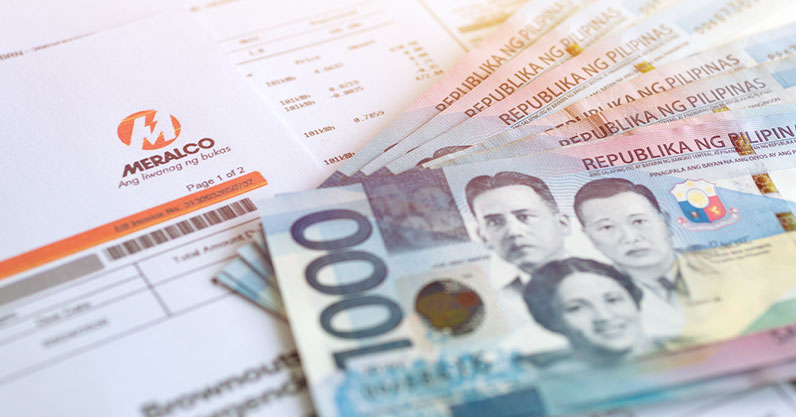
Power Interruptions Scheduled in Five Provinces on April 6 for Maintenance

Several areas across five provinces in the Philippines will experience power interruptions on Sunday, April 6, due to scheduled maintenance, according to advisories from the National Grid Corporation of the Philippines (NGCP) released on Thursday. The affected areas are as follows: AlbayPower outages will occur on April 6 from 6 a.m. to 8 a.m. and again from 5 p.m. to 6 p.m., affecting ALECO. This is due to the load shifting of ALINDECO and ALECO from the Tiwi C Substation to the Daraga Substation. AntiquePower interruptions will happen from 5 a.m. to 7 a.m. on April 6, impacting ANTECO (Culasi and Bugasong Substations) and VHPP SUWECO. The outage is due to load transfer and normalization work on the Nabas-Culasi 69kV line following preventive maintenance at the Nabas and Culasi substations. Quezon ProvinceOn April 6, power will be cut from 6 a.m. to 6 p.m. affecting QUEZELCO 1. This is related to general maintenance and corrective measures along the Pitogo-Mulanay 69 kV line. South CotabatoPower disruptions will take place from 8 a.m. to 10 a.m. on April 6, affecting SOCOTECO II (Polomolok, Tupi, and Dole Philippines Substations). The interruption is due to the disconnection of loop jumper conductors at the Gensan-Poblacion Tupi 69kV line. Southern LeytePower outages will be in effect at different times on April 6: 6 a.m. to 5 p.m. at Himay-angan Substation 6 a.m. to 8 a.m. at Maasin, Sogod, and St. Bernard Substations 4 p.m. to 5 p.m. at Sogod and St. Bernard SubstationsThese outages are due to SOLECO’s request for relay testing and resetting of 69kV protection, along with hotspot correction at the Nasaug Substation.

Meralco Aims for P50 Billion Profit Following Record-Breaking 2024

The Manila Electric Co. (Meralco) is setting its sights on a P50 billion net income this year, following its strong financial performance in 2024. The company’s record-breaking growth has positioned it for further expansion, with strategic investments in renewable energy, infrastructure, and smart technologies driving its ambitions. Record-High Earnings in 2024 Meralco recorded a core net income of P45.5 billion in 2024, marking a significant increase from the previous year. The company’s impressive financial results were fueled by higher electricity sales, improved operational efficiency, and growth in its power generation business. According to Meralco Chairman and CEO Manuel V. Pangilinan, the company is confident in its ability to achieve its P50 billion profit target for 2025. He emphasized that sustainability and innovation will be key drivers of Meralco’s long-term success. Strategic Plans for 2025 To reach its P50 billion goal, Meralco is focusing on several key initiatives: Expanding Renewable Energy – The company is ramping up its clean energy projects, including solar, wind, and hydroelectric power, in line with its commitment to sustainability. Infrastructure Development – Meralco is investing in grid modernization to improve service reliability and reduce power outages. Enhancing Customer Experience – The company is adopting smart grid technology and improving digital services to provide better customer support. Exploring New Business Opportunities – Meralco is venturing into electric vehicle (EV) charging stations and other emerging technologies as part of its long-term strategy. Commitment to Sustainability Pangilinan stressed that Meralco’s growth must align with global sustainability efforts. The company aims to provide reliable and affordable energy solutions while minimizing its environmental impact. Investments in renewable energy and smart grid technology are expected to play a crucial role in achieving this balance. Looking Ahead With its record earnings in 2024 and ambitious targets for 2025, Meralco remains a key player in the Philippine energy sector. By embracing innovation, sustainability, and infrastructure improvements, the company is positioning itself for continued growth in an evolving energy landscape. As Meralco moves forward, the focus will remain on delivering long-term value to consumers, shareholders, and the environment.

ERC Approves FIT-All Increase, Higher Electricity Bills Expected

Consumers should brace for higher electricity costs next month as the Energy Regulatory Commission (ERC) has approved an increase in the feed-in tariff allowance (FIT-All). The adjustment follows the depletion of the FIT-All Fund, attributed to persistently low prices in the Wholesale Electricity Spot Market (WESM). In a statement, the ERC confirmed that it granted approval to the National Transmission Corporation (TransCo) to raise the FIT-All rate from P0.0838 per kilowatt-hour (kWh) to P0.1189 per kWh during its regular commission meeting on February 19. The FIT-All is a uniform charge applied to all on-grid electricity consumers, ensuring continued support for the renewable energy (RE) sector. “In approving the increase, the ERC noted the depletion of the FIT-ALL Fund due to sustained low prices in the Wholesale Electricity Spot Market (WESM),” the statement read. “The lower-than-expected WESM prices adversely affected the fund’s capacity to cover the FIT payments, necessitating adjustments in the FIT-ALL computation to ensure the payments for the supply to consumers coming from renewable energy (RE) FIT-eligible power plants,” it added. The ERC also clarified that the FIT Differential, which accounts for the difference between the FIT rates paid to renewable energy generators and prevailing WESM prices, has been revised to P10,125,029,884, down from TransCo’s initial estimate of P13,541,077,775, based on actual generation data from January to December 2024. “The ERC is committed to ensuring that FIT payments are sustained to support the continued development of renewable energy projects while balancing the impact on consumers,” the statement concluded.

Electricity Rates Expected to Rise Amid Summer Heat and Election Campaigns

MANILA, Philippines — Electricity rates in the country’s power spot market may increase in the coming months as demand rises due to hotter temperatures and political campaign rallies. The Wholesale Electricity Spot Market (WESM), where electricity is traded, recorded an average price of P2.96 per kilowatt-hour (kWh) last month, the lowest in two years. However, the Independent Electricity Market Operator of the Philippines (IEMOP) cautioned that this downward trend may not continue as market prices could surge during the dry season. “It is just a supply and demand condition. Of course, when it’s hot, we can see that there will be an increase in demand. So, therefore, prices increase during the summer months,” said Chris Warren Manalo, assistant manager at IEMOP’s trading operations department. Electric cooperatives and distribution utilities rely on WESM to supplement their energy supply when their contracted sources are insufficient. For example, Manila Electric Co. (Meralco) obtained 28% of its energy requirements for January from WESM. The lower spot market rate that month helped offset rising costs from independent power producers and power supply agreements. Price Trends and Election Impact Spot market prices in February are expected to remain close to January levels due to the lingering cold weather. “The price between January and February is not expected to differ much. I think it will be at the same level, with either a slight increase or decrease, but still within the same range,” Manalo said. However, IEMOP trading operations head Isidro Cacho Jr. pointed out that election campaign rallies could further increase power demand during the dry season. Data from IEMOP showed that during the 2022 presidential election season (February to May), the average power demand was 12,222 megawatts (MW), which led to an average spot market price of P6.34 per kWh over that period. Supply Outlook for 2025 Despite the expected demand increase, Cacho remains optimistic about supply stability this year. “Compared to last year, this year looks much better in terms of supply, which means more stable prices in the market,” he said. With the anticipated La Niña phenomenon, Cacho also predicts that demand will be lower than last year, which was affected by El Niño. “Generally, our demand will increase because of the summer, but compared to last year, it will possibly not reach the same peak this year,” he added. In May 2024, WESM recorded a system-wide demand of 15,688 MW, which pushed power rates to as high as P8.22 per kWh, according to IEMOP data. Would you like any modifications or additional details?

Fuel Prices Expected to Rise Next Week – DOE

Motorists should brace for higher fuel prices next week, according to the Department of Energy (DOE) on Friday. Based on international trading over the past four days, DOE-Oil Industry Management Bureau Assistant Director Rodela Romero shared the estimated price adjustments for petroleum products: Gasoline – Increase of P0.45 to P0.75 per liter Diesel – Increase of P0.30 to P0.60 per liter Kerosene – Increase of P0.15 to P0.30 per liter Romero stated that the expected price hike could be “driven by the increasing Middle East tensions and the intensifying sanctions of US to Iran and Russia.” However, she clarified that final adjustments will be confirmed after the last trading day of the week. Fuel companies typically announce official price changes every Monday, with adjustments taking effect the following day. Earlier this week, oil firms reduced prices per liter by P0.10 for gasoline and diesel, while kerosene dropped by P0.30. Would you like any additional edits or details?

Court Orders RCBC to Unfreeze Philippine Sanjia Steel Corporation Account

Cagayan de Oro City, Misamis Oriental — The Regional Trial Court of Misamis Oriental, Branch 41, issued a decisive order on December 23, 2024, reiterating its earlier resolution and temporary restraining order (TRO) to enjoin Rizal Commercial Banking Corporation (RCBC) and its Lapasan Business Center Branch Manager, Sherlene Seriña, from freezing the account of Philippine Sanjia Steel Corporation. The account in question under the name Philippine Sanjia Steel Corporation, was allegedly frozen by RCBC despite the court’s prior instructions. The court reiterated its December 10 resolution and December 18 TRO, mandating RCBC to desist from actions that would contravene the orders. The case, filed under docket number R-CDO-24-04257-CV, revolves around claims of specific performance and damages against RCBC and Seriña. The plaintiff, Philippine Sanjia Steel Corporation, represented by its Corporate Secretary John Paul Gonzales, alleged undue actions by the defendants and sought judicial relief. Both parties have actively filed submissions, with the Plaintiff Corporation filing a Manifestation on December 19, 2024, and the Defendants responding with a Counter-Manifestation on December 20, 2024. These filings were duly noted by the court. Presiding Judge Jeoffre W. Acebido emphasized compliance with the orders to protect the rights of the plaintiff and ensure adherence to judicial directives. Legal counsels for both parties, including Atty. Alphon Lagamon and Atty. David Rafael B. Mariano, were informed of the developments. The case underscores the importance of safeguarding corporate rights and ensuring judicial orders are respected in financial disputes.

Mayor Treñas Orders Removal of Wires on Diversion Road by January 16, 2025

ILOILO City Mayor Jerry Treñas has set a deadline for public utility companies to remove their wires and poles along the Diversion Road, also known as Senator Benigno S. Aquino Jr. Avenue, by January 16, 2025. This comes after the city government successfully dismantled the tangled wires at Calle Real or JM Basa Street in the City Proper district earlier this January, in line with the city’s Regulation Ordinance No. 2023-006. The ordinance, approved on January 18, 2023, requires public utility providers to relocate their cables underground in designated areas, such as plaza complexes, heritage sites, and major roads. “These unsightly lines, spanning from the service road to the other side, have turned this iconic avenue into a long stretch of what looks like clotheslines, detracting from its beauty,” Mayor Treñas stated on Sunday, January 5. The 14-kilometer Diversion Road in Mandurriao district serves as a key route connecting the city to Iloilo International Airport in Cabatuan. Treñas stressed that the overhead wires disrupt the multimillion-peso investments made by the national government in developing the area’s bike lanes and service roads. “Leaders should not be afraid to do what is needed in the community, even when faced with difficulties. Difficult things can be done if we are united, with clear consciences, working not for any vested interest but solely for the welfare of our beloved Ilonggos,” he added. On January 3, disruptions to internet services were experienced by residents and businesses in the city proper, including the city hall, due to the removal of telecommunication cables along J.M. Basa Street. This also affected real property tax payments, requiring transactions to be processed at City Hall due to the temporary unavailability of offsite payment systems.

Motorists to Face Higher Fuel Prices as Retailers Announce Price Hike for 2025

Motorists will see an increase in petroleum product prices this week as retailers announced a significant price hike on Monday to kick off 2025, following a rollback the previous week. In separate announcements, Seaoil Philippines Corp. and Shell Pilipinas Corp. stated they will raise the prices per liter of gasoline and kerosene by P1.00 each, and diesel by P1.40. Cleanfuel and Petro Gazz will implement the same price changes, excluding kerosene, which they do not offer. The price adjustments will take effect at 6 a.m. on Tuesday, January 7, for all companies, except Cleanfuel, which will raise prices at 4:01 p.m. on the same day. Other companies have not yet announced similar changes for the week. These latest adjustments are in line with earlier projections made by the Department of Energy-Oil Industry Management Bureau (DOE-OIMB), which pointed to extended production cuts until April 2025, increased demand in the US and Europe due to extreme cold weather, and geopolitical risks and trade tensions. Last week, firms rolled back the prices of diesel and gasoline by P0.30 each, and kerosene by P0.90. In 2024, price adjustments resulted in a net increase of P12.75 per liter for gasoline and P11.00 for diesel, while kerosene saw a net decrease of P2.70 per liter.

ERC Sets P25/kWh Price Cap for Backup Power in Reserve Market

MANILA, Philippines — The Energy Regulatory Commission (ERC) has introduced a price cap of P25 per kilowatt-hour (kWh) for backup power offered to the National Grid Corp. of the Philippines. During a recent meeting, the ERC decided to set a minimum offer price of zero per megawatt-hour and a maximum of P25,000 per MWh, equivalent to P25 per kWh, in the reserve market. The price floor and cap represent the minimum and maximum prices that generation companies can propose within the reserve market. “The interim offer price floor and cap shall be reviewed and recomputed one year after its implementation, contingent on the collection of sufficient data from the annual submissions of generation companies,” the ERC stated. Ancillary services (AS), or reserves, are designed to provide backup power, ensuring that the grid maintains balance and stability despite variations in supply and demand. These services help regulate frequency and voltage to keep the system running smoothly. The ERC announced it would conduct a review of the pricing guidelines every five years after the revised rules are implemented or sooner if deemed necessary. In addition, the commission has mandated that generation companies include their weighted average cost of capital in their annual management reports. “Upon collection of sufficient reportorial requirements and data from generation companies, the commission will initiate a review,” the ERC added. The newly established P25 per kWh price cap for reserves is lower than the initial ceiling set by the Department of Energy (DOE) but higher than an earlier recommendation from the ERC. During the reserve market’s initial operation, the DOE implemented a temporary price cap of P32,000 per MWh or P32 per kWh. However, the ERC found this amount “excessive” and decided to implement a more “reasonable” limit to curb inflated prices, prevent excessive profits for AS providers, and protect consumers. Previously, the ERC adopted a price ceiling of P19,000 per MWh or P19 per kWh for reserve trading in the Wholesale Electricity Spot Market (WESM). The reserve market, integrated with WESM, aims to enhance competition and affordability by optimizing schedules and prices for energy and reserves while ensuring grid security and reliability. In March, the ERC suspended billing and settlement in the reserve market after observing a significant rise in reserve costs compared to the previous month. Partial trading resumed two months later, allowing power generators to recover part of the costs incurred during March transactions. Specifically, 30 percent of the transaction amounts were approved for settlement to ensure continuous reserve operations. The ERC fully lifted the trading suspension in July, leading to the market’s full commercial resumption by August. Recently, the ERC approved the collection of the remaining 70 percent of the recalculated reserve trading amounts, totaling P3.05 billion. Recovery of this amount will begin next month and will be staggered over three months for participants in Luzon and Mindanao and six months for those in the Visayas.

Visayan Electric Lowers Residential Rates by P0.68/kWh for Holiday Season, Advises Energy-Saving Practices

Residential consumers of Visayan Electric will experience a reduction of P0.68 per kilowatt-hour (kWh) in their December to January billing cycle. This adjustment lowers the overall residential rate from P12.19/kWh to P11.51/kWh, equating to savings of at least P136 for households consuming 200 kWh. The decrease is primarily due to reduced electricity prices in the Wholesale Electricity Spot Market (WESM), where electricity is traded. While this is welcome news, Visayan Electric emphasizes the importance of managing energy use, especially during the holiday season. “Let us not be too complacent with the recent reduction in the electricity rate, as our usage during the holiday season may be unusually high, resulting in a higher bill despite the decrease in the rate,” cautions Visayan Electric President and COO Raul Lucero. The utility company notes that higher energy consumption during this period is often driven by electronic Christmas decorations, fully-stocked refrigerators, and increased use of appliances like electric fans, air conditioners, and televisions. To help consumers manage their energy use and avoid higher bills, Visayan Electric advises adopting energy-saving practices, such as using LED lights for decorations, turning off unused appliances, and setting air conditioners to energy-efficient temperatures. These small adjustments can significantly reduce electricity consumption during the holidays.