
Razon utilities ease power bills over ₱1/kWh while Meralco raises rates ahead of summer
The Manila Electric Company (Meralco) raised its residential electricity rates this February despite the country still being in cooler months and before the official start of summer, while several provincial utilities under business tycoon Enrique Razon Jr. — Bohol Light, Negros Electric and Power Corporation (NEPC), and MORE Power in Iloilo — implemented substantial rate cuts exceeding ₱1 per kilowatt-hour (kWh). Meralco’s February residential rate increased by ₱0.2226 per kWh, bringing the total to ₱13.1734 per kWh from ₱12.9508 in January. The utility cited higher transmission charges and an upward adjustment in the Universal Charge for Missionary Electrification (UCME) as the main drivers of the increase, which outweighed modest reductions in generation costs from Independent Power Producers (IPPs). In contrast, utilities under Razon’s business portfolio passed on significant savings to consumers. MORE Power (Iloilo) reduced its residential rate by ₱1.06 per kWh, lowering it from ₱12.66 to ₱11.60 per kWh. Households consuming 200 kWh may save around ₱212 this month. The reduction was primarily due to lower Wholesale Electricity Spot Market (WESM) prices, decreased system losses, and improved reliability of generation plants. Bohol Light implemented a ₱1.6075 per kWh cut, bringing residential rates to ₱12.5251 per kWh, citing lower generation charges and decreased line rental costs. NEPC posted one of the largest reductions, lowering rates by ₱1.66 per kWh, from ₱13.10 to ₱11.44 per kWh, the decrease followed a sharp drop in generation costs. Meralco Vice President and Head of Corporate Communications Joe R. Zaldarriaga rerminded customers that with electricity rates already higher this February, they should prepare for the upcoming summer season, when energy demand typically spikes. “We reiterate our call for customers to practice energy efficiency as we approach the dry season,” Zaldarriaga added. The contrasting rate movements are drawing attention as both Meralco and MORE Power are proposing a joint venture agreement with BATELEC II, an electric cooperative in Batangas. The proposed partnership aims to address persistent electricity supply challenges in the province, improve operational efficiency, and provide reliable service to consumers.
Treñas gives 150% endorsement for MORE Power as Batangas’ next power distributor
Former Iloilo City Mayor Jerry P. Treñas has given his “150% endorsement” to MORE Electric and Power Corporation (MORE Power) as the next power distributor for Batangas through its Joint Venture Agreement (JVA) with Batangas II Electric Cooperative(BATELEC II), sharing how the company helped transform Iloilo City’s economy and quality of life in just a few years. “When MORE Power came to Iloilo, our city’s power supply finally became stable, reliable, and affordable,” Treñas recalled. “That stability brought in investors, created jobs, and fueled Iloilo’s growth. I can proudly say that Iloilo’s transformation was literally powered by MORE Power,” he added. Since taking over Iloilo’s power distribution in 2020, MORE Power has poured in billions of pesos to modernize the city’s entire electrical system by building new substations, upgrading distribution lines, and installing advanced technology for faster response and outage management. “In just five years, MORE Power has done what some utilities take decades to accomplish,” Treñas said. “They modernized Iloilo without passing the burden to consumers. Even with all the upgrades, our power rates remain among the lowest in the Visayas region,” he said. Treñas said that before MORE Power’s entry, Iloilo City faced frequent brownouts and unstable electricity that discouraged investors and frustrated residents. “Those days are long gone,” he shared. “Now, Iloilo is one of the most business-friendly cities in the Philippines. Investors trust us because our energy is stable. People’s lives have improved, and our local economy is stronger than ever.” He believes the same transformation can happen in Batangas once the partnership between MORE Power and BATELEC II pushes through. “Batangas has everything it needs to become one of the country’s strongest economic zones,” Treñas said. “But it needs a dependable, forward-looking energy partner and MORE Power has already proven it can deliver,” he said. The former mayor appealed to Batangueños to be open to the change that comes with modernization, assuring them that it leads to real progress. “To my friends in Batangas, support the change,” Treñas urged. “Change is inevitable, and it’s good. We once faced the same uncertainty in Iloilo, but trusting MORE Power turned out to be one of the best decisions we ever made.” He added that he can personally vouch for the company’s leadership and professionalism. “MORE Power’s management is transparent, hands-on, and genuinely committed to serving the people,” Treñas said. “They work closely with the local government and the community. If they can do it for Iloilo, they can do it for Batangas.” Treñas expressed optimism that Batangas will soon experience the same benefits that Iloilo enjoys today — stable electricity, more investments, and a stronger local economy. “With MORE Power’s proven track record, I’m confident Batangas can look forward to a brighter, more progressive future. What happened in Iloilo can—and will—happen in Batangas,” Treñas concluded.
NASECOR asks ERC: Are Meralco bills fair?
The National Association of Consumer Organizations (NASECOR) is calling on the Energy Regulatory Commission (ERC) to check if Manila Electric Company (Meralco) is overcharging consumers. In a January 22, 2026 letter, NASECOR president Petronilo Ilagan asked how many of Meralco’s subsidiaries and related businesses fall under the law requiring utilities to pass earnings from other businesses back to customers. Section 26 of the Electric Power Industry Reform Act of 2001 (RA 9136) mandates separate accounting, clear audits, and bill reductions when utilities earn from rate-based assets. “Linawin lang natin ito. Hindi ito reklamo. Hindi rin ito akusasyon. Isa itong diretsong tanong para sa consumers… May audit ba? May malinaw bang segregation ng accounts? At may bill reduction bang pinapasa sa consumers kapag may kinita?” Ilagan asked in a Facebook reel. “Hindi po ito konklusyon. Ito ay clarification na hinihingi ng consumers. Dahil simple lang ang logic: kung may income na dapat bumaba sa singil pero hindi naipapasa, ang ending, mas mataas ang binabayaran ng consumers kesa sa dapat,” the former Department of Energy undersecretary added. Ilagan stressed they are not seeking special treatment, only fair and transparent enforcement of the law. “Ang transparency ay hindi paninira. Ang audit ay hindi kaaway. Ito ay normal na bahagi ng tamang regulasyon lalo na kung milyong milyong Pilipino ang umaasa sa kuryente araw-araw,” he concluded.
MORE Power Announces 4.2% Rate Reduction for Iloilo City This December
MORE Power Iloilo: December Electricity Rates Reduction Iloilo City residents will see smaller utility bills this month. MORE Electric and Power Corp. (MORE Power) confirmed a significant electricity rates reduction for the December billing cycle. The company announced a 4.2% decrease in overall costs. This news offers much-needed financial relief for households and local businesses during the busy holiday season. Benefits for Households and Businesses Residential consumers now pay an average rate of P11.3477 per kilowatt-hour (kWh). This price is lower than November’s rate of P11.8558 per kWh. A typical household using 200 kWh could save about P100 this month. Local business owners also benefit from this change. Commercial rates fell to P10.6661 per kWh from the previous P11.1741 per kWh. This electricity rates reduction helps shops and restaurants manage their costs during the peak December shopping period. Why Market Prices Fell Several factors caused this price drop. MORE Power points specifically to the current energy market conditions. A wider power supply margin emerged as overall demand fell on the Wholesale Electricity Spot Market (WESM). When energy supply stays high while demand drops, prices usually fall. The utility provider successfully passed these market savings directly to Iloilo consumers. This shift ensures that local rates reflect the most recent market trends. Technical Savings and Efficiency Transmission charges also played a major role in the lower bills. These costs decreased by 3.7% month-on-month to P1.7918 per kWh. Lower prices for ancillary services and regulated charges caused this decline. These essential services help the company balance the power grid effectively. MORE Power also improved its internal operational efficiency. System losses decreased to P0.4086 per kWh from P0.4512 per kWh. System loss refers to energy that vanishes during the distribution process. By lowering these losses, the company keeps the local grid stable. While external market costs changed, MORE Power kept its own distribution charge the same.
Primelectric Benchmarks South Korea’s Power Distribution System
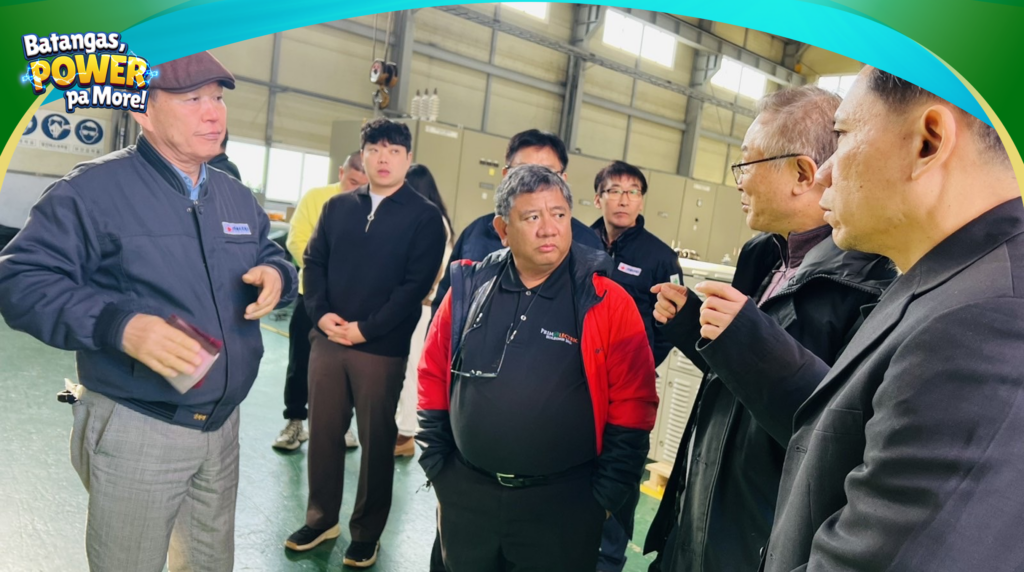
In its drive to further improve consumer services, officials of Primelectric recently traveled to Seoul, South Korea to study the country’s advanced power distribution system. The delegation was led by Primelectric President and CEO Roel Castro, who visited the Transmission and Distribution Headquarters of the Korean Electric Power Corporation (KEPCO), recognized globally as the World’s Best in Transmission and Distribution Efficiency. KEPCO presented how it maintains its remarkably low system loss of 3.53% and system average incident frequency index of just 0.6% per year—a clear indication that the utility experiences almost zero unscheduled power interruptions across its network. A major contributor to this performance is South Korea’s use of modern equipment and high-tech facilities, which significantly boost efficiency and reliability. As of today, 12.3% of its distribution lines are already underground, particularly in commercial districts; all lines are fully insulated, and thousands of automatic circuit reclosers (ACRs) are installed with the capability to reconnect power within just one second. The delegation was also shown unmanned substations, control panels, switches, ACRs, and other equipment—most of which are fully digitalized and remotely operated. KEPCO likewise demonstrated its ability to conduct live line maintenance works, which no longer require power shutdowns. Primelectric officials also expressed admiration for KEPCO’s strict implementation of safety standards, particularly its use of specialized safety gear and protocols to protect linemen and technical personnel. According to Castro, this benchmarking mission will significantly influence the direction of Primelectric and its operating units—MORE Power, Negros Power, and Bohol Light—as well as other potential expansion areas in the Philippines. “What we saw in KEPCO is not just technology, but a mindset—a culture of efficiency, reliability, and safety. This is the level of service we want to bring to our consumers,” Castro said.“We plan to send our engineers to the KEPCO Academy to speed up the adoption of modernized systems and familiarize them with world-class equipment.” With the delegation’s return to the Philippines, Primelectric aims to implement the modern practices it learned—phase by phase—to steadily move toward world-class standards in the country’s power distribution sector.
Biodiesel Group Urges Careful Review of Proposed “Murang Langis” Bill
MANILA, Philippines — The Philippine Biodiesel Association (TPBA) on Monday called for a careful evaluation of proposed changes to Republic Act No. 9367, or the Biofuels Act of 2006, stressing that any adjustments should consider “the wider implications” for motorists, farmers, and public health. The group’s statement comes as House Bill 4151, also known as the “Murang Langis Act,” is being deliberated in Congress. The bill seeks to give the President the power to suspend the mandated coco-biodiesel blend whenever blended diesel costs at least 5% more than pure diesel. While acknowledging the consumer-protection goals of HB 4151, TPBA emphasized that blended diesel is not always more expensive. “In several periods—particularly during global oil price volatility—coco-biodiesel has been at parity or even cheaper than pure diesel,” the group noted. Under current conditions, TPBA said the B3 blend adds only about ₱0.71 per liter over B2, or less than 2%, while a potential B5 blend may add roughly another 3%. Yet, it delivers a 6–10% improvement in fuel efficiency, the group added. The association cited studies by the Department of Energy (DOE) and the University of the Philippines–National Center for Transportation Studies (UP-NCTS) as evidence supporting the benefits of biodiesel blends. TPBA also expressed support for Energy Secretary Sharon Garin for pushing policies that balance consumer protection, farmer welfare, environmental responsibility, and national energy security. “The DOE has done an excellent job ensuring energy security and balancing stakeholder needs. Our contribution to the discussion is simply to highlight additional considerations to help ensure that all angles are fully evaluated,” TPBA Executive Director Ramon Taniola said. TPBA further noted the environmental and public health benefits of coco-biodiesel, which can reduce soot emissions by up to 95%, potentially avoiding P1.86–2.2 trillion in annual health costs—a gain that directly benefits urban communities, children, seniors, and daily commuters. “Biodiesel continues to give Filipinos more value per peso, and we hope to preserve that momentum,” Taniola added.
MORE Power Wins CSR Company of the Year at 2025 Asia CEO Awards
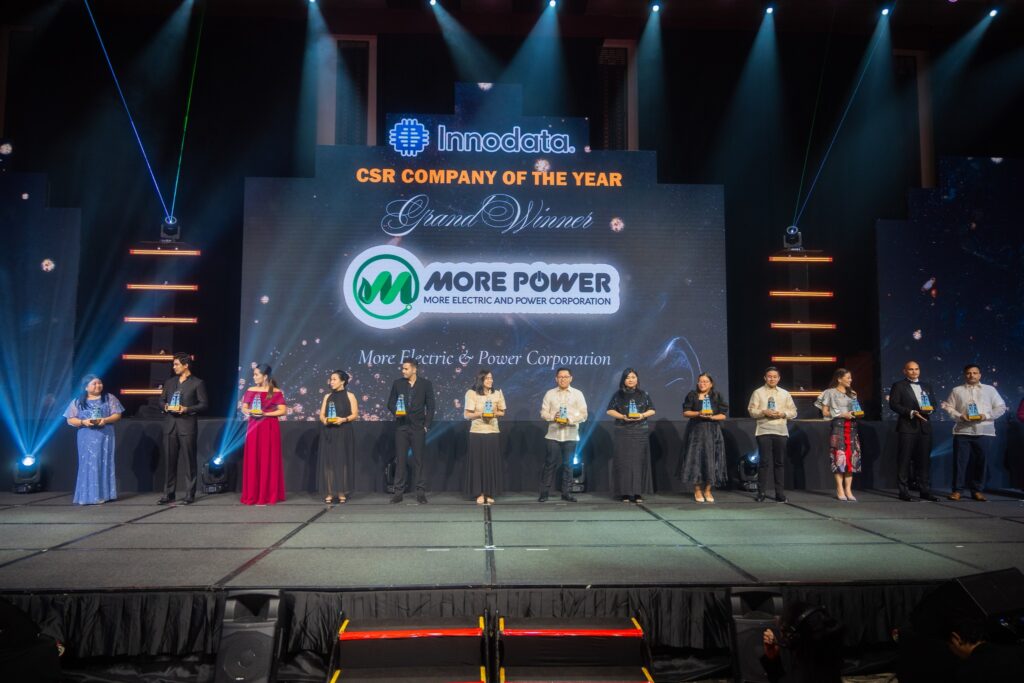
MANILA, Philippines — MORE Electric and Power Corporation (MORE Power) has been recognized as the Grand Winner for CSR Company of the Year (Innodata Circle of Excellence) at the 2025 Asia CEO Awards, held on October 14 at the Manila Marriott Grand Ballroom. The award highlights MORE Power’s strong commitment to corporate social responsibility (CSR), underscoring the company’s efforts to promote environmental sustainability, community livelihoods, and youth development. These initiatives have been credited for creating lasting positive impact across the communities the company serves. Janet Petilla, Vice President for Project Delivery at Innodata Knowledge Services, emphasized the significance of CSR in modern business: “Corporate social responsibility is the gold standard for being recognized as a premier company in the Philippines. Companies dedicated to CSR attract top talent and loyal customers. Their success shows that caring for the community and the nation is inseparable from corporate excellence.” In response, MORE Power expressed gratitude to the Asia CEO Awards and reaffirmed its commitment to advancing pro-people and pro-environment programs that empower communities while promoting sustainable growth. Operating as Iloilo City’s electric distribution utility since 2020, MORE Power emerged as a standout among a strong list of finalists, which included AXA Philippines, Concentrix, Gardenia Bakeries, Genpact, Hewlett Packard Enterprise, PJ Lhuillier, PLDT and Smart, Robinsons Land Corporation, SixEleven Global Services, White & Case Global Operations Center (Manila), and Wipro Philippines. This recognition reinforces MORE Power’s position as a leader in energy distribution and sustainability, demonstrating that responsible energy companies can drive both community development and corporate success.
Power Poverty Persists: Inside the Lives of the Energy-Insecure
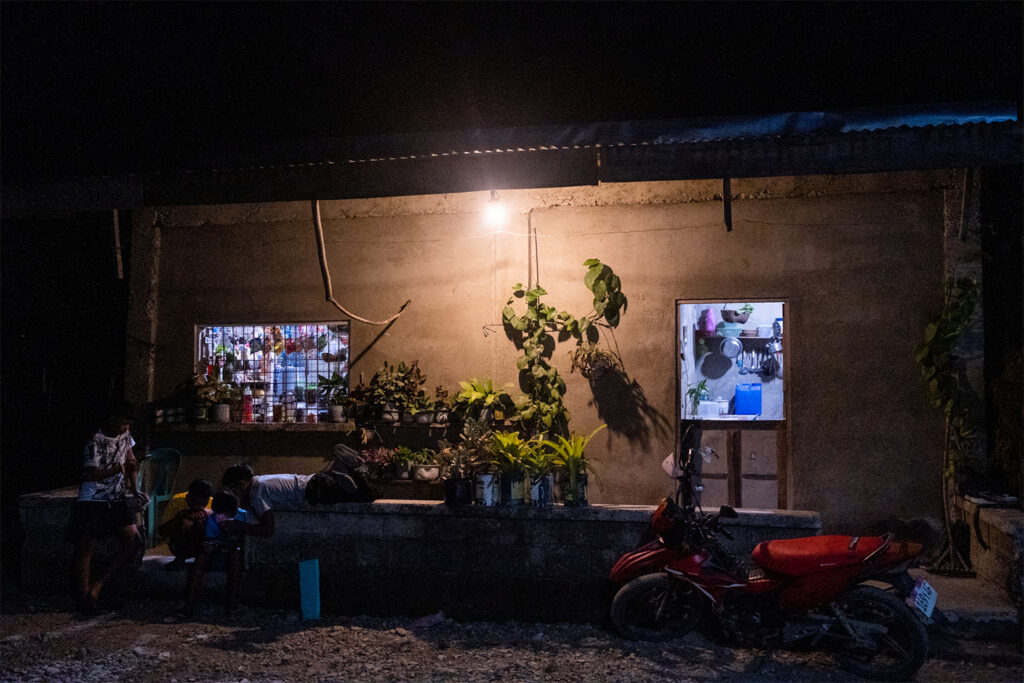
Despite years of investment and policy reforms, millions of Filipinos continue to live without reliable access to electricity — a challenge that underscores the country’s deepening energy inequality as it races toward its 2030 electrification target. The Scale of Energy Poverty According to a 2024 study by the Philippine Institute for Development Studies (PIDS), approximately 16 million Filipinos still lack access to electricity, representing around 14% of the population. While the Department of Energy (DOE) reports a national electrification rate of 90.4%, it acknowledges that “many households in off-grid and remote areas still experience intermittent or limited electricity service.” The DOE’s Total Electrification Program, launched in 2019, aims to close this gap by extending grid connections and developing off-grid renewable systems. However, in its 2024 annual update, the agency admitted that “electrification of geographically isolated and disadvantaged areas (GIDAs) remains a major challenge due to logistical constraints, fuel transport costs, and disaster vulnerability.” High Costs and Uneven Access The Philippines continues to record one of the highest electricity rates in Southeast Asia, largely due to its dependence on imported fuels. In 2025, the International Energy Agency (IEA) cited the Philippines as a country where “household energy costs remain disproportionately high compared to regional peers, straining low-income families and small enterprises.” PIDS Senior Research Fellow Dr. Josef Yap noted that “energy poverty in the Philippines is not only about physical access, but also about affordability and reliability,” calling for “a multidimensional measure of energy insecurity that includes cost burden, service quality, and household welfare.” In its latest Sustainable Development Goal 7 (SDG7) country report, the Global SDG7 Hub estimated that the poorest 20% of Filipino households spend up to 20% of their monthly income on electricity and cooking fuel — far above the international energy affordability benchmark of 10%. The Unequal Energy Map Geographic inequality continues to define access. DOE data show that electrification rates are highest in Luzon (98%), but significantly lower in parts of Mindanao and small island provinces. In the Bangsamoro Autonomous Region in Muslim Mindanao (BARMM), energy access remains below 70%, according to the National Electrification Administration (NEA). A 2023 NEA report identified Palawan, Basilan, and Eastern Samar among the provinces with the lowest power reliability, citing “insufficient generation capacity and dependence on diesel power plants.” Health, Education, and Livelihood Impacts The consequences go beyond inconvenience. A 2022 report by the Asian Development Bank (ADB) found that households without reliable power face “limited access to digital learning, refrigeration for health facilities, and income-generating equipment,” worsening poverty cycles in off-grid regions. In a public statement, DOE Secretary Raphael Lotilla emphasized that “universal, affordable, and reliable electricity is essential to inclusive development,” noting that “the energy transition must not leave behind communities that have waited decades for stable power.” Renewable Microgrids as a Solution The DOE and private sector are increasingly turning to renewable microgrid systems to reach far-flung communities. Under the Microgrid Systems Service Provider (MGSP) Program, projects in Masbate, Occidental Mindoro, and Samar are already operational. In 2024, the DOE reported that solar-hybrid microgrids in off-grid barangays had reduced household energy costs by up to 30% while providing 24-hour power for the first time. According to the agency, “off-grid renewable systems are the fastest, most cost-effective pathway to total electrification.” Climate Reality Philippines, a non-governmental organization, echoed this view in its 2023 policy paper, stating that “localized renewable energy solutions can eliminate fuel transport costs, reduce carbon emissions, and provide communities with greater control over their energy systems.” The Policy Challenge Ahead While the government’s 2030 target remains in sight, experts warn that success will depend on addressing both affordability and quality. The PIDS has recommended reforms such as: Expanding lifeline electricity subsidies for low-income consumers; Modernizing electric cooperatives through funding and digitalization; Integrating clean cooking and renewable microgrids into rural development plans. In its 2025 briefing, PIDS concluded: “The Philippines must redefine electrification not just as connection, but as the ability of every household to access sufficient, reliable, and affordable energy for a dignified life.” The Bottom Line Power access in the Philippines has improved, but the reality of energy insecurity persists — particularly for the poor, the rural, and the remote. As the nation pushes toward a renewable future, ensuring equitable access remains one of the most urgent and complex challenges of its energy transition. Sources: Philippine Institute for Development Studies (PIDS) – Energy Access Studies Department of Energy – 2024 Total Electrification Report International Energy Agency (IEA) – Southeast Asia Energy Outlook 2025 Global SDG7 Hub – Philippines Country Report National Electrification Administration (NEA) – Electrification Updates Asian Development Bank – Energy Access and Poverty Report 2022 Climate Reality Philippines – Renewable Energy Policy Brief 2023
The Budget Battle Over Energy Subsidies: Who Gains, Who Loses?
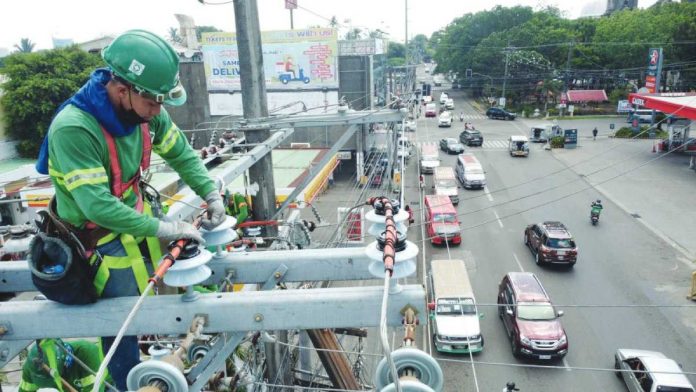
The Budget Battle Over Energy Subsidies: Who Gains, Who Loses? Introduction Energy subsidies are one of the most contentious lines in the Philippine budget. On one hand, they can provide relief to vulnerable sectors during times of high fuel and power prices. On the other, they often weigh heavily on government finances and may benefit higher-income groups disproportionately. As the country balances inflation, energy security, and transition to cleaner sources, the subsidy debate is heating up: who gets helped, and who ends up bearing the cost? What Are the Key Subsidies Under Debate Here are some of the main subsidy mechanisms in play (or being proposed) and how they work: Fuel subsidies for transport (public utility vehicles, tricycles, ride-hailers, delivery services) and agriculture (farmers and fisherfolk). These are meant to cushion the blow when global oil prices surge. (powerphilippines.com) Electricity subsidies / support to off-grid or far-flung areas: Through the Universal Charge for Missionary Electrification (UCME), which helps subsidize electricity costs in areas disconnected from the main grid. (legacy.senate.gov.ph) Rural electrification programs like “sitio electrification,” funding for the National Electrification Administration, and other DOE-led initiatives. (powerphilippines.com) Subsidies for state-owned corporations (GOCCs): The government gives budget support to energy-related GOCCs to cover costs beyond what they can earn. (philstar.com) Who Gains from Energy Subsidies Vulnerable households and rural communities often benefit the most, especially those in off-grid areas who face higher electricity costs. Fuel subsidies also reduce transport and farming expenses, cushioning the impact of global price spikes. PUV drivers, farmers, and fisherfolk gain from direct fuel assistance to keep their livelihoods viable during price surges. (dbm.gov.ph) Off-grid and island communities depend on UCME support to keep electricity costs manageable. Without these subsidies, many would pay far higher rates. Agriculture and fisheries producers benefit from lower fuel costs, helping maintain food production and transport in times of volatility. Who Loses or Gets Left Behind Higher-income and urban consumers may indirectly gain from universal subsidies, even though they don’t need them. NEDA has warned that broad energy subsidies often benefit wealthier households more. (gmanetwork.com) Taxpayers and public finances carry the burden. More subsidies mean less funding for health, education, or renewable energy. When oil subsidies rise, fiscal pressure builds. (powerphilippines.com) State-owned utilities can struggle if subsidies are cut or delayed, forcing them to absorb costs or reduce services. Subsidies to GOCCs dropped significantly this year, raising concerns over operational sustainability. (philstar.com) Renewable energy programs risk underfunding when fossil-fuel subsidies dominate. Budget constraints often limit funding for green initiatives. (pna.gov.ph) Remote areas may also lose when subsidy allocation is uneven or delayed, leaving them with high generation costs despite national programs. (legacy.senate.gov.ph) Recent Moves and Budget Trends The DOE requested a 24.4% increase in its 2026 budget to expand electrification and clean energy programs. (powerphilippines.com) Subsidies for GOCCs have been scaled back, down over 10% year-on-year. (mb.com.ph) The UCME fund ballooned from ₱7.34 billion in 2015 to ₱24.62 billion in 2024, as more off-grid areas received support. (legacy.senate.gov.ph) The government remains cautious about general fuel or power subsidies, citing fiscal sustainability concerns. (gmanetwork.com) The Trade-offs Targeting vs universality: Broad subsidies are politically easy but economically costly. Targeted aid is more efficient but harder to administer. Short-term relief vs long-term transition: Should funds go to immediate relief or to renewable energy projects that reduce dependency on imports? Fiscal sustainability: Expanding subsidies risks ballooning deficits and crowding out other social spending. Efficiency and transparency: Misuse or misallocation can waste resources and weaken public trust. Who Should Win and Policy Recommendations Low-income households and remote communities should remain top priority in energy subsidy programs. Essential sectors like transport, farming, and fishing need timely, well-targeted assistance during fuel price spikes. Renewables and electrification programs deserve stronger budgetary backing to ensure long-term energy resilience. Efficiency and transparency in programs like UCME must improve to ensure subsidies match actual needs. Gradual, conditional reforms should protect the poor as subsidies for fossil fuels are phased down. Conclusion Energy subsidies remain a balancing act between social welfare, fiscal prudence, and climate responsibility. Properly designed, they can shield the vulnerable and stabilize prices. Poorly targeted, they drain budgets and delay progress toward clean energy. In this ongoing budget battle, the winners should be those benefiting from smart, targeted, and transparent subsidy systems—and the losers, those clinging to wasteful policies that burden the public and stall the transition to a sustainable energy future. 2026 national budget can strike that balance remains to be seen, but one thing is clear: every allocation choice made today will shape the Philippines’ energy future for decades to come. Sources: Department of Budget and Management Department of Energy Senate of the Philippines Philippine Energy Transition Council reports
Citicore Unveils Batangas 1: PH’s First Baseload Solar + Storage Facility
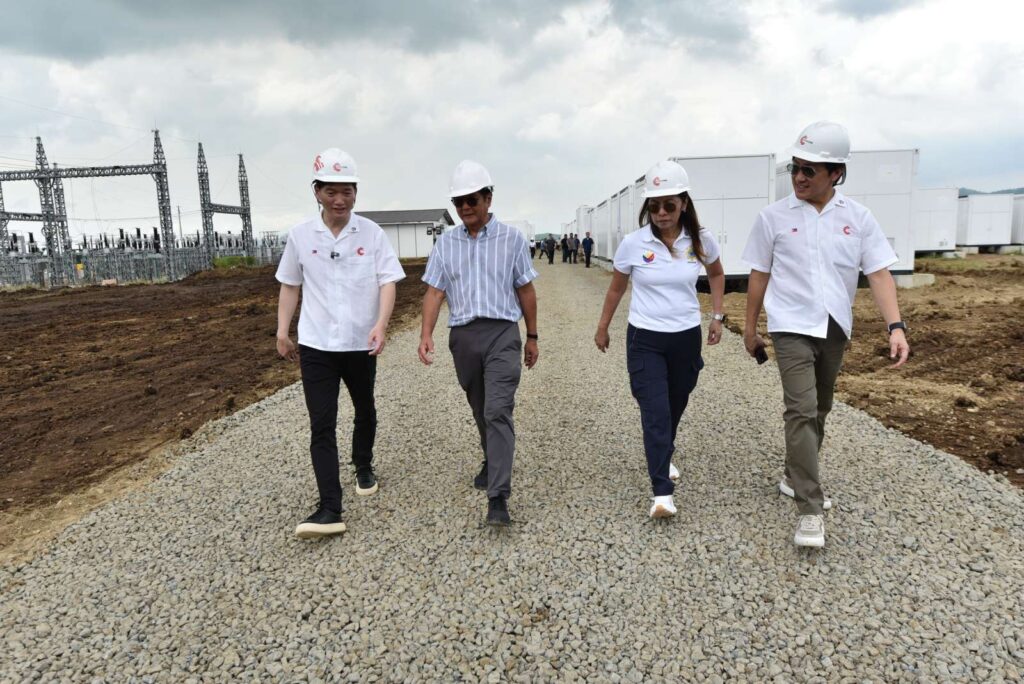
The Philippines has marked a milestone in its renewable energy journey with the inauguration of Citicore Renewable Energy Corp.’s Batangas 1 Solar Plant, the country’s first baseload-capable solar + storage project. Located in Calatagan, Batangas, the 197 MW solar farm is paired with a 320 MWh battery energy storage system (BESS), making it capable of delivering stable power to the grid even beyond daylight hours. Energy officials describe it as a “game-changer” in addressing one of the biggest challenges of renewable energy — intermittency. “This is proof that renewable energy can now provide baseload capacity. It is not just supplemental, but dependable power that can help stabilize our grid,” said Citicore executives during the inauguration. The project is expected to supply power to thousands of households, contribute to the government’s 35% renewable energy target by 2030, and reduce the country’s reliance on imported fossil fuels. Industry analysts point out that the Batangas 1 project comes at a crucial time, as rising electricity rates and frequent typhoon disruptions underscore the need for resilient and sustainable energy systems. The integration of solar with large-scale battery storage could set a precedent for future projects nationwide. Citicore’s Batangas 1 is also aligned with the Philippines’ commitments under the Paris Agreement, helping cut carbon emissions while promoting cleaner, more affordable power. Source: Reccessary