
DOE, NPC Fast-Track SPUG Solar Hybrid Microgrids

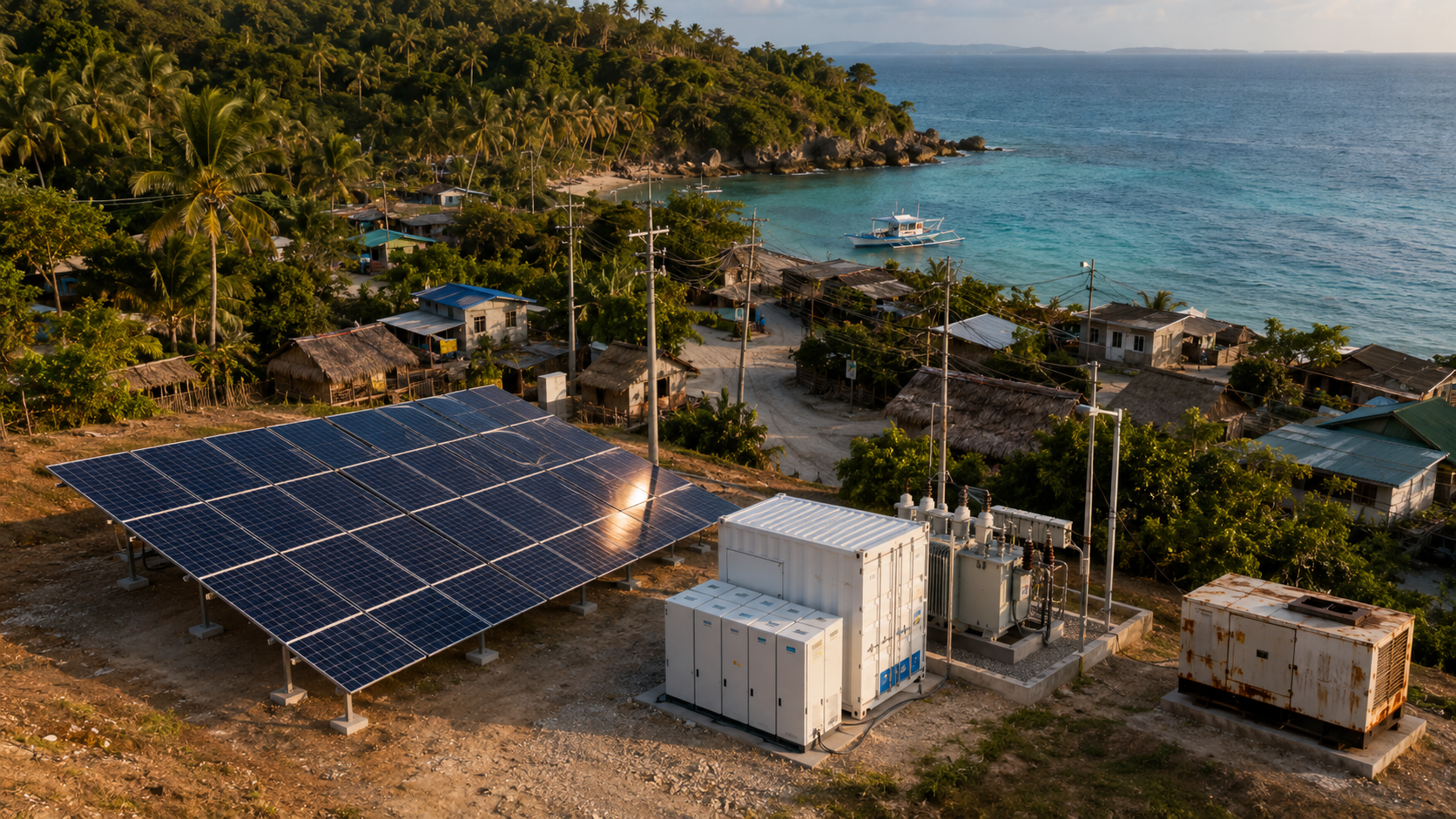
The Department of Energy (DOE) and the National Power Corporation (Napocor) are stepping up the deployment of solar photovoltaic (PV) and battery energy storage system (BESS) hybrid microgrids across remote island territories, a strategic push aimed at displacing expensive diesel fuel generation and curbing ballooning universal subsidies.
The initiative targets unviable and isolated areas managed under Napocor’s Small Power Utilities Group (SPUG), modernizing aging generator sets into decentralized, smart clean energy hubs capable of supplying continuous electricity to missionary communities.
Dismantling High-Cost Diesel Dependency
For decades, off-grid Philippine islands have relied almost exclusively on bunker and diesel-fired generator sets. According to data from the DOE and energy regulatory filings, the true cost of generation (TCGR) in isolated SPUG facilities can soar to as high as ₱62 per kilowatt-hour (kWh) due to exorbitant maritime fuel transport and logistics expenses.
However, residential and commercial consumers in these missionary areas pay a heavily subsidized rate—the Subsidized Approved Generation Tariff (SAGT)—which ranges between ₱7.00 and ₱8.30 per kWh. The substantial gap between the actual production cost and the retail rate is recovered from all grid-connected electricity consumers nationwide through the Universal Charge for Missionary Electrification (UC-ME) line item in monthly electric bills.
By deploying solar-plus-storage solutions, state energy planners expect to permanently lower local generation costs, systematically reducing the UC-ME burden passed on to main-grid households and businesses across Luzon, Visayas, and Mindanao.
Hybrid Architecture and Target Clusters
The modernized microgrid model integrates centralized ground-mounted or rooftop solar PV arrays with intelligent battery storage units, keeping legacy diesel generators strictly as secondary or tertiary backup for peak hours and prolonged inclement weather.
Initial rollout and feasibility evaluations prioritize isolated island clusters across Palawan, Quezon, and Cebu, alongside peripheral archipelagic communities that currently receive only four to twelve hours of intermittent power daily. Hybridizing these facilities provides round-the-clock, stable power necessary to support local cold storage, tourism, and micro-enterprises.
The technical transition is supported by mechanisms under Republic Act No. 11646, or the Microgrid Systems Act, which enables private sector participation through Competitive Selection Processes (CSP) and Qualified Third Party (QTP) frameworks to accelerate capital deployment into off-grid electrification.
Advancing Total Household Electrification
Beyond fiscal prudence and emissions abatement, the microgrid expansion insulates off-grid local economies from volatile global crude markets. As Napocor and private microgrid developers commission additional hybrid capacities in the coming quarters, the country takes a decisive step toward turning fragile island power outposts into self-sufficient, resilient clean energy ecosystems.