
DOE Eyes Port Rationing for Offshore Wind in GEA-5

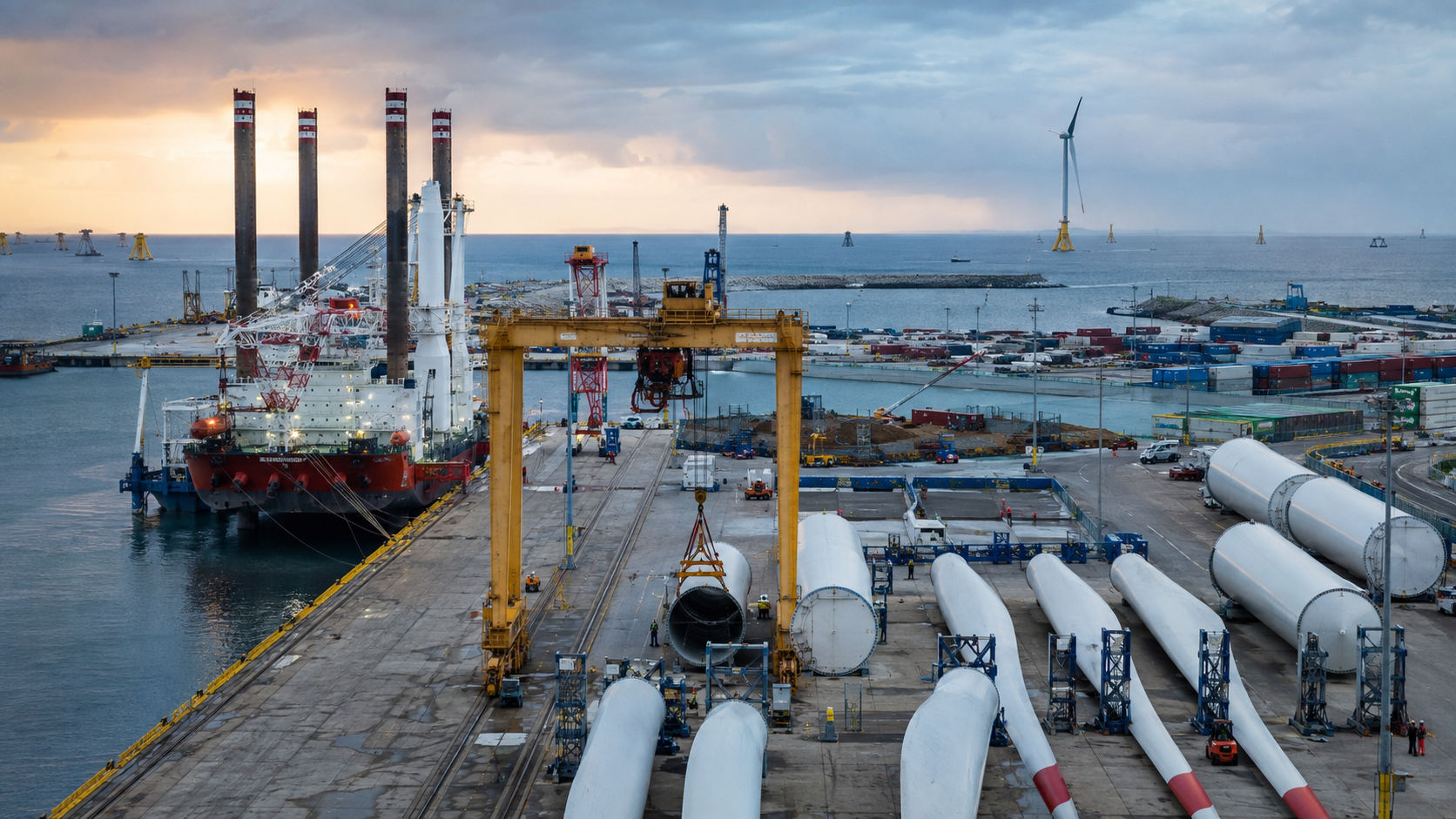
The Department of Energy (DOE) is drafting regulatory guidelines to ration port access for offshore wind developers participating in the upcoming Green Energy Auction Round 5 (GEA-5), aiming to eliminate logistical bottlenecks that threaten the rollout of clean marine power.
Under the proposed draft circular, winning bidders in the GEA-5 auction will secure priority, exclusive operational access to designated Philippine Ports Authority (PPA) facilities for up to 27 consecutive months, closely aligned with their committed commercial delivery dates.
Solving the Offshore Logistics Bottleneck
The move follows the government’s earlier suspension and recalibration of GEA-5, which was undertaken to address severe infrastructure constraints. Offshore wind installations require specialized port infrastructure, including deep berths, heavy-load staging areas, and dedicated marshalling yards capable of supporting massive turbine blades, towers, and substructure assembly.
Given the limited number of domestic ports equipped for heavy-lift staging, the DOE’s draft policy seeks to prevent berth congestion and project delivery overlaps. By staggering and rationing port access across multi-year windows, energy planners intend to give developers guaranteed operational timelines to mobilize installation vessels and component deliveries without stranded time at sea.
Massive Pipeline Against Port Constraints
The policy intervention comes as the Philippines builds one of Southeast Asia’s most ambitious offshore wind development pipelines. Government records show the DOE has awarded 95 offshore wind service contracts to date, representing an aggregate technical potential of approximately 72 gigawatts (GW).
However, turning that pipeline into operational generation requires coordinated public infrastructure. Through GEA-5, the government plans to procure 3,300 megawatts (MW) of offshore wind capacity scheduled for commercial delivery between 2027 and 2030, with target initial power generation slated for as early as 2028.
Industry analysts have pointed out that without dedicated port availability, early-mover projects face substantial capital expenditure risks from maritime delays, which could inflate bid prices in the green auction rounds.
Alignment with Port Authorities and Next Steps
The draft rules will undergo stakeholder consultations with renewable energy developers, maritime logistics operators, and the PPA to finalize port allocation mechanics and site readiness criteria. Key regional ports across Luzon and the Visayas are currently undergoing assessment to determine the scope of modernization and dredging required to handle next-generation wind turbines.
For energy regulators, synchronizing grid connection milestones, auction schedules, and port utilization represents a critical step in turning offshore wind targets into tangible generation. As the DOE finalizes the GEA-5 auction framework, structured port allocation could provide the operational certainty global and local developers need to deploy billions of dollars into Philippine offshore energy waters.