
DOE to Auction Solar-BESS Microgrids for Off-Grid Islands

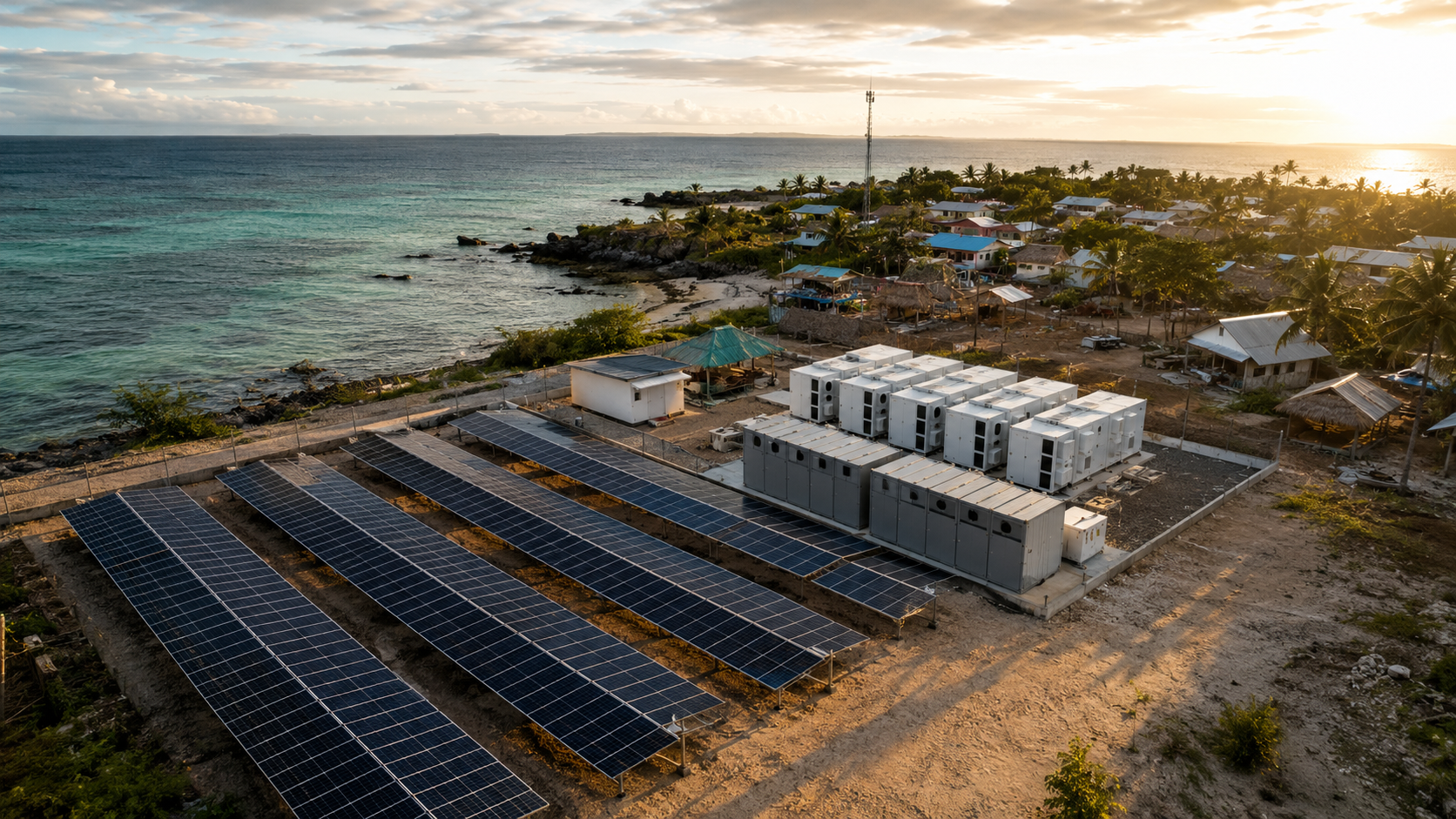
The Department of Energy (DOE) is preparing to roll out a specialized Green Energy Auction (GEA) framework designed specifically for off-grid island grids currently managed by the National Power Corporation’s Small Power Utilities Group (NPC-SPUG). The policy drive aims to displace expensive, fuel-dependent diesel generation units with integrated solar photovoltaic (PV) and Battery Energy Storage Systems (BESS).
By deploying utility-scale hybrid microgrids across remote Philippine archipelagic territories, the energy department seeks to bolster supply reliability, shield isolated consumers from volatile oil import costs, and trim the mounting multi-billion-peso subsidy borne by on-grid ratepayers across Luzon, Visayas, and Mindanao.
Escalating Diesel Costs Burdening the Power Grid
Official regulatory filings and energy data indicate that the True Cost Generation Rate (TCGR) in isolated island power systems ranges between ₱18 and ₱62 per kilowatt-hour (kWh), driven largely by the high logistics and procurement expenses of running localized diesel generator sets.
In contrast, subsidized Subsidized Approved Generation Rates (SAGR) charged to residential consumers in missionary jurisdictions remain pegged between ₱7.00 and ₱8.30 per kWh. The massive variance is covered by the Universal Charge for Missionary Electrification (UCME), a line-item subsidy mandated by Republic Act No. 9136 (EPIRA) and billed monthly to all grid-connected electricity end-users nationwide.
Energy officials noted that replacing SPUG diesel plants with renewable microgrids will directly lower the total UCME requirement, providing long-term tariff relief across mainstream utility bills while improving the green energy profile of local electric cooperatives.
Unlocking Private Capital for Island Microgrids
Under the upcoming tender, qualified independent power producers and clean technology developers will compete to construct and operate hybrid installations comprising high-efficiency solar arrays paired with advanced BESS capacities. The storage component ensures round-the-clock base reliability, smoothing intermittent solar generation during peak night-time demand cycles.
The initiative aligns with the implementation rules of Republic Act No. 11646, or the Microgrid Systems Act, which establishes competitive mechanisms to accelerate 100% household electrification across unserved and underserved regions through low-carbon technologies.
“Accelerating clean microgrid deployment is not solely an environmental imperative; it is a fiscal necessity for our power sector,” an energy policy analyst said, noting that private sector investments under long-term power purchase contracts will systematically modernize isolated distribution networks without draining national coffers.
Structural Transition in Missionary Electrification
The DOE is expected to release the final tender guidelines, bidding schedules, and indicative off-grid site clusters in the coming months, following stakeholder consultations with the Energy Regulatory Commission (ERC), NPC, and island-based electric cooperatives.
As the Philippines accelerates its target to achieve a 35% renewable energy share by 2030, transforming missionary power from an expensive diesel sinkhole into a testing ground for decentralized clean energy technology will be crucial for both fiscal sustainability and energy security.