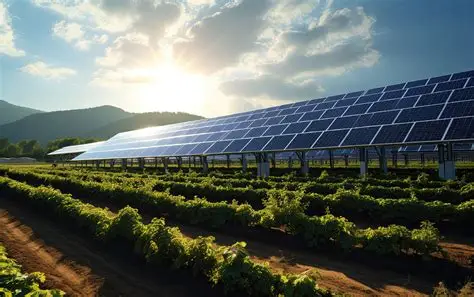
Batangas, Philippines — The country has taken a major step toward its renewable energy transition as Citicore Renewable Energy Corporation (CREC) inaugurated the Batangas 1 agrivoltaic solar complex, a landmark project combining large-scale solar generation with advanced battery storage and integrated agriculture.
The facility, located across Barangays Lumbangan and Luntal in Tuy, Batangas, boasts 197 megawatts-peak (MWp) of solar capacity paired with a 320 megawatt-hour (MWh) battery energy storage system (BESS). According to project officials, it will be capable of powering up to 158,000 households while cutting an estimated 265,000 tons of carbon dioxide emissions annually.
Power Even Without the Sun
Unlike conventional solar farms that only produce during daylight hours, Batangas 1 is billed as the country’s first baseload-capable solar project. Its battery storage system allows electricity to be stored and dispatched at night or during cloudy periods, offering greater stability to the Luzon grid.
“This is a game-changer for Philippine energy security. With solar and storage combined, we can now provide clean, reliable power that doesn’t just stop when the sun sets,” CREC executives said during the launch.
Agriculture + Solar: The Agrivoltaic Model
Batangas 1 also introduces the agrivoltaic model, where farmland is shared between agriculture and solar infrastructure. Crops are cultivated beneath and around the solar arrays, ensuring that the land continues to produce food while generating power. Officials said this approach helps address food security while easing community concerns about land conversion.
National Renewable Push
The project was inaugurated in the presence of President Ferdinand Marcos Jr., who highlighted the facility as a symbol of the government’s goal of sourcing 50% of the country’s power from renewables by 2040.
“Projects like Batangas 1 show that the Philippines is ready to lead Southeast Asia in clean energy innovation. We can meet our people’s energy needs without sacrificing sustainability or growth,” Marcos said in his speech.
Financing and Future Projects
Backed by both local financing and foreign partnerships, CREC confirmed it is targeting 1 gigawatt (GW) of operational solar capacity by 2026, with similar hybrid projects in the pipeline. The company also sees battery storage as crucial in balancing the country’s energy mix as demand grows and fossil fuel prices remain volatile.
Why It Matters
The Batangas complex represents more than just a solar farm—it’s a blueprint for the future of Philippine energy, where technology, agriculture, and climate action intersect. For communities, it means cheaper, more stable electricity, new livelihood opportunities, and a cleaner environment.
Sources: PV Magazine (Sept. 15, 2025), Power Philippines (Sept. 15, 2025), Philstar (Sept. 16, 2025), Energy-Storage News (Sept. 16, 2025)