President Ferdinand “Bongbong” Marcos Jr. has ordered a sweeping audit of the government’s flood control programs amid mounting allegations of large-scale corruption and unfinished or non-existent infrastructure projects.
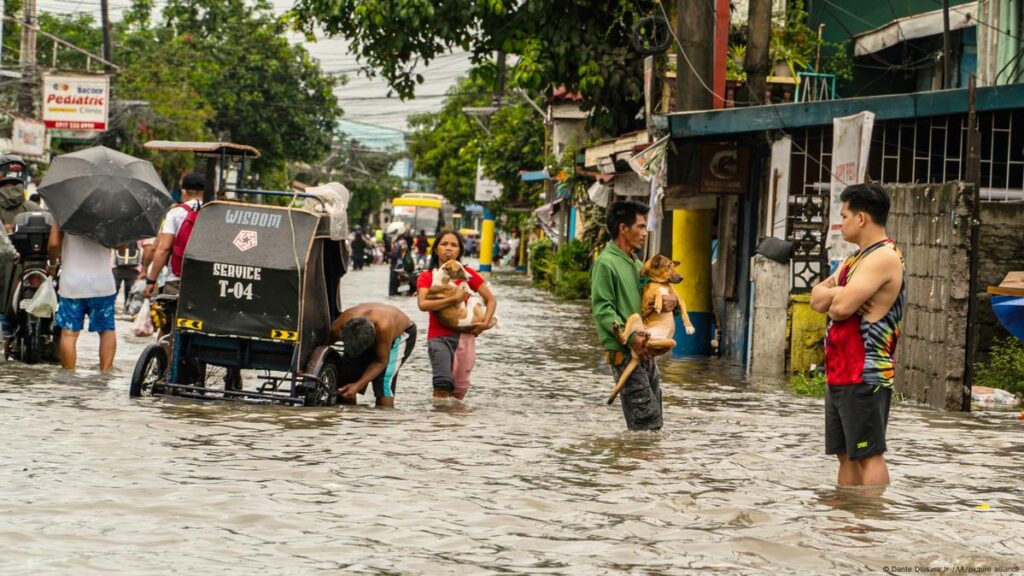
The move comes after former senator Panfilo Lacson revealed that nearly P2 trillion has been allocated to flood control initiatives since 2011, yet a significant portion of the country continues to suffer from severe flooding.
Lacson warned that up to half of the massive budget may have been lost to corruption.
The President instructed relevant agencies to release a publicized list of failed and ghost projects and to file charges against those accountable.
Meanwhile, Baguio City Mayor Benjamin Magalong made damning allegations, claiming that members of Congress are receiving kickbacks ranging from 35 to 40 percent from infrastructure projects. According to him, corruption often begins when lawmakers handpick the district engineers of the Department of Public Works and Highways (DPWH), bypassing the authority of the public works secretary.
“Lawmakers are selecting them, not the public works secretary,” Magalong said. “From the very start, there’s already a conspiracy.”
Magalong pointed out that flood control and road projects are among the most commonly exploited, as their costs and materials can be easily manipulated.
“Same thing with cat’s eye, solar lights… their favorite,” he added, referring to reflective road markers and solar-powered street lights.
He estimated that only 35 percent of project funds actually go into implementation. The rest, he said, is lost to kickbacks, taxes, bonds, and agency fees.
“At an average of 30 percent (in kickbacks), minus the seven percent value-added tax, one-percent insurance bond, plus the implementing agency gets around 12 percent, then three-percent contingency fund, plus another two percent, hence, around 55 percent (of the budget) gets removed,” Magalong explained.
He called the entire process a “highly organized” system of collusion between contractors and bidding agencies.
In response, Senate President Francis Escudero has proposed legislation that would ban relatives of government officials—up to the fourth degree—from becoming government contractors or suppliers, in an attempt to curb nepotism and conflicts of interest.
However, not everyone agrees with Magalong’s claims. Bicol Saro party-list Rep. Terry Ridon challenged the mayor to present concrete evidence rather than making broad accusations.
“It is hard to make a generalization that all lawmakers are doing the same thing,” Ridon said.
As the corruption issue unfolds, Public Works Secretary Manuel Bonoan revealed that the DPWH is seeking P5 billion for the dredging of rivers and waterways to mitigate the country’s worsening flood problems.
According to Bonoan, there is currently no specific budget for large-scale desilting or dredging, and the agency plans to include the purchase of new heavy equipment in its 2026 budget proposal.
Meanwhile, Manila Mayor Isko Moreno criticized the ongoing dysfunction in flood control operations under the DPWH.
He cited the Sunog Apog pumping station in Tondo, which he described as “brand new, but ineffective and not functioning.” Moreno also pointed out unfinished infrastructure, including the Estero de Abad, Remedios, and Padre Faura pumping stations near Manila Bay, which remain incomplete due to what he called “ongoing problems.”