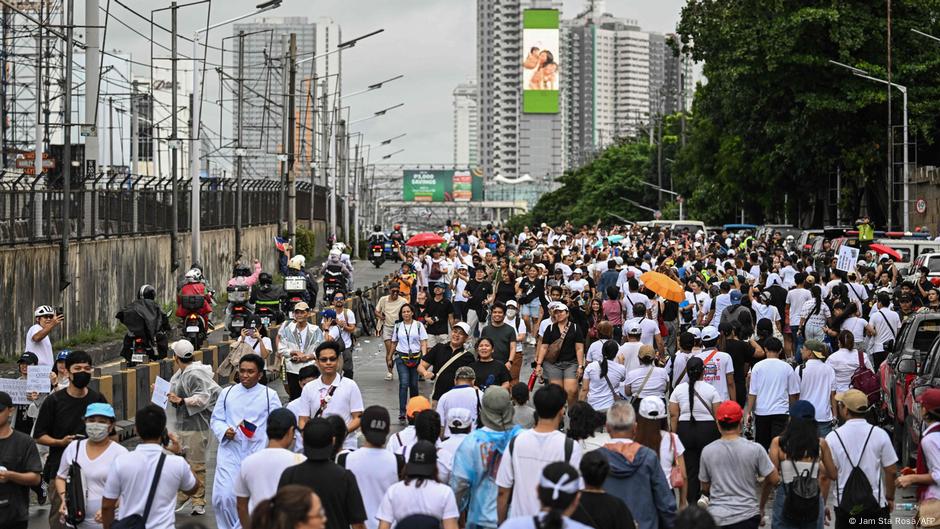
Tens of thousands of Filipinos took to the streets this September in what has been dubbed the “Trillion Peso March,” a wave of protests demanding transparency and accountability from the government amid allegations of massive corruption in infrastructure spending.
The demonstrations, held in Metro Manila and other major cities, were triggered by revelations that flood-control projects worth more than ₱545 billion were riddled with substandard work and overpriced contracts, allegedly to accommodate kickbacks for legislators and officials. The Senate inquiry into the issue has since heightened public anger.
Clashes erupted near the presidential palace in Manila as police tried to disperse protesters calling for reforms and the resignation of officials linked to the scandal. Dozens were arrested, with rights groups warning of heavy-handed tactics against demonstrators.
President Ferdinand Marcos Jr. responded by forming the Independent Commission for Infrastructure (ICI) to investigate projects dating back to 2015. The move, however, has not eased public dissatisfaction, with protesters demanding swifter accountability and stronger safeguards to prevent future abuses.
Analysts note that the protests are among the largest since the anti-pork barrel demonstrations a decade ago. The scale of public mobilization underscores growing frustration with recurring corruption scandals that erode trust in government institutions.
As pressure mounts, lawmakers and watchdog groups are pushing for tighter procurement rules, greater transparency in public works, and stronger protection for whistleblowers. Whether these demands translate into lasting reforms remains to be seen, but the protests have placed corruption and governance failures back at the center of the national agenda.