The Philippines is accelerating its push into renewables, with the Department of Energy (DOE) laying out plans to shift the country’s power mix increasingly toward clean energy sources by 2035. Under its proposed roadmap, renewables won’t just supplement, but potentially become the primary source of electricity as the nation seeks to balance supply security, decarbonization, and economic resilience.
What the DOE Plans
-
The new Philippine Energy Plan (PEP) 2023-2050 sets ambitious milestones, including increasing the share of renewable energy in the power generation mix to 35% by 2030, and 50% by 2040. Power Philippines+3Asia Clean Energy Forum+3Asia EEC+3
-
DOE is also revising its energy roadmap (extending to 2050), which includes phasing down (and eventually moving beyond) coal power while incorporating more geothermal, hydropower, wind (onshore & offshore), and solar energy. Nuclear Business Platform+2Asia Clean Energy Forum+2
-
There is increasing interest in ancillary technologies like energy storage, grid upgrades, and policies such as Renewable Portfolio Standards, Green Energy Auctions, and easing of foreign ownership constraints to attract investment in renewables. Asia Clean Energy Forum+2Reuters+2
Why 2035 Is a Key Year
While the DOE hasn’t (so far in public documents) explicitly declared “renewables 100% by 2035,” the 2035‐2036 period emerges as a turning point in many model scenarios:
-
Many analyses (including from the DOE’s Energy Transition Roadmap) show that capacity and generation from renewables begin to scale significantly after 2030. To achieve 50% by 2040, there must be a strong ramp‐up during the 2030-35 window. Asia Clean Energy Forum+1
-
The 1.5°C compatible scenario report (by independent analysts) argues that for the Philippines to be aligned with climate goals, it needs to phase out coal by 2035 and expand renewable generation dramatically. CEED
Thus, while 2035 isn’t formally codified yet as the date when renewables become the main source, all signs point to that being the target-period when renewables may overtake fossil fuels in importance (depending on policy, investment, and implementation pace).
Challenges & Risks
Pushing renewables to dominate by 2035 is ambitious. The following issues will need to be addressed:
-
Grid Capacity & Stability
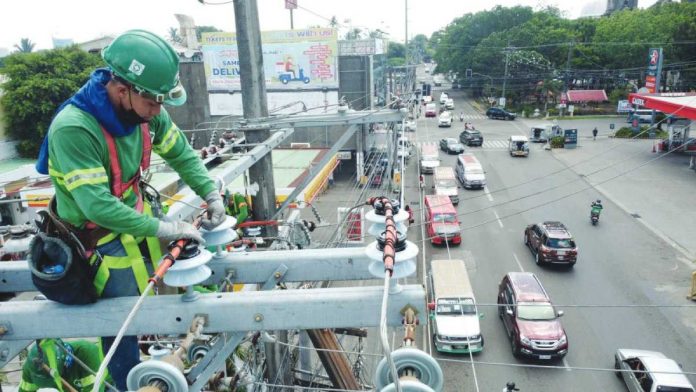
Variable renewables (solar, wind) require upgrades in grid infrastructure, better forecasting, frequency control, storage solutions, and possibly demand‐side management. Without these, intermittency could hamper reliability. -
Financing & Investment
Massive financing will be needed—not just for generation capacity but for transmission, storage, and regulatory bodies. Investors will weigh risks such as regulatory delays, permitting, land acquisition, and community pushback. -
Policy & Regulatory Environment
Clear, consistent, and enabling policy frameworks are needed—laws, incentives, auctions/dispatch rules, land rights, permitting. Any policy inconsistency could slow down deployment. -
Social & Environmental Constraints
Land use conflicts, environmental reviews, biodiversity and conservation issues (especially for large scale solar/wind or hydro) could slow projects. Community acceptance will matter. -
Energy Security & Transition Path
Phasing out coal has implications for baseload power. The transition must ensure reliability—especially in off-grid or unstable grid areas (Mindanao, islands)—and perhaps rely on transitional fuels or backup capacity.
What This Would Mean for Consumers / the Economy
If the DOE succeeds:
-
Electricity generation costs may stabilize or decline, especially as solar, wind (and geothermal) units reach economies of scale and fossil fuels become more expensive.
-
Dependence on imported coal/oil would drop, improving energy security.
-
Job creation in renewables (construction, O&M, manufacturing), especially in regions where solar/wind/hydro sites are developed.
-
Reduced greenhouse gas emissions, improving compliance with the Philippines’ Nationally Determined Contributions (NDCs) under international climate agreements.
-
Potential for lower electricity tariffs in long run—if costs are managed and regulatory frameworks are efficient.
Where Things Stand Now
-
As of 2022-2023, renewables accounted for about 22-29% of installed capacity / generation in the country. Asia Clean Energy Forum+1
-
The DOE has begun implementing policies (Green Energy Auctions, Renewable Portfolio Standards, easing foreign ownership limits) to attract more investment. Asia Clean Energy Forum+2Reuters+2
-
Major projects are underway (e.g. large solar farms, wind projects, storage plans) to help meet the 2030 and 2040 targets. Power Philippines+2Asia Clean Energy Forum+2
Bottom Line
“Renewable energy as main power source by 2035” may still be more of a goal than an established policy, but the Philippines’ DOE is structuring policies, targets, and investments to make that a realistic possibility. The next 5 years (2025-2030) will be critical: how fast clean energy capacity can be built, policies streamlined, and grid & financing challenges addressed.