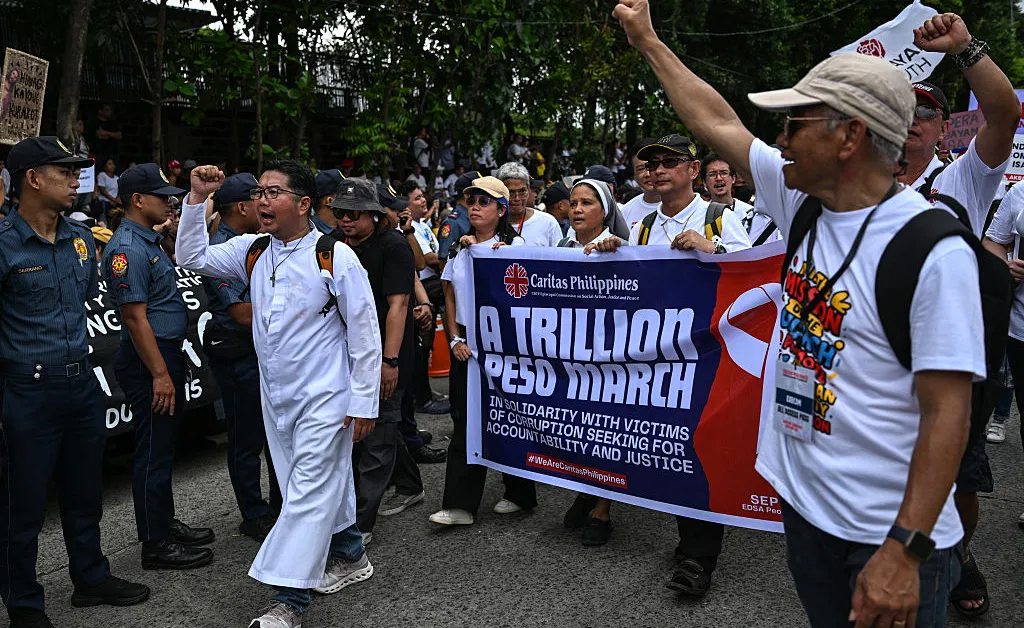
The massive protests that swept Manila in September 2025 were more than just a call against corruption — they were a powerful reminder of the role that civil society and grassroots movements play in holding government accountable.
Triggered by revelations of alleged anomalies in over ₱545 billion worth of flood control projects, thousands of Filipinos took to the streets under banners like the “Trillion Peso March” and “Baha sa Luneta.” What stood out was not only the scale of public outrage but the diverse coalition behind it — from students and church groups to community organizers and NGOs.
Civil society groups have long warned that opaque procurement processes and weak oversight create opportunities for kickbacks in big-ticket infrastructure projects. This time, grassroots mobilization succeeded in forcing the issue into the national spotlight, prompting President Marcos Jr. to form the Independent Commission for Infrastructure (ICI) tasked to audit projects dating back a decade.
Observers note that transparency demands are no longer confined to watchdog NGOs — they’ve become mainstream public sentiment. Social media campaigns amplified on-ground mobilizations, creating nationwide pressure that made it harder for officials to downplay the allegations.
“The people are saying: every peso counts, especially when lives are at stake during floods,” said one civil society leader.
Whether the ICI can deliver impartial results remains to be seen. But what’s clear is that grassroots mobilization has shifted the balance: citizens are no longer passive recipients of public works, but active guardians of how these projects are funded and executed.