
Transport Chief Dizon Rides MRT-3, Promises Service Upgrades

MANILA, Philippines — Transportation Secretary Vince Dizon joined MRT-3 commuters on Monday to personally inspect train and station conditions while gathering feedback on ways to improve services. Dizon visited several major stations, including Taft, Ayala, and Shaw Boulevard, where he engaged with passengers about their experiences and suggestions for enhancements. Recognizing the need for immediate upgrades, he assured the public that the Department of Transportation (DOTr) is focusing on key improvements. These include reducing passenger queues, improving station entry and exit, repainting faded markings, and fixing defective turnstiles to ease congestion. Additionally, Dizon committed to enhancing station lighting in poorly lit areas and constructing covered walkways to provide smoother connections between MRT stations and nearby transport terminals for buses and jeepneys. “These improvements are crucial for passenger safety and convenience. We are working to ensure a better and more efficient experience for MRT-3 commuters,” Dizon said.
DepEd to Prioritize Last-Mile Schools, Congress Probes SHS Voucher Anomalies
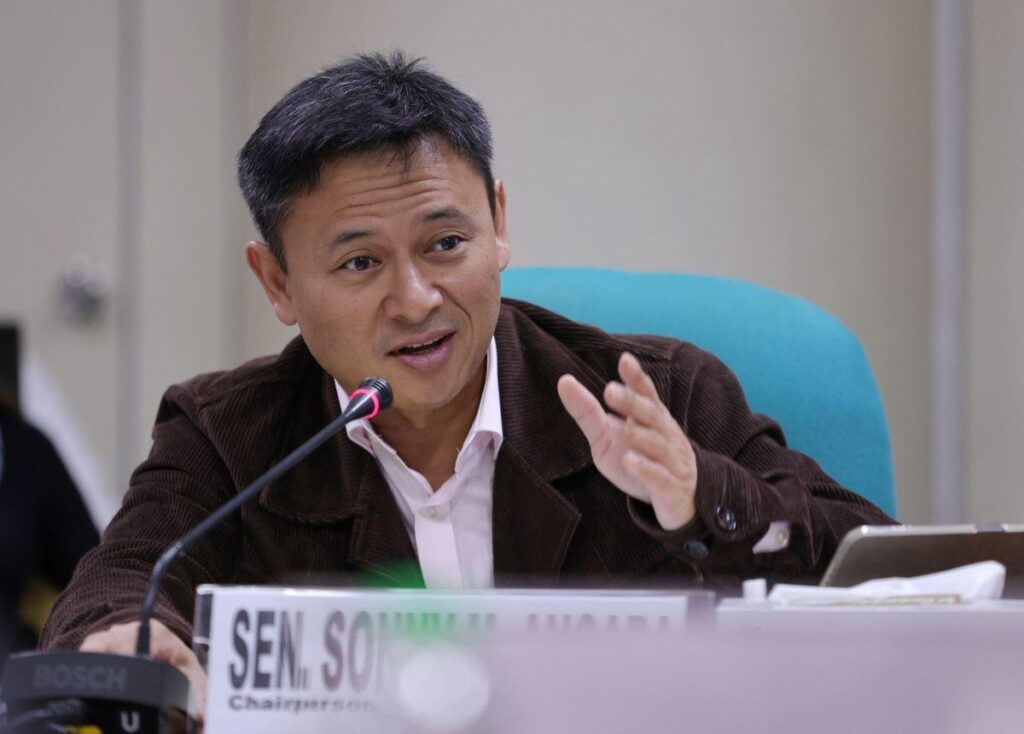
MANILA, Philippines — The Department of Education (DepEd) has reaffirmed its commitment to last-mile schools (LMSs) as part of its push to deliver quality education to underserved communities in remote areas. “Last mile doesn’t have to be last priority,” Education Secretary Sonny Angara stated during his visit to schools in the Cordillera Administrative Region. Improving Access to Education in Remote Areas Last-mile schools are those with fewer than four classrooms, often made of makeshift materials, and lacking electricity, proper infrastructure, and funding for repairs or new buildings. These schools are located in hard-to-reach areas, requiring long and difficult travel to access. Despite these challenges, LMSs cater to fewer than 100 students, with less than five teachers, over 75 percent of whom are from indigenous communities, according to DepEd. Angara emphasized that President Marcos has directed DepEd to prioritize these schools, aligning with the government’s education equity agenda. “Our school visits in the Cordillera give us hope, showing that the right interventions can translate to positive outcomes,” he added. During his visit to Andolor Elementary School, Angara led the turnover of a newly built school facility, ensuring better learning conditions for students. He also inaugurated a new center at the Benguet Special Education Center – Inclusive Learning Resource Center, reinforcing DepEd’s commitment to inclusive and accessible education. Angara noted that his regular school visits across different regions provide valuable insights for DepEd’s ongoing education reforms. GSIS Expands Support for Underserved Schools As part of efforts to aid last-mile schools, 30 underserved schools across the country will each receive P400,000 worth of educational resources under DepEd’s adopt-a-school program. The Government Service Insurance System (GSIS) signed an agreement with DepEd to provide P400,000 per school until 2027, targeting disaster-prone areas and last-mile schools. GSIS general manager Wick Veloso stated that the funding will be used for laptops, tablets, printers, and other essential learning materials. “The new agreement expands the original 25 schools to 30, continuing the adopt-a-school program’s decade-long track record of supporting 165 schools, particularly in disaster-affected and remote areas,” Veloso explained. Congress to Investigate Alleged ‘Ghost Beneficiaries’ in SHS Voucher Program Meanwhile, Ako Bicol party-list Rep. Jil Bongalon has called for a congressional inquiry into the alleged “ghost beneficiaries” in DepEd’s Senior High School (SHS) voucher program. Reports indicate that some private schools have been listing non-existent students since 2016 to fraudulently claim government subsidies. Bongalon warned that preliminary findings suggest that millions of pesos in education funds have been lost due to these false enrollments, undermining the program’s purpose of decongesting public schools and providing financial aid to real students. Under Vice President Sara Duterte’s leadership, concerns were raised that weak oversight enabled the scheme to persist, with critics claiming that her lack of action allowed the problem to continue unchecked. While Education Secretary Angara has already launched an internal investigation into 12 private schools in nine divisions for allegedly submitting false enrollment records, Bongalon insisted that Congress must conduct its own inquiry to prevent future abuses. Beyond the SHS voucher scandal, Bongalon suggested that a pattern of financial mismanagement had emerged during the Duterte administration. “Remember retired police officer Arturo Lascañas’ testimony in 2017, where he revealed that funds for supposed ‘ghost employees’ in Davao City – during Rodrigo Duterte’s mayoral tenure – were used for clandestine operations?” Bongalon remarked. As DepEd focuses on uplifting last-mile schools and ensuring accountability in education programs, stronger safeguards and oversight will be essential to protect public funds and the future of Filipino students.
Palace Calls Duterte a ‘One-Man Fake News Factory,’ Rejects Martial Law Claims

Malacañang has refuted former President Rodrigo Duterte’s allegation that President Ferdinand Marcos Jr. is planning to declare martial law to extend his term, dismissing it as misinformation. Executive Secretary Lucas Bersamin responded by branding Duterte a “one-man fake news factory.” “This hoax is another budol emerging from a one-man fake news factory,” Bersamin said, using “budol” to describe Duterte’s statement as deceptive. Duterte made the claim during a rally in Mandaue City, suggesting that Marcos Jr. might follow in the footsteps of his father, former President Ferdinand Marcos Sr., who declared martial law in 1972. “I bet he will not step down after his term. It will be just like his father’s time. He will impose martial law,” Duterte said. Bersamin rejected the accusation, reassuring the public that the administration remains committed to democracy and constitutional governance. “As our actions have consistently demonstrated, we will stay the course in upholding the Constitution, in adhering to the rule of law, and in respecting the rights of the people,” he stated. The Palace also criticized Duterte’s administration, accusing it of persecuting political opponents and encouraging extrajudicial actions. Bersamin remarked, “We will not backslide into the oppressive ways of the previous administration, when critics were jailed on trumped-up charges and when kill orders were publicly issued with glee and obeyed blindly.” The exchange highlights the deepening political rift between the Marcos and Duterte camps. Malacañang has urged the public to be vigilant against misinformation and to rely on credible sources for accurate news.
DILG Gives Urdaneta Officials 10 Days to Step Down
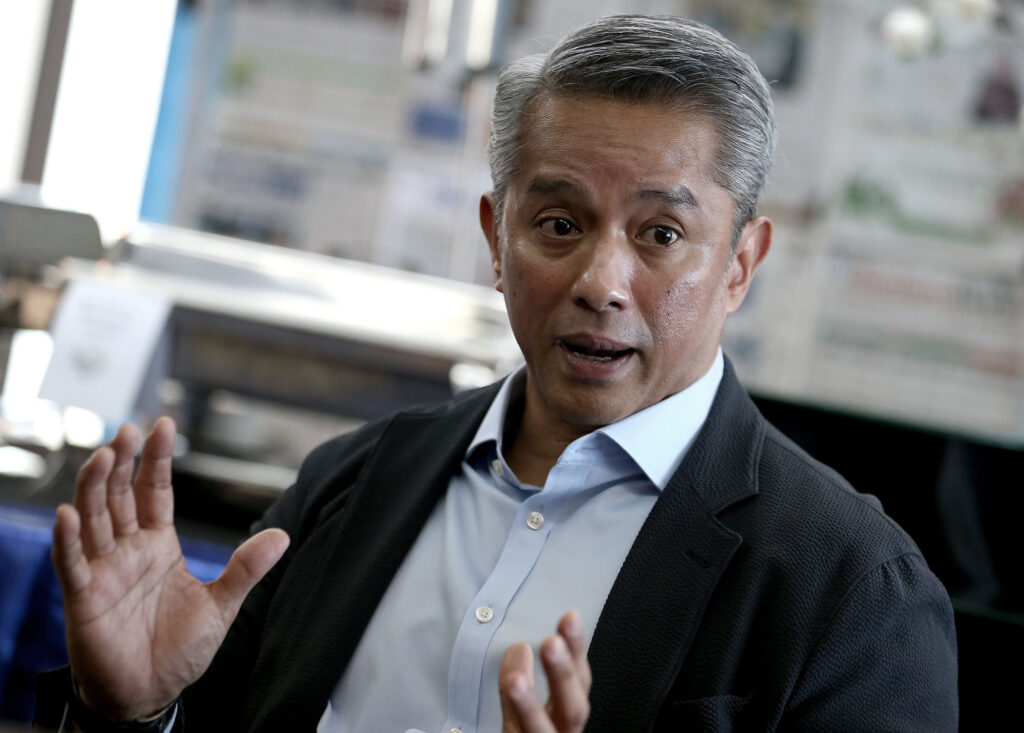
BAGUIO CITY, Philippines — Interior and Local Government Secretary Jonvic Remulla has given Urdaneta City Mayor Julio Parayno III and Vice Mayor Jimmy Parayno ten days to comply with their suspension order, which was issued last month. Speaking at a press briefing in Baguio on Wednesday, Remulla confirmed the deadline, saying, “I give them 10 days [from Wednesday].” He was in the city to meet with officials and barangay leaders from Baguio and Benguet ahead of the midterm elections on May 12. The suspension order, issued by Executive Secretary Lucas Bersamin on Jan. 3, found the Paraynos guilty of grave misconduct and abuse of authority over their removal of the Liga ng mga Barangay president from the city council in 2022. However, the two officials have refused to vacate their positions, prompting the Department of the Interior and Local Government (DILG) to issue a final ultimatum last week. Mayor Parayno argued that he was not properly served the suspension order on Jan. 7, as he was on an official leave of absence at the time. He also claimed that the suspension should not take effect during the election period. With no staff members willing to accept the order on his behalf, the DILG instead posted the notice on the doors of both the mayor’s and vice mayor’s offices. On Feb. 4, Mayor Parayno posted a letter from the Commission on Elections (Comelec) on social media, stating that Comelec had not received a request for approval from Malacañang regarding the suspension. According to Comelec regulations, “No public official shall, except upon prior written approval of the Commission, suspend any elective provincial, city, municipal, or barangay officer…from Jan. 12, 2025, to June 11, 2025.” Parayno clarified that “it is not the decision of the suspension itself that is prohibited, but rather the implementation of it without prior approval of the commission.” Although the Office of the President has declared the ruling final and executory, Parayno said they would appeal the decision before the Court of Appeals. During a separate press conference at Camp John Hay, Remulla emphasized his firm stance against “malfeasance”, a principle he upheld as Cavite governor before being appointed DILG chief by President Marcos. He also discussed government efforts to combat vote-buying and election-related offenses, as well as ongoing crackdowns on private armed groups and militias in high-risk areas, including Abra province, Ormoc City, and the Bangsamoro Autonomous Region in Muslim Mindanao.
Malabon Mayor Jeannie Sandoval dominates voter preference in the recent Capstone Survey

A recent survey conducted by Capstone Intel Corporation has revealed an overwhelming endorsement for Malabon Mayor Jeannie Sandoval, with 60 % of respondents indicating their intent to vote for her in the upcoming election, highlighting significant voter confidence in her leadership. UP Professor Guido David, Chief Data Scientist at Capstone, emphasized that the high level of support for Mayor Sandoval reflects not only her past performance but also a critical confidence among voters. “When voters believe in a candidate’s ability to serve, their engagement and decisions at the polls can significantly shape the election’s direction,” David noted. According to David, 91% of the respondents in the survey were voters from the last election and their willingness to vote for Sandoval again can be seen as a reflection of her effective performance in office. “it is clear that their willingness to support Sandoval again reflects their satisfaction with her performance. This highlights how past governance significantly influences future electoral decisions, as constituents tend to favor candidates who have proven their reliability and effectiveness in office.” David said. Capstone Intel Research and Publications Director Kaye Domingo reported that the survey conducted from January 22 to 26, 2025 included 1,200 participants with an equal distribution of sexes. The age distribution was between 18 to 55 years old, with majority being married.Notably, 16.90% of the respondents had resided in their area for 16 to 20 years; 14% had lived in Malabon for 21 to 25 years 13.50% and 13 % had lived 21 to 25 and 26 to 30 years, respectively. Other notable groups included those with 6 to 10 years and 46 and above of residence. The respondents’ educational attainment was fairly distributed, with the largest being college graduates, followed by high school undergraduates. The highest number of respondents were employed followed by those unemployed. When asked about their mayoral preferences, Sandoval is preferred by 60 % while 28 % for Jaye Noel. When respondents were asked about their familiarity with the mayoral candidates, 93% reported being fully familiar with Sandoval, while 51% expressed familiarity with Noel. Respondents cited several reasons for their support of Mayor Sandoval. An impressive 67.30% “ naniniwala sa kanyang adbokasiya” while 55.90% “madaling lapitan” and 55.40% “patunay ng kakayahang maglingkod”. Additionally, 43.40% recognize her “konkretong aksyon sa mga nangangailangan”, and 37.60% commend her “magandang track record” and 29.80% highlighting her “walang bahid ng korapsyon”. When asked about the qualities they desired in a political candidate, a notable 79.60% of respondents expressed a desire for candidates “ nakakapagpatupad ng mga programa at serbisyo” and 51.80% “may karanasan sa pamumuno at marunong rumespeto”. The survey also assessed satisfaction with government services in Malabon, revealing that 45.80% of respondents were “very satisfied” with the available services, while only 2.80% reported being “very dissatisfied.” Respondents specifically acknowledged the effectiveness of key services, such as medical assistance and health services, financial assistance/ayuda, educational assistance; disaster relief, emergency response, job assistance and livelihood opportunities, assistance to seniors, community programs and activities and security and peacekeeping efforts. Domingo explained that the polling data indicates that residents have noticed tangible improvements in areas such as health access, education and public safety, contributing to a sense of optimism about the future of Malabon.
Shut up! Makati court issues gag order vs Tessa Prieto-Valdes

The Makati Regional Trial Court Branch 144 has issued a gag order against Tessa Prieto-Valdes, prohibiting her from making public statements about the case she filed against her ex-girlfriend, Angel Chua, with the Makati Prosecutor’s Office. The order follows an urgent motion by Atty. Alexander Llanes Acain Jr., citing Prieto’s violations of the sub judice rule, which restricts public comments on ongoing judicial proceedings to preserve their integrity. The ruling comes after Prieto participated in an online interview with journalist Joan Maglipon, where she made public comments related to the merits of her case. These statements were widely shared on February 10, 2025, across the online platform and social media accounts of Pep.ph. The enforcement of this gag order aims to ensure a fair and impartial judicial process as the case progresses. Chua, from a prominent and well-respected Chinese family, expressed her support for the gag order, stating it will protect her from harassment and misinformation. Such orders, she added, prevent what she described as “diarrhea of the mouth” in media, urging focus on more pressing national issues rather than personal disputes best handled in court. Atty. Acain also emphasized the necessity of the gag order, saying that it ensures a fair legal process, free from public speculation and undue influence.
PhilHealth Enhances Z Benefit Package for Peritoneal Dialysis

The Philippine Health Insurance Corporation (PhilHealth) has significantly improved its Z Benefit Package for Peritoneal Dialysis (PD), with separate packages for adult and pediatric patients, effective January 1, 2025. This update follows President Ferdinand R. Marcos Jr.’s commitment to expanding healthcare benefits despite the absence of a subsidy. Peritoneal dialysis, as explained by the National Kidney and Transplant Institute, is a type of renal replacement therapy (RRT) in which the patient’s peritoneal membrane, which lines the abdominal organs, serves as an artificial kidney. The updated PD package now includes coverage for different treatment methods depending on the patient’s age. For adults, PhilHealth covers Continuous Ambulatory Peritoneal Dialysis (CAPD), while for younger patients, both CAPD and Automated Peritoneal Dialysis (APD) are covered. “We want to encourage the availment of peritoneal dialysis as a first line modality treatment for patients with Chronic Kidney Disease Stage 5,” said PhilHealth President and CEO Emmanuel R. Ledesma, Jr. “PhilHealth wants to push this as an option apart from hemodialysis, not just to give autonomy and flexibility to our members in choosing the treatment modality, but also to promote quality of life and mobility of patients,” he added. For adult patients, coverage for peritoneal dialysis ranges from P389,640 to P510,140, depending on the daily requirement for PD solution. Previously, the coverage was set at P270,000 annually. For pediatric patients, benefits for CAPD range from P510,000 to P765,210, while APD coverage is between P763,000 and P1.2 million. PhilHealth also covers prevention and treatment of exit site infections and peritonitis, along with other necessary services such as catheter insertion, outpatient care for PD-related peritonitis, and diagnostic tests and medications for both adult and pediatric patients. Under PhilHealth Circular No. 2024-0036, patients with Chronic Kidney Disease Stage 5 must be registered in the PhilHealth Dialysis Database and comply with the eligibility guidelines to avail of this RRT. Patients must follow their treatment plan and attend all follow-up visits. The sharing, selling, or distribution of PD solutions is prohibited. Additionally, contracted health providers or facilities cannot charge co-payments for essential services covered by the package. However, co-payments may apply for services not included in the essential benefits. Providers are required to clearly inform patients about any additional co-payments. The enhanced PD Z Benefits are available at any of the 51 contracted PD providers nationwide, with the full list available on www.philhealth.gov.ph. Vicente Sotto Memorial Medical Center in Cebu City and Cebu South Medical Center in Talisay City are among the contracted Z Benefit Providers for Peritoneal Dialysis in Central Visayas. For more information, members may contact the 24/7 hotlines: (02) 866-225-88 or mobile numbers 0998-857-2957, 0968-865-4670, 0917-1275987, or 0917-1109812.
Romualdez Promises Quick Action on Wage Hike Bill
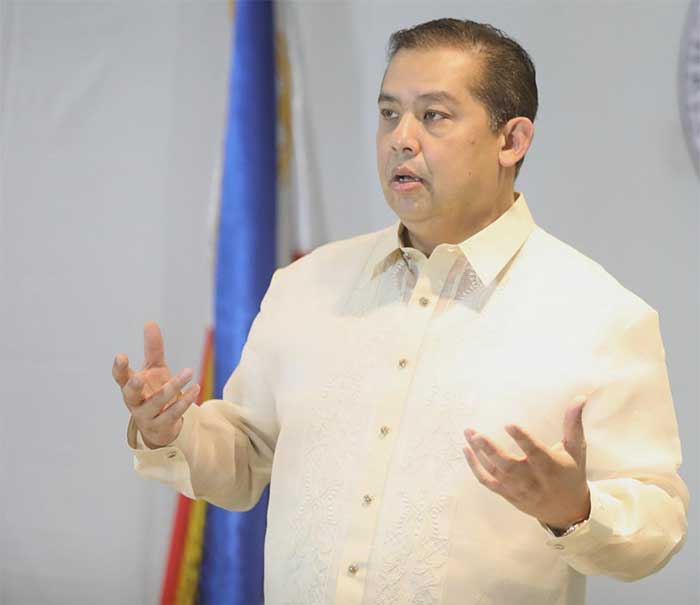
MANILA, Philippines — Speaker Martin Romualdez pledged on Wednesday that the House of Representatives would speed up the deliberations on a bill aimed at raising the daily minimum wage, emphasizing the need to strike a balance between workers’ needs and employers’ concerns. Romualdez made this statement after meeting on Tuesday night with labor leaders at the House of Representatives, accompanied by Deputy Speaker Democrito Raymond Mendoza and Assistant Majority Leader Jude Acidre, to discuss the ongoing push for a legislated wage increase. The Leyte congressman revealed that the House is looking into a P200 increase to the daily minimum wage, with the aim of providing financial relief to workers while maintaining the viability of micro, small, and medium enterprises (MSMEs). “This is a critical step toward achieving inclusive growth and addressing the immediate challenges faced by Filipino families,” Romualdez explained. He underscored the urgency of a wage adjustment, noting the rising costs of basic goods and services. Inflation climbed to 2.9 percent in December, up from 2.5 percent in November, mainly driven by higher housing and energy prices, according to the latest data from the Philippine Statistics Authority. Romualdez pointed out that the last legislated wage increase occurred over 30 years ago, under the Wage Rationalization Act of 1989. “If we were able to do this in the past, there is no reason why we cannot do it now, especially with careful planning and collaboration with all sectors,” Romualdez said. Romualdez further noted that, following public consultations, the consensus within the House is that a P200 increase in the daily minimum wage is a viable option. He also highlighted the potential economic benefits of a wage increase, such as boosting household spending, stimulating local economies, and encouraging long-term growth. Romualdez explained that in the Philippines, where consumer spending is a significant part of the country’s GDP, “a wage hike can act as an economic catalyst.” “A well-designed wage hike is not just an immediate solution to help workers cope with inflation, it is an investment in our collective future,” he added. Makabayan bloc lawmakers expressed support for Romualdez’s statement, calling it “a step in the right direction,” but argued that a P200 increase is inadequate, reiterating their proposal for a P750 across-the-board wage hike for private-sector workers to ensure a family living wage. “We welcome any step towards increasing workers’ wages, as this positive development stems from our workers’ persistent demands for a legislated wage increase,” said Assistant Minority Leader Arlene Brosas. Source: P200 wage hike floated after House-labor meet
DOH Backs House Bill to Improve Healthcare System

The Department of Health (DOH) has expressed its support for House Bill 11357, which seeks to enhance the Philippine healthcare system by promoting efficiency, fairness, and improved emergency preparedness. The bill successfully passed its second reading in the House of Representatives on Tuesday. The measure, introduced by House Health Committee chairman Batanes Rep. Ciriaco Gato Jr. and co-authored by 67 other legislators, aims to strengthen healthcare services nationwide. Health Secretary Teodoro Herbosa emphasized President Ferdinand Marcos Jr.’s role in pushing for improvements to the Universal Health Care (UHC) law, noting his experience as a former provincial governor. “His broad national perspective rooted in local government implementation is what inspires the DOH as we actively support both the House of Representatives and the Senate in improving our UHC Act,” Herbosa said. One of the key amendments, proposed by House Appropriations Panel acting chairman Marikina Rep. Stella Luz Quimbo, lowers PhilHealth premium contributions from 5 percent to 3.5 percent. Future adjustments will be determined based on actuarial studies reviewed annually by an independent body approved by Congress. Additionally, migrant workers—both land- and sea-based—will no longer be required to pay PhilHealth premiums. Instead, their employers will cover half of the cost, while the national government will shoulder the remaining amount. The bill also sets a limit on the salaries of PhilHealth officials and employees, capping them at 7.5 percent of the previous year’s total benefit payments rather than 7.5 percent of premium collections. Furthermore, local government units, including component cities and municipalities, will manage their own special health funds under regulations developed by the DOH in coordination with the Department of Budget and Management and the UHC Coordinating Council. To accelerate the implementation of the UHC law, the UHC Coordinating Council—co-chaired by the health and interior and local government secretaries—will oversee its execution at both national and local levels. Source: UHC amendments pass second reading
COMELEC to 2025 bets: Use digital innovation ethically

The Commission on Elections (COMELEC) enjoined candidates and campaign managers to responsibly adopt digital innovation in their campaigns. “Prioritize the truth, transparency and practice ethical campaigning,”Commissioner Rey Bulay emphasized during the National Election Game Changer Summit held in November 2024 at the Marquis Events Place in BGC, Taguig City. “Our electorate deservers no less. Let us prioritize security both online and offline. Protect personal data, guard against hacking, and secure communication channels to ensure the safety of candidates, teams and thne democratic proces,” he added. Bulay highlighted that the rise of technologies like social media and artificial intelligence poses new challenges for the commission. According to him, while these tools are powerful, they can be weaponized to spread misinformation, sway public opinion, and undermine the credibility of elections. “Napakadali pong mag-confuse ng voters sa social media. Yun lamang pong maliin kung saan ang polling place may problema na tayo. Fostering mistrust and dangerous or irreversible errors mean voter disenfranchisement. The antidote is very simple: accurate information for a well-informed electorate. But how do you do it? They should be able to discern fact from fiction,” he explained. Bulay underscored the imporance of fact-checking as a cornerstone of modern election management, urging COMELEC, media organizations, and civil society to foster a culture of verification. “We should be able to flag false content on social platforms and, more importantly, provide accessible, readily available credible sources of information,” he urged. The commissioner reminded the public that COMELEC’s role is not to predict election outcomes but to ensure every vote is cast freely and that voters have access to the truth. “As we stand on the edge of new era in Philippine elections, I ask each one of you to committ to this vision, a vision where technology is used for good. Disinformation is thwarted and the voice of the people is protected and amplified. “With COMELEC leading the way, let us please work togethjer to ensure that the 2025 elections will be remembered for the victory of the voters, of the candidates, of the truth, of transparency and democracy.”