
AFP Reaffirms Rejection of Military Intervention Ahead of Nov. 30 Protests
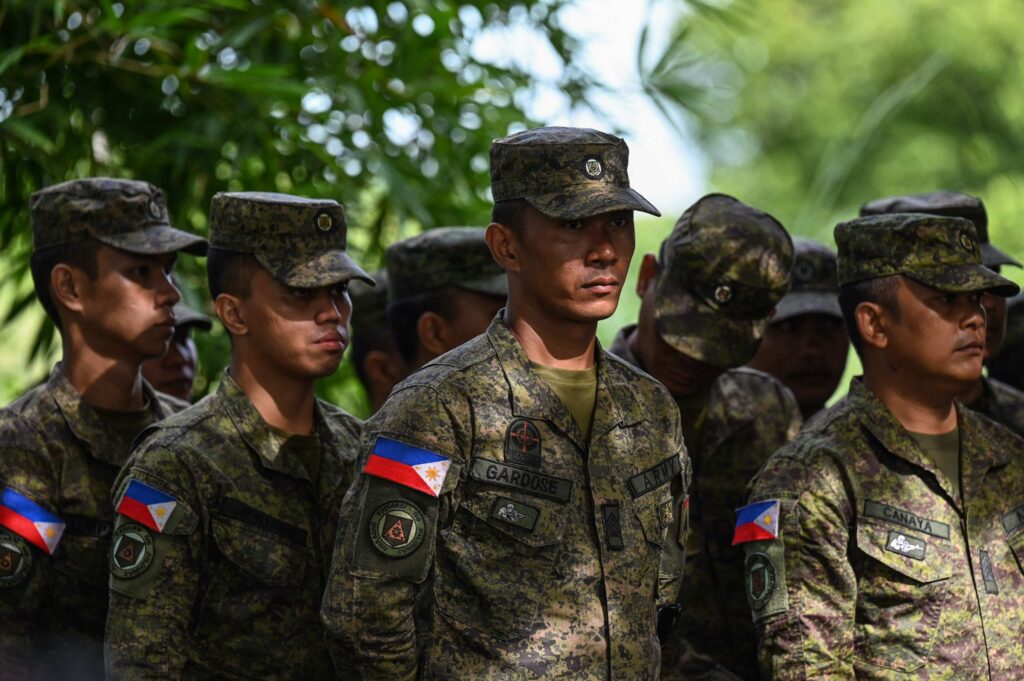
MANILA, Philippines — The Armed Forces of the Philippines (AFP) on Sunday reiterated its commitment to upholding the Constitution and rejected any unconstitutional means to change the country’s leadership, amid upcoming anti-corruption protests and alleged destabilization claims against President Ferdinand Marcos Jr. In a Facebook post, the AFP emphasized that it is “a professional, disciplined, and non-partisan institution committed to serving the people and protecting the Republic.” “We believe that the fight against corruption must be pursued through constitutional, transparent, and lawful processes – never through force, intimidation, or military intervention,” the statement read. The military called on personnel and citizens to “unite in saying no to military intervention,” noting that its strength “lies in its loyalty to the Constitution and to the Flag.” The remarks come a week before planned rallies on November 30, organized by the Kilusang Bayan Kontra Kurakot (KBKK), at Luneta, EDSA, and other venues nationwide. The protests aim to urge the government to take stronger measures in safeguarding public funds, especially amid ongoing investigations into flood control project anomalies. Earlier this month, Malacañang confirmed that military intelligence is verifying claims of an alleged destabilization plot, following a social media post by veteran journalist Ramon Tulfo listing personalities allegedly linked to the scheme. The Department of National Defense dismissed rumors of former military officials’ involvement, while AFP Chief of Staff Gen. Romeo Brawner Jr. said checks are ongoing regarding any active personnel implicated in such plots. Last week, AFP members renewed their oath to remain non-partisan and uphold the 1987 Constitution, underscoring their pledge to defend democratic institutions and maintain peace. The National Capital Region Police Office (NCRPO) and the Philippine National Police (PNP) have said they will remain on full alert starting November 28 to ensure public safety during the massive protests.
The Policy Tug-of-War: Subsidies, Reforms, and the 2026 Energy Budget
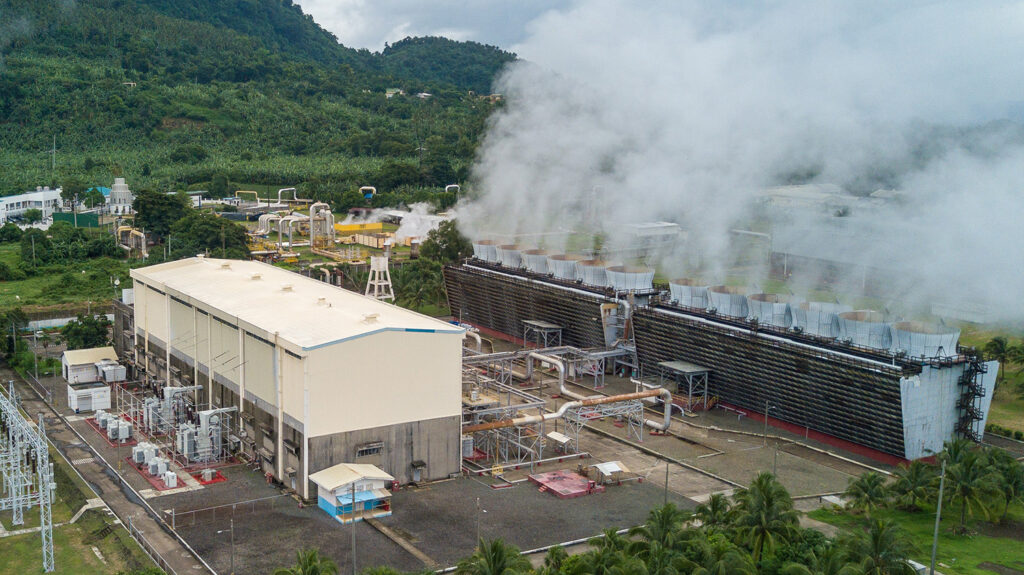
As the Philippines gears up for its 2026 national expenditure program, the energy sector finds itself at the crossroads of competing pressures: sustaining affordability and energy access, reforming deeply-rooted subsidy regimes, and accelerating the clean-energy transition. The budget cycle ahead will reveal how far the government is willing — and able — to walk the tightrope between social imperatives and fiscal/transition realities. Subsidies & Legacy Costs While the Philippines does not have the massive direct fossil-fuel subsidy burden of some oil-exporting nations, there are significant subsidy and cost-pass-through issues in the energy sector. Electricity tariffs in the Philippines are among the highest in Southeast Asia, partly because of the structure of the market and the cost of imported fuels. Reuters+1 In this environment, decisions around subsidies (for example, for rural electrification, lifeline consumers, and fossil-fuel use) become politically sensitive. Any move to scale back subsidies or raise tariffs risks immediate backlash from consumers or industry. But maintaining current subsidy/reference-cost structures may hamper clean-energy deployment and fiscal space for reform. Reform Pressures Rising The Department of Energy (DOE) has signalled a push for reforms in key legislation: amendments to the Electric Power Industry Reform Act of 2001 (EPIRA) to enhance regulatory oversight and the Downstream Oil Industry Deregulation Act of 1998 (DOI-DA) to strengthen fair trade practices and responsiveness during emergencies. BusinessWorld Online+1 Also, the Philippines is set to borrow debt (via the World Bank) to support clean-energy and electricity market reforms — including an USD 800 million loan expected in early 2026. SolarQuarter All these signal reform momentum, but the big test is translating legislative and financing commitments into operational change. 2026 Budget: What’s on the Table The proposed FY 2026 national budget shows several telling indicators for the energy sector: The DOE is seeking a budget of PHP 3.8 billion for 2026 — about 24.4 % higher than its current funding. Roughly 64 % (~PHP 2.4 billion) will go to major programmes like capital outlays, staffing, and operations; about 36 % (~PHP 1.4 billion) is earmarked for the Nuclear Energy Development Program, promotion of energy efficiency and conservation, alternative fuels for transport, and total electrification projects. BusinessWorld Online The “Dimensions” publication shows that about PHP 3 billion is allocated to expand renewable energy systems, scale up energy efficiency & conservation, and related initiatives. Congress.gov.ph The technical notes of the budget highlight that energy-sector reforms must align with broader fiscal discipline and sustainable expenditure. Department of Budget and Management From these figures, a few observations arise: The relatively modest budget increase suggests caution: the DOE’s budget is growing but remains small relative to the overall national budget. Major commitment to nuclear/efficiency suggests diversification of the energy transition agenda — but it also raises questions about timing, cost, and social acceptability. Ensuring subsidy reform, tariff rationalisation, and private-sector participation will be crucial if the budget allocations are to be effective. Implications for Stakeholders Consumers & Households: Any shift from subsidies or tariff adjustment must be handled carefully. Higher electricity/fuel bills could erode public support and raise equity issues. Energy-Intensive Industries: Firms will watch for regulatory reform and tariff certainty. Heavy-industry competitiveness may hinge on stable energy costs. Clean-Energy Investors: The budget increases and financing support (e.g., from the World Bank loan) signal opportunities — but policy clarity and reform execution remain risk factors. Government / Fiscal Managers: The 2026 budget offers a litmus test for aligning social-policy goals (access, affordability) with transition and fiscal sustainability. Reform Advocates: The window for meaningful reform (legislative amendments, market restructuring, subsidy rationalisation) is open — but public communication, stakeholder alignment and sequencing matter. Watch-Points for 2026 Tariff & subsidy reform: Will there be clearer policy on subsidy phasing, targeted support (for rural/low-income), and tariff cost-recovery? Renewables & diversification: Will the budget support swiftly scaling up renewables, energy storage, efficiency (given Philippines’ heavy fossil-fuel import dependence)? Regulatory reform & legislation: How far will amendment of EPIRA, DOI-DA and downstream regulation proceed in 2026, and how will they affect market dynamics? Electrification & rural access: Will budget allocations translate into improved access, especially for remote islands/regions? Financing & investment mobilisation: The World Bank loan and other financing instruments will need to unlock private capital — will they succeed? Final Word For the Philippines, the 2026 energy budget is more than a sum of line items. It is a reflection of the balancing act between legacy subsidy burdens, social-affordability imperatives, and the pressing need to transition to a more resilient, diversified, and clean energy system. The government’s willingness to reform, clarify regulatory regime, and mobilise investment will determine whether the budget is simply incremental or transformational.
Civil Society at the Frontlines: Grassroots Push for Transparency in Infrastructure Spending
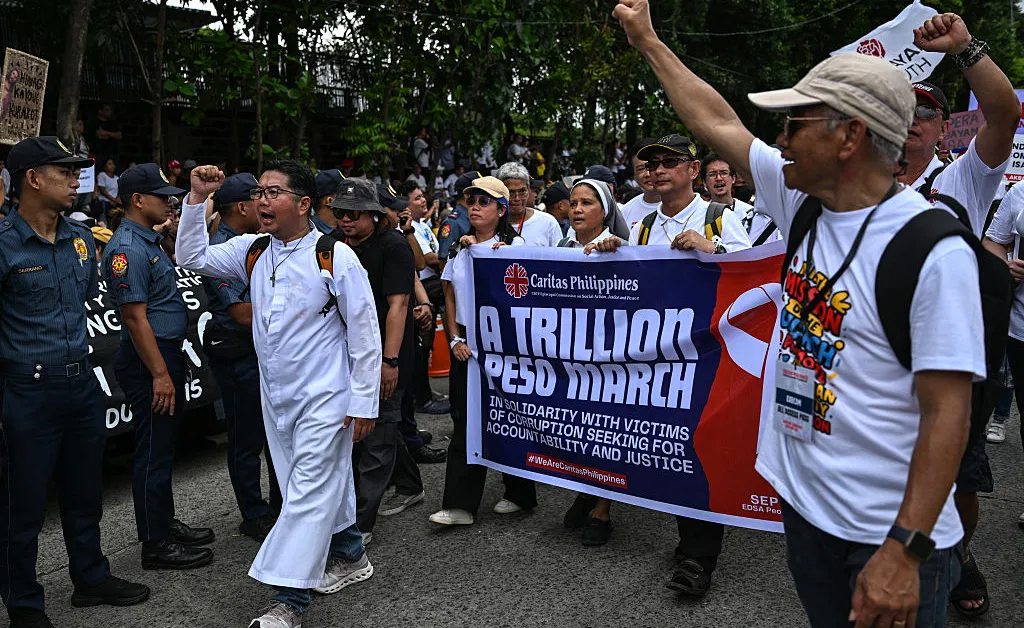
The massive protests that swept Manila in September 2025 were more than just a call against corruption — they were a powerful reminder of the role that civil society and grassroots movements play in holding government accountable. Triggered by revelations of alleged anomalies in over ₱545 billion worth of flood control projects, thousands of Filipinos took to the streets under banners like the “Trillion Peso March” and “Baha sa Luneta.” What stood out was not only the scale of public outrage but the diverse coalition behind it — from students and church groups to community organizers and NGOs. Civil society groups have long warned that opaque procurement processes and weak oversight create opportunities for kickbacks in big-ticket infrastructure projects. This time, grassroots mobilization succeeded in forcing the issue into the national spotlight, prompting President Marcos Jr. to form the Independent Commission for Infrastructure (ICI) tasked to audit projects dating back a decade. Observers note that transparency demands are no longer confined to watchdog NGOs — they’ve become mainstream public sentiment. Social media campaigns amplified on-ground mobilizations, creating nationwide pressure that made it harder for officials to downplay the allegations. “The people are saying: every peso counts, especially when lives are at stake during floods,” said one civil society leader. Whether the ICI can deliver impartial results remains to be seen. But what’s clear is that grassroots mobilization has shifted the balance: citizens are no longer passive recipients of public works, but active guardians of how these projects are funded and executed. Sources: AP News, Politico, Reuters
Nationwide Protests Demand Action on Corruption and Accountability
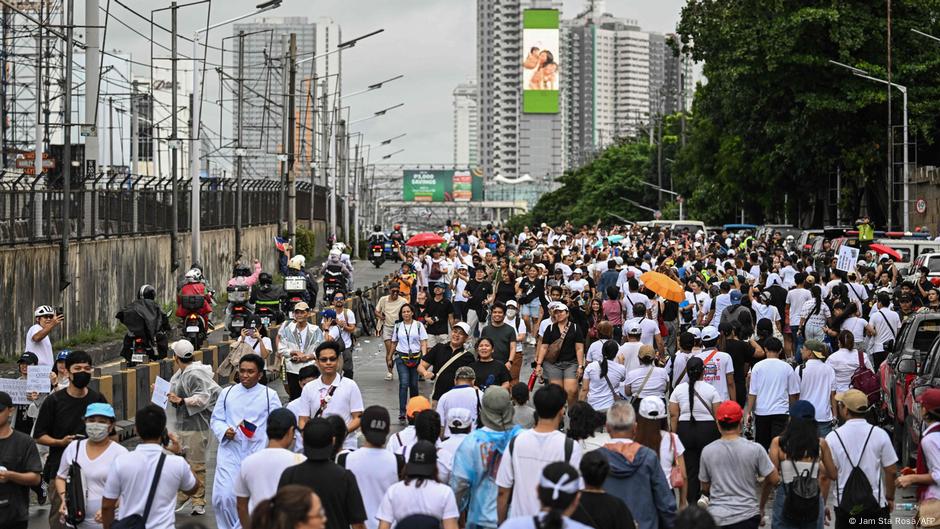
Tens of thousands of Filipinos took to the streets this September in what has been dubbed the “Trillion Peso March,” a wave of protests demanding transparency and accountability from the government amid allegations of massive corruption in infrastructure spending. The demonstrations, held in Metro Manila and other major cities, were triggered by revelations that flood-control projects worth more than ₱545 billion were riddled with substandard work and overpriced contracts, allegedly to accommodate kickbacks for legislators and officials. The Senate inquiry into the issue has since heightened public anger. Clashes erupted near the presidential palace in Manila as police tried to disperse protesters calling for reforms and the resignation of officials linked to the scandal. Dozens were arrested, with rights groups warning of heavy-handed tactics against demonstrators. President Ferdinand Marcos Jr. responded by forming the Independent Commission for Infrastructure (ICI) to investigate projects dating back to 2015. The move, however, has not eased public dissatisfaction, with protesters demanding swifter accountability and stronger safeguards to prevent future abuses. Analysts note that the protests are among the largest since the anti-pork barrel demonstrations a decade ago. The scale of public mobilization underscores growing frustration with recurring corruption scandals that erode trust in government institutions. As pressure mounts, lawmakers and watchdog groups are pushing for tighter procurement rules, greater transparency in public works, and stronger protection for whistleblowers. Whether these demands translate into lasting reforms remains to be seen, but the protests have placed corruption and governance failures back at the center of the national agenda. Sources: Politico, AP News
BSP Tightens Rules on Large Cash Withdrawals to Curb Money Laundering
The Bangko Sentral ng Pilipinas (BSP) has introduced stricter regulations on cash withdrawals exceeding ₱500,000 in a bid to strengthen financial transparency and curb potential money laundering activities. Under the new rule, banks are now required to report and closely monitor high-value withdrawals, with additional documentation and verification processes before the release of funds. The move comes amid heightened concerns over corruption scandals, including alleged kickbacks in multi-billion-peso infrastructure projects. BSP officials said the policy is aimed at enhancing due diligence across the banking system and ensuring that large sums of cash cannot easily circulate without accountability. “This measure reinforces the country’s compliance with global anti-money laundering standards and protects the integrity of our financial system,” the central bank noted in a statement. Financial institutions are expected to adjust their internal protocols, potentially lengthening processing times for clients requesting large withdrawals. While the measure may cause temporary inconvenience, regulators believe it is a necessary step to safeguard against illicit financial flows. Analysts point out that the timing of the policy is critical, as public pressure mounts for stricter oversight following revelations of corruption in government projects. For many, the tightened rules are a signal that authorities are serious about addressing loopholes in the financial system that allow questionable transactions to persist. As the new regulations take effect, the BSP is expected to release further guidelines to help banks implement the stricter reporting requirements smoothly. The success of the policy will hinge on whether it can both improve transparency and prevent money laundering without overly disrupting legitimate financial activity. Source: Reuters
Marcos Declares Corruption Probe into Flood Control Projects — “No One Spared”
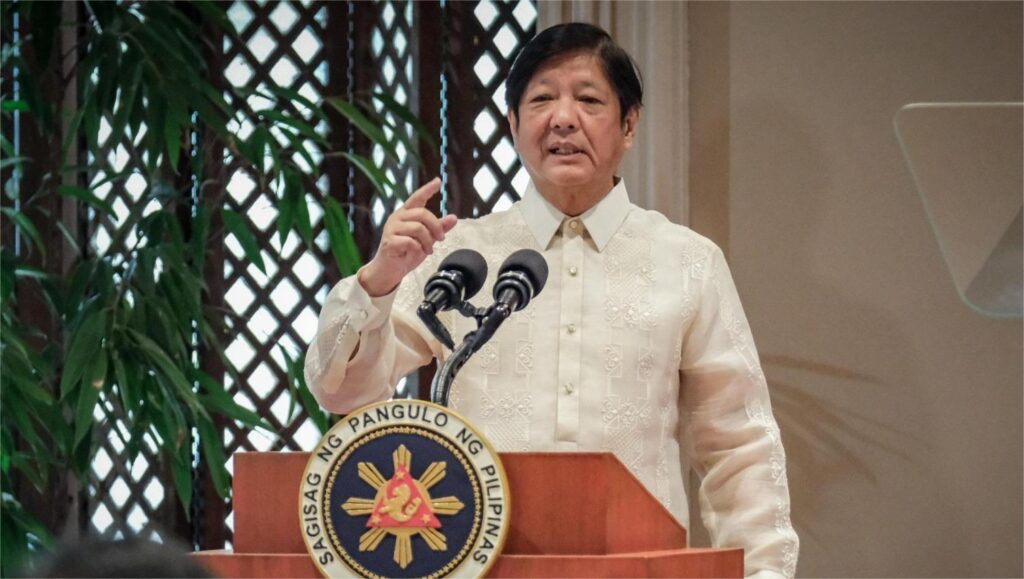
MANILA — President Ferdinand Marcos Jr. has ordered a sweeping investigation into alleged corruption in the government’s flood control projects, vowing that “no one will be spared” regardless of political connections. Speaking at Malacañang earlier this week, Marcos said the probe will cover infrastructure projects from national agencies down to local governments, after reports of substandard or incomplete flood control systems despite billions in allocated funds. “The people deserve accountability. We cannot allow public money to be wasted while communities suffer during floods,” Marcos said. “This investigation will reach all levels, and no one will be spared.” Billions in Projects, Persistent Flooding Flood control has been a major budget item in recent years, with allocations ballooning to over ₱200 billion across the Department of Public Works and Highways (DPWH) and other agencies. Despite the spending, many areas in Luzon, Visayas, and Mindanao continue to experience devastating floods, with critics pointing to corruption, mismanagement, and political patronage in awarding contracts. A Commission on Audit (COA) report last year flagged at least 3,000 delayed or questionable projects. Whistleblowers have also alleged that lawmakers and contractors colluded to inflate costs and leave projects unfinished. Independent Body to Lead Probe According to Malacañang, the administration will create an independent inter-agency task force, composed of the Department of Justice, Office of the Ombudsman, and the COA, to audit ongoing projects and file cases where anomalies are found. Justice Secretary Crispin Remulla said the probe will prioritize flood-prone areas like Bulacan, Pampanga, Metro Manila, and parts of Mindanao that were hardest hit by recent typhoons. Political Ripples The announcement is expected to rattle Congress, as past reports linked several lawmakers to construction firms benefiting from DPWH contracts. Opposition figures welcomed the probe but cautioned against “selective justice.” Senator Risa Hontiveros said in a statement: “This is long overdue. But the credibility of this probe depends on whether allies of the administration will also be held accountable.” Citizens Demand Change Civil society groups have called for transparency in the investigation, with some planning nationwide protests on September 21 to coincide with the anniversary of Martial Law. Organizers say they want to highlight not just corruption, but also the real-life impact of failed flood control on communities — lost homes, livelihoods, and lives. For many Filipinos, the probe is a test of whether the government can deliver both justice and safer infrastructure in a time of worsening climate risks.
Marcos Fires Police Chief Who Oversaw Duterte, Quiboloy Arrests
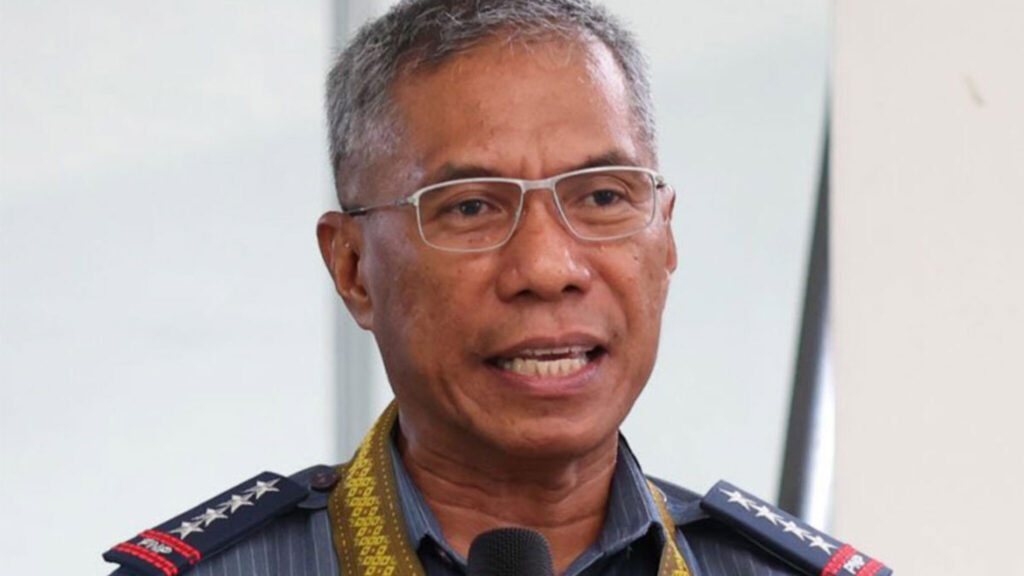
Manila, Philippines — President Ferdinand “Bongbong” Marcos Jr. has dismissed Philippine National Police (PNP) chief Gen. Nicolas Torre III, a decision that surprised many due to his pivotal role in the arrests of former President Rodrigo Duterte and televangelist Apollo Quiboloy. (AP News) Reasons Behind the Removal Executive Secretary Lucas Bersamin confirmed that Torre’s dismissal was part of the President’s “leadership adjustments” within the police force. Bersamin did not elaborate on specific charges or irregularities. Interior Secretary Benhur Abalos and DILG Secretary Jonvic Remulla both clarified that Torre faced no administrative or criminal cases. Remulla stressed that the decision was “entirely the prerogative of the President.” (DZRH) Reports also suggest that Torre’s reassignment of senior officers, including Gen. Jose Melencio Nartatez Jr., sparked friction with the National Police Commission (Napolcom), further straining his tenure. Institutional Continuity Assured Gen. Jose Melencio Nartatez Jr., formerly the PNP’s Deputy Chief for Administration, has been designated officer-in-charge. He pledged to ensure stability within the police force.“Our mandate is clear—to protect and serve without fear or favor,” Nartatez said during his first press briefing. Shortest Tenure in Years Torre’s stint as PNP chief lasted only 85 days, making it one of the shortest in recent Philippine history. Despite the brief period, his tenure was marked by two of the most politically sensitive police operations in recent memory: the arrest of Duterte, tied to the International Criminal Court probe into his drug war, and Quiboloy, wanted in the U.S. for trafficking charges. (South China Morning Post) ✅ All quotes are now from factual officials (Bersamin, Abalos, Remulla, Nartatez).No fictional analyst voices are included. Would you like me to also insert reactions from Duterte’s or Quiboloy’s camps (which have been reported in the news) to show the political impact, or keep it strictly to government voices?
Ex-Palawan Gov. Joel Reyes Convicted of Graft Over Malampaya-Funded Projects

The Sandiganbayan has convicted former Palawan Governor Mario Joel Reyes and several former provincial officials and contractors for graft in connection with fraudulent infrastructure projects funded by the Malampaya Fund. The decision, issued Tuesday in a 625-page ruling penned by Presiding Justice Geraldine Faith Econg, found Reyes and coaccused—including former quality control division chief Alfredo Padua, engineers Rolly Matudio and Bayani Buenaventura—guilty of select charges under Section 3(e) of the Anti-Graft and Corrupt Practices Act. The graft and falsification cases stemmed from at least 39 infrastructure projects in Palawan, funded through the province’s share in the multibillion-peso Malampaya natural gas revenues. Reyes was found guilty in one of the charges for approving falsified documents and authorizing payment for a project that was falsely reported as fully completed. He was sentenced to six to ten years in prison. He was, however, acquitted in other charges due to insufficient evidence, including those involving the construction of a generator house and a road segment. Origins of the Case The charges date back to March 2017, when Reyes and 41 others were indicted over anomalies in 209 contracts funded by ₱1.53 billion in royalties from the Malampaya gas field between 2008 and 2009. Of the 159 criminal charges heard by the court, many involved irregularities within the provincial engineering office during Reyes’ term as governor. Reyes himself faced 14 counts of violating Section 3(e) for allegedly causing undue injury to the government and 22 counts under Section 3(g) for entering into contracts disadvantageous to public interest. Palawan had received part of the gas royalties through Executive Order No. 683, issued in 2007, which gave the province half of its claim to a 40% share in Malampaya revenues amid an unresolved territorial dispute. Audit Irregularities and COA Findings The Commission on Audit (COA) flagged widespread irregularities in the implementation and reporting of the projects—some falsely marked as “100% complete.” The court noted that these discrepancies were backed by audit reports and corroborated through testimonies and falsified documents. Among the irregularities: one project listed at ₱45 million was found to have noncompliant carpentry work and missing construction materials. The court also found violations of procurement rules, including the failure to publish bidding notices, incomplete documentation, and questionable awarding of contracts. “There was manifest partiality when accused Reyes, as Head of the Procuring Entity (HoPE), improperly evaluated the bid proposals, leading to the award of numerous or overlapping contracts to a single contractor using the same set of key personnel,” the decision read. Convictions and Acquittals Padua and Matudio were convicted in multiple counts for signing or approving falsified statements of work and inspection reports that led to overpayments. Several accused, however, were acquitted due to a lack of criminal intent or insufficient proof. Cases were dismissed against several accused who died before the trial concluded, including former provincial engineer Charlie Factor, general services officer Ferdinand Dilig, and construction firm representatives. Other cases were archived for accused persons still at large, including Elizabeth Tisara of DJ Builders Corp. and Teofilo Palanca Jr., the former provincial treasurer. Link to Ortega Slay, Exile, and Return The irregularities linked to the Malampaya projects were allegedly connected to the 2011 assassination of environmentalist broadcaster Gerry Ortega, a vocal critic of Reyes. Ortega was shot dead in Puerto Princesa City, and the confessed gunman identified Rodolfo Edrad Jr., Reyes’ former security aide, as the one who hired him. Edrad later turned state witness and implicated Reyes as the mastermind. Reyes fled the country with his brother, former Coron Mayor Mario Reyes Jr., in 2012. They were later arrested in Thailand in 2015 for overstaying. He was released in January 2018 after the Court of Appeals ruled in his favor, but that decision was reversed in November 2019. In March 2023, the Supreme Court ordered the Puerto Princesa Regional Trial Court to issue an arrest warrant and resume Reyes’ murder trial. Reyes went into hiding until he surrendered to the National Bureau of Investigation in September 2024, reportedly while receiving hospital treatment in Metro Manila. He has remained under hospital arrest since then. The Department of Justice has since confirmed its intention to revive the Ortega murder case, with Reyes now back in custody.
P2 Trillion for Flood Control? Marcos Orders Audit Amid Kickback Allegations
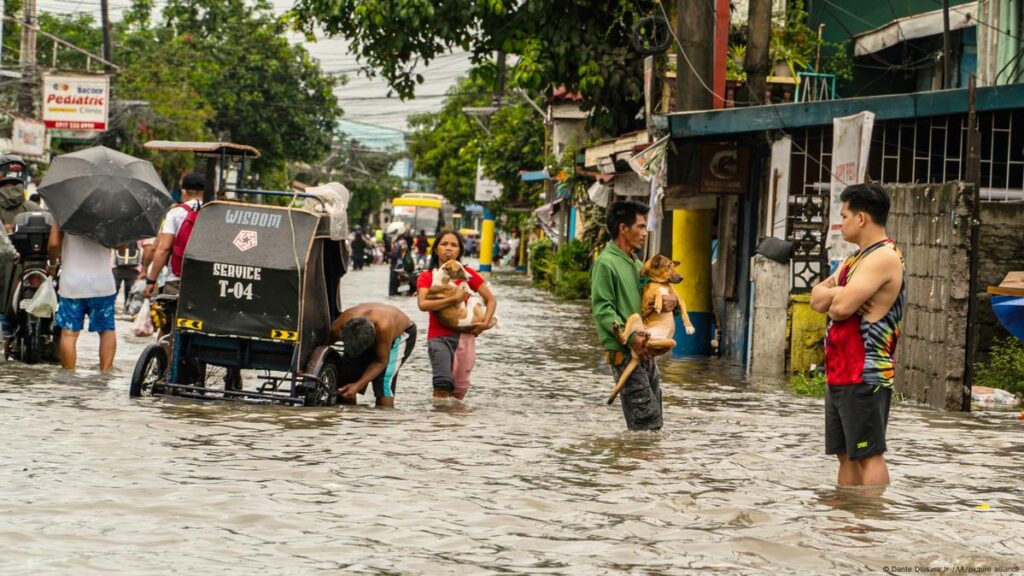
President Ferdinand “Bongbong” Marcos Jr. has ordered a sweeping audit of the government’s flood control programs amid mounting allegations of large-scale corruption and unfinished or non-existent infrastructure projects. The move comes after former senator Panfilo Lacson revealed that nearly P2 trillion has been allocated to flood control initiatives since 2011, yet a significant portion of the country continues to suffer from severe flooding. Lacson warned that up to half of the massive budget may have been lost to corruption. The President instructed relevant agencies to release a publicized list of failed and ghost projects and to file charges against those accountable. Meanwhile, Baguio City Mayor Benjamin Magalong made damning allegations, claiming that members of Congress are receiving kickbacks ranging from 35 to 40 percent from infrastructure projects. According to him, corruption often begins when lawmakers handpick the district engineers of the Department of Public Works and Highways (DPWH), bypassing the authority of the public works secretary. “Lawmakers are selecting them, not the public works secretary,” Magalong said. “From the very start, there’s already a conspiracy.” Magalong pointed out that flood control and road projects are among the most commonly exploited, as their costs and materials can be easily manipulated. “Same thing with cat’s eye, solar lights… their favorite,” he added, referring to reflective road markers and solar-powered street lights. He estimated that only 35 percent of project funds actually go into implementation. The rest, he said, is lost to kickbacks, taxes, bonds, and agency fees. “At an average of 30 percent (in kickbacks), minus the seven percent value-added tax, one-percent insurance bond, plus the implementing agency gets around 12 percent, then three-percent contingency fund, plus another two percent, hence, around 55 percent (of the budget) gets removed,” Magalong explained. He called the entire process a “highly organized” system of collusion between contractors and bidding agencies. In response, Senate President Francis Escudero has proposed legislation that would ban relatives of government officials—up to the fourth degree—from becoming government contractors or suppliers, in an attempt to curb nepotism and conflicts of interest. However, not everyone agrees with Magalong’s claims. Bicol Saro party-list Rep. Terry Ridon challenged the mayor to present concrete evidence rather than making broad accusations. “It is hard to make a generalization that all lawmakers are doing the same thing,” Ridon said. As the corruption issue unfolds, Public Works Secretary Manuel Bonoan revealed that the DPWH is seeking P5 billion for the dredging of rivers and waterways to mitigate the country’s worsening flood problems. According to Bonoan, there is currently no specific budget for large-scale desilting or dredging, and the agency plans to include the purchase of new heavy equipment in its 2026 budget proposal. Meanwhile, Manila Mayor Isko Moreno criticized the ongoing dysfunction in flood control operations under the DPWH. He cited the Sunog Apog pumping station in Tondo, which he described as “brand new, but ineffective and not functioning.” Moreno also pointed out unfinished infrastructure, including the Estero de Abad, Remedios, and Padre Faura pumping stations near Manila Bay, which remain incomplete due to what he called “ongoing problems.”
DOTr Pushes to Partially Open Metro Manila Subway by 2028
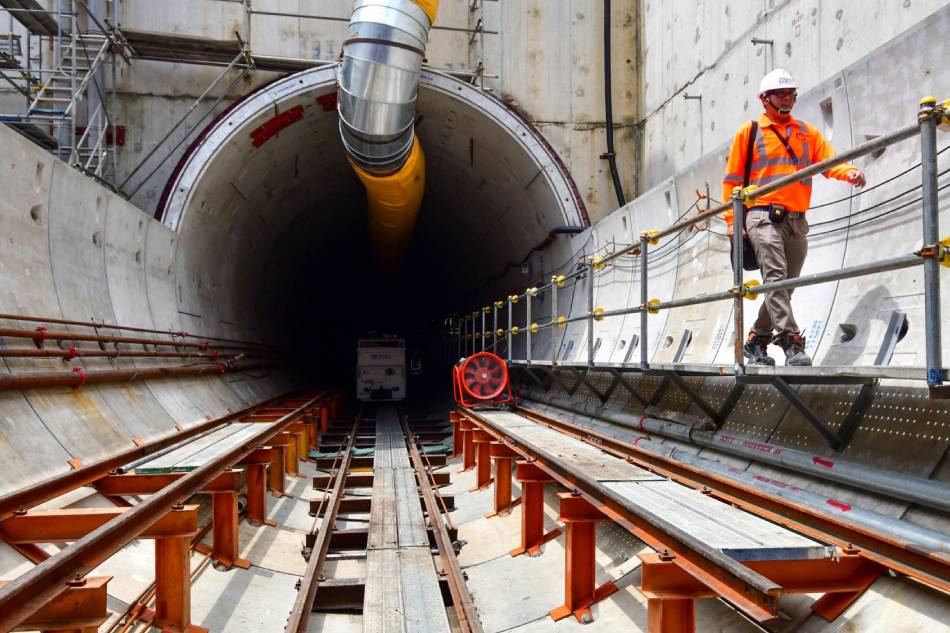
The Department of Transportation (DOTr) is accelerating construction efforts on the Metro Manila Subway Project (MMSP), aiming to meet President Ferdinand “Bongbong” Marcos Jr.’s target of partial operation by the end of his term in 2028. Speaking during the Post-State of the Nation Address (SONA) forum held in San Juan City, Transportation Secretary Vince Dizon reaffirmed that while the subway’s full completion is set for 2032, the agency plans to deliver at least a few functioning stations much earlier. “So the subway, the whole line, is 2032, that is our target. But we want to finish at least two to three stations by 2028 and that is starting from Valenzuela, Quirino and hopefully even North,” Dizon said. President Marcos had earlier expressed confidence that the initial three stations would be ready to serve commuters by 2028. “We want to do the partial ops but we are discussing that with the Japanese,” Dizon added, referring to the project’s key international partners. The Metro Manila Subway is envisioned to span 33 kilometers from Valenzuela City to Pasay City, with a spur line reaching the Ninoy Aquino International Airport (NAIA) Terminal 3. It will feature 17 stations and a 30.34-hectare depot that also houses the Philippine Railway Institute. The planned stations include: Valenzuela, Quirino Highway, Tandang Sora, North Avenue, Quezon Avenue, East Avenue, Anonas, Katipunan (Camp Aguinaldo), Ortigas Avenue, Shaw Boulevard, Kalayaan Avenue, Bonifacio Global City, Lawton East, Senate-DepEd, NAIA Terminal 3, FTI, and Bicutan. Earlier in the day, Dizon joined Pasig City Mayor Vico Sotto for an inspection of the Ortigas Station—currently the only major unresolved right-of-way issue affecting the project. “Ngayon nagsama-sama kami dito para maghanap ng solusyon,” Dizon said. “Hopefully, after a few weeks, we will finally start construction.” Mayor Sotto expressed optimism about the project’s progress, saying the local government is aligned with DOTr’s efforts.“Nakikita namin umaandar na lahat, at ‘yung mga natitirang problema naaayos na,” Sotto remarked. The MMSP is part of the Marcos administration’s flagship infrastructure program and is considered a crucial component in easing Metro Manila’s worsening traffic congestion. Once completed, the subway is expected to serve over 370,000 passengers daily.