
Philippines Eyes $800-Million World Bank Loan for Clean Energy, Water Reforms
The Philippine government is moving to finalize a USD 800 million loan from the World Bank aimed at accelerating the country’s energy transition and strengthening water governance. According to the Department of Finance, the program — formally called the Second Energy Transition and Climate Resilience Development Policy Loan (DPL2) — will support policy and institutional reforms that promote clean energy investments, modernize the electricity market, and improve water resource management. The financing is part of Manila’s broader strategy to cut greenhouse gas emissions, meet its renewable energy targets, and bolster resilience against climate change. The World Bank noted that the package will also improve energy affordability and reliability by encouraging competition and efficiency in the power sector. Energy officials highlighted that the loan will help scale up solar, wind, and hydropower projects, while providing support for grid modernization and energy storage technologies. On the water side, reforms will focus on better governance, sustainable allocation, and expanded access for underserved communities. “This initiative is not just about financing projects — it’s about laying down a policy framework that ensures long-term resilience,” the DOF said in a statement. The move comes as the Philippines faces dual challenges: climate-driven disasters that frequently disrupt power and water services, and rising electricity costs that burden households. The World Bank package is expected to ease fiscal pressures while accelerating reforms needed to align with the country’s climate commitments. If approved, the $800-million DPL2 will be disbursed in tranches over the coming years, contingent on progress in implementing the agreed reforms. Source: SolarQuarter
Alternergy Expands Wind Portfolio with Quezon Projects Acquisition
Alternergy Holdings Corp. is ramping up its renewable energy portfolio after acquiring majority stakes in two wind farm projects in Quezon province from CleanTech Global Renewables Inc. The deal covers the 96-megawatt Tayabas North and the 150-megawatt Tayabas South wind projects, including their assets, permits, and development contracts. CleanTech will retain an equity stake in the ventures and may reinvest further as co-developer. According to Alternergy, the transaction marks a strategic expansion of its pipeline beyond its first 500 MW of projects already in the works. Mabuhay Capital served as financial advisor for the deal. The transfer of ownership is still subject to approval by the Department of Energy (DOE). Tayabas North has already secured a slot under the government’s 4th Green Energy Auction, while the Tayabas South project’s progress will depend on landing an offtake agreement with buyers. Industry watchers note that these projects could help the Philippines inch closer to its renewable energy targets, but challenges remain. Grid integration, financing risks, and timely regulatory approvals will determine whether Alternergy can deliver on its timetable. Local stakeholders in Quezon are also watching closely. Large-scale wind projects promise jobs and investment in host communities, but they also bring questions on land use, environmental safeguards, and long-term social impact. For Alternergy, the move highlights how acquisitions and partnerships are becoming essential tools for scaling up renewables in the Philippines. Whether these projects can translate into operational capacity within the decade will test not only the company’s strategy but also the country’s regulatory and infrastructure readiness. Sources: Philstar, BusinessMirror
Philippines Switches On First Agrivoltaic Solar Complex with 320 MWh Battery Storage
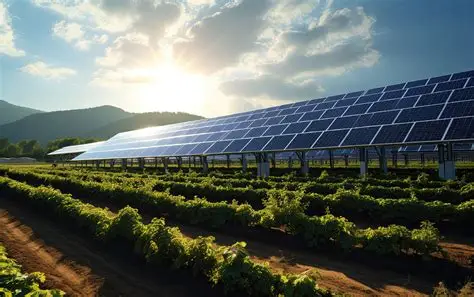
Batangas, Philippines — The country has taken a major step toward its renewable energy transition as Citicore Renewable Energy Corporation (CREC) inaugurated the Batangas 1 agrivoltaic solar complex, a landmark project combining large-scale solar generation with advanced battery storage and integrated agriculture. The facility, located across Barangays Lumbangan and Luntal in Tuy, Batangas, boasts 197 megawatts-peak (MWp) of solar capacity paired with a 320 megawatt-hour (MWh) battery energy storage system (BESS). According to project officials, it will be capable of powering up to 158,000 households while cutting an estimated 265,000 tons of carbon dioxide emissions annually. Power Even Without the Sun Unlike conventional solar farms that only produce during daylight hours, Batangas 1 is billed as the country’s first baseload-capable solar project. Its battery storage system allows electricity to be stored and dispatched at night or during cloudy periods, offering greater stability to the Luzon grid. “This is a game-changer for Philippine energy security. With solar and storage combined, we can now provide clean, reliable power that doesn’t just stop when the sun sets,” CREC executives said during the launch. Agriculture + Solar: The Agrivoltaic Model Batangas 1 also introduces the agrivoltaic model, where farmland is shared between agriculture and solar infrastructure. Crops are cultivated beneath and around the solar arrays, ensuring that the land continues to produce food while generating power. Officials said this approach helps address food security while easing community concerns about land conversion. National Renewable Push The project was inaugurated in the presence of President Ferdinand Marcos Jr., who highlighted the facility as a symbol of the government’s goal of sourcing 50% of the country’s power from renewables by 2040. “Projects like Batangas 1 show that the Philippines is ready to lead Southeast Asia in clean energy innovation. We can meet our people’s energy needs without sacrificing sustainability or growth,” Marcos said in his speech. Financing and Future Projects Backed by both local financing and foreign partnerships, CREC confirmed it is targeting 1 gigawatt (GW) of operational solar capacity by 2026, with similar hybrid projects in the pipeline. The company also sees battery storage as crucial in balancing the country’s energy mix as demand grows and fossil fuel prices remain volatile. Why It Matters The Batangas complex represents more than just a solar farm—it’s a blueprint for the future of Philippine energy, where technology, agriculture, and climate action intersect. For communities, it means cheaper, more stable electricity, new livelihood opportunities, and a cleaner environment. Sources: PV Magazine (Sept. 15, 2025), Power Philippines (Sept. 15, 2025), Philstar (Sept. 16, 2025), Energy-Storage News (Sept. 16, 2025)
DOE Eyes Renewable Energy as Main Power Source by 2035

The Philippines is accelerating its push into renewables, with the Department of Energy (DOE) laying out plans to shift the country’s power mix increasingly toward clean energy sources by 2035. Under its proposed roadmap, renewables won’t just supplement, but potentially become the primary source of electricity as the nation seeks to balance supply security, decarbonization, and economic resilience. What the DOE Plans The new Philippine Energy Plan (PEP) 2023-2050 sets ambitious milestones, including increasing the share of renewable energy in the power generation mix to 35% by 2030, and 50% by 2040. Power Philippines+3Asia Clean Energy Forum+3Asia EEC+3 DOE is also revising its energy roadmap (extending to 2050), which includes phasing down (and eventually moving beyond) coal power while incorporating more geothermal, hydropower, wind (onshore & offshore), and solar energy. Nuclear Business Platform+2Asia Clean Energy Forum+2 There is increasing interest in ancillary technologies like energy storage, grid upgrades, and policies such as Renewable Portfolio Standards, Green Energy Auctions, and easing of foreign ownership constraints to attract investment in renewables. Asia Clean Energy Forum+2Reuters+2 Why 2035 Is a Key Year While the DOE hasn’t (so far in public documents) explicitly declared “renewables 100% by 2035,” the 2035‐2036 period emerges as a turning point in many model scenarios: Many analyses (including from the DOE’s Energy Transition Roadmap) show that capacity and generation from renewables begin to scale significantly after 2030. To achieve 50% by 2040, there must be a strong ramp‐up during the 2030-35 window. Asia Clean Energy Forum+1 The 1.5°C compatible scenario report (by independent analysts) argues that for the Philippines to be aligned with climate goals, it needs to phase out coal by 2035 and expand renewable generation dramatically. CEED Thus, while 2035 isn’t formally codified yet as the date when renewables become the main source, all signs point to that being the target-period when renewables may overtake fossil fuels in importance (depending on policy, investment, and implementation pace). Challenges & Risks Pushing renewables to dominate by 2035 is ambitious. The following issues will need to be addressed: Grid Capacity & StabilityVariable renewables (solar, wind) require upgrades in grid infrastructure, better forecasting, frequency control, storage solutions, and possibly demand‐side management. Without these, intermittency could hamper reliability. Financing & InvestmentMassive financing will be needed—not just for generation capacity but for transmission, storage, and regulatory bodies. Investors will weigh risks such as regulatory delays, permitting, land acquisition, and community pushback. Policy & Regulatory EnvironmentClear, consistent, and enabling policy frameworks are needed—laws, incentives, auctions/dispatch rules, land rights, permitting. Any policy inconsistency could slow down deployment. Social & Environmental ConstraintsLand use conflicts, environmental reviews, biodiversity and conservation issues (especially for large scale solar/wind or hydro) could slow projects. Community acceptance will matter. Energy Security & Transition PathPhasing out coal has implications for baseload power. The transition must ensure reliability—especially in off-grid or unstable grid areas (Mindanao, islands)—and perhaps rely on transitional fuels or backup capacity. What This Would Mean for Consumers / the Economy If the DOE succeeds: Electricity generation costs may stabilize or decline, especially as solar, wind (and geothermal) units reach economies of scale and fossil fuels become more expensive. Dependence on imported coal/oil would drop, improving energy security. Job creation in renewables (construction, O&M, manufacturing), especially in regions where solar/wind/hydro sites are developed. Reduced greenhouse gas emissions, improving compliance with the Philippines’ Nationally Determined Contributions (NDCs) under international climate agreements. Potential for lower electricity tariffs in long run—if costs are managed and regulatory frameworks are efficient. Where Things Stand Now As of 2022-2023, renewables accounted for about 22-29% of installed capacity / generation in the country. Asia Clean Energy Forum+1 The DOE has begun implementing policies (Green Energy Auctions, Renewable Portfolio Standards, easing foreign ownership limits) to attract more investment. Asia Clean Energy Forum+2Reuters+2 Major projects are underway (e.g. large solar farms, wind projects, storage plans) to help meet the 2030 and 2040 targets. Power Philippines+2Asia Clean Energy Forum+2 Bottom Line “Renewable energy as main power source by 2035” may still be more of a goal than an established policy, but the Philippines’ DOE is structuring policies, targets, and investments to make that a realistic possibility. The next 5 years (2025-2030) will be critical: how fast clean energy capacity can be built, policies streamlined, and grid & financing challenges addressed.
Meralco Bills on the Move: What Consumers Can Expect Next Month
Rates in Flux Consumers in Metro Manila and nearby provinces should brace for another possible adjustment in their electricity bills next month, as Meralco signals a shift in rates following changes in the wholesale electricity spot market (WESM) and generation costs. In its latest advisory, Meralco said that generation charges—the biggest component of the monthly bill—remain volatile due to global fuel costs and spot market prices (Philstar, Inquirer). Independent power producers (IPPs) and power supply agreements (PSAs) also add pressure to September’s outlook. Why Rates Rise and Fall Meralco’s billing adjustments typically come from: Generation Costs (≈60% of bill): Based on coal, oil, and natural gas prices passed on from suppliers (ERC). Transmission Charges: Fees set by the National Grid Corporation of the Philippines (NGCP). Taxes & Other Charges: VAT, subsidies, and universal charges mandated by government policies. In August 2025, Meralco hiked rates by ₱0.20 per kWh, citing higher WESM prices and fuel costs from power producers (GMA News). If trends persist, September bills may edge upward again. The Consumer Impact For a household consuming 200 kWh monthly, even a ₱0.20 per kWh increase means an additional ₱40–₱50 per month (Inquirer). While modest on paper, the burden adds to the strain of rising food, fuel, and transport costs. Small businesses and low-income households feel the pinch most, since electricity is a non-negotiable expense. Government and Industry Moves The Energy Regulatory Commission (ERC) says it is closely reviewing rate-setting mechanisms to ensure consumers are protected from excessive pass-through charges (ERC). Meanwhile, the Department of Energy (DOE) argues that accelerating renewable energy integration—such as the thousands of solar, wind, and battery storage projects lined up in 2025—will help reduce reliance on imported fuel in the long term (Daily Guardian). Consumer groups like the Power for People Coalition (P4P) are urging greater transparency in Meralco’s billing breakdowns and stronger government support for energy efficiency programs (Philstar). Looking Ahead Short-term relief remains uncertain. With oil and coal prices still elevated globally, Filipinos will likely face continued monthly swings in power bills. But in the bigger picture, the rollout of renewable energy projects and grid modernization could bring stability within the next decade. For now, households must monitor advisories closely—because each peso per kilowatt-hour counts.
Fuel Costs Soar Again: How End-August Oil Price Hikes Are Hitting Filipino Households
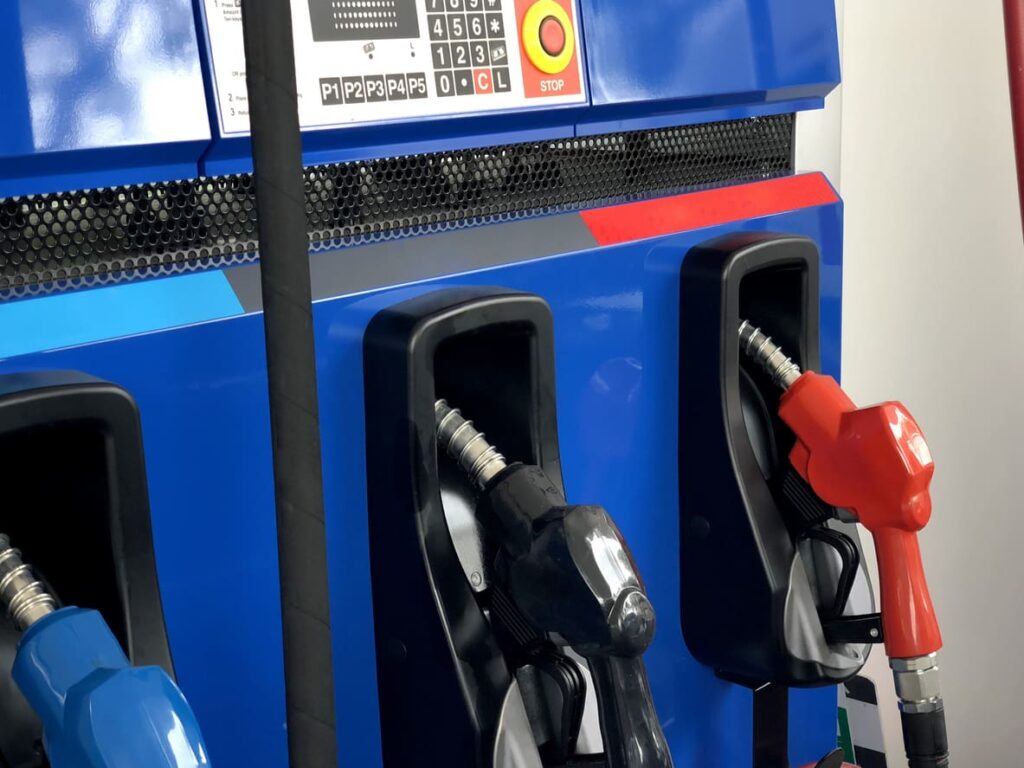
Rising at the Pumps For the second straight week, motorists are greeted with higher pump prices as oil firms announced increases effective August 26, 2025. Gasoline climbed by ₱0.70 per liter, diesel by ₱0.50 per liter, and kerosene by ₱0.30 per liter. This latest adjustment brings year-to-date hikes to ₱10.20/L for gasoline and ₱12.10/L for diesel, according to data from the Department of Energy (DOE). Industry watchers point to global crude supply concerns, OPEC+ output cuts, and geopolitical tensions in the Middle East as the main culprits behind the surge (PhilStar, GMA News). Ripple Effects Across Daily Life The impact of higher fuel costs is not limited to motorists. Jeepney and bus operators, already squeezed by high maintenance costs, are warning of possible fare hike petitions if prices persist. Trucking groups also note that the added burden on logistics may eventually push food and commodity prices higher—further fueling inflationary pressures. For households, this means higher costs of living: Transport: Daily commuters face the threat of rising fares. Food Prices: Supply chain costs may push up the prices of rice, vegetables, and meat. Electricity Bills: Oil-fired power plants, though fewer in number, may still pass costs onto consumers. Economists warn that the latest price uptick could strain household budgets, especially for lower-income families who spend a disproportionate share on transport and food. Government Response Malacañang and the Department of Energy say they are monitoring developments closely. Energy Secretary Raphael Lotilla has called on fuel firms to maintain transparency in pricing, while transport regulators are urging moderation in fare hike petitions. Meanwhile, proposals for a fuel subsidy program for jeepney and tricycle drivers are being revived, though details on funding remain unclear. Bangko Sentral ng Pilipinas (BSP) Governor Eli Remolona also noted that persistent fuel hikes could complicate efforts to stabilize inflation, which has been trending above government targets for much of 2025. Coping Strategies for Households Consumer groups suggest several ways for households to cushion the blow: Shift to ride-sharing or carpooling to save on daily commute costs. Budget adjustments—prioritizing essential expenses while deferring discretionary purchases. Monitoring price advisories to refuel strategically during rollbacks. On a broader level, analysts emphasize that the country’s heavy dependence on imported oil highlights the urgency of accelerating renewable energy projects and expanding mass transport systems. The Bigger Picture The latest fuel price hikes serve as a reminder of the Philippines’ vulnerability to global oil market shocks. While renewable energy and mass transit improvements offer long-term relief, Filipino households continue to bear the brunt of short-term volatility—feeling the pinch in their wallets every time prices climb at the pump.
Most Electric Cooperatives Charge Less Than Meralco, Says NEA
At least 90 electric cooperatives nationwide charge lower electricity rates compared to the Manila Electric Company (Meralco), the country’s largest power distributor, according to the National Electrification Administration (NEA). NEA Administrator Antonio Mariano Almeda said that based on the agency’s data, 90 out of 121 electric cooperatives, or about 74%, offer more affordable power rates than Meralco. This is despite Meralco operating in urban areas with advanced infrastructure, while most cooperatives serve remote communities with limited financial and operational resources. From January 2024 to June 2025, these cooperatives maintained electricity rates that were P1.00 to P4.00 per kilowatt-hour (kWh) lower than Meralco’s, according to NEA’s comparative analysis. These cooperatives operate in various provinces, including those in BARMM, CARAGA, Cordillera Administrative Region, and Regions 3, 5, 7, 9, 11, and 12. “This is something that deserves commendation. The electric cooperatives have proven that they can offer more affordable electricity to Filipino consumers even compared to Meralco” Almeda said in a radio interview. Consumer groups and energy watchdogs have repeatedly criticized Meralco over its high power rates. In July, the company implemented another rate hike of P0.4883 per kWh, bringing its overall rate to P12.6435 per kWh, currently the highest in Southeast Asia. This is not the first time Meralco’s rates have been called into question. In 2023, PHILRECA Representative Presley De Jesus also raised concerns, noting that smaller cooperatives were able to offer lower prices despite having fewer resources. “If we compare to Meralco, these cooperatives are so small. Meralco holds essentially a mega franchise with the largest captive market,” said De Jesus. He argued that despite Meralco’s extensive customer base and modern facilities, which should allow it to lower rates, electricity prices have continued to rise. Meralco currently serves around 8 million customers across 39 cities and 72 municipalities.
Gov’t Poised to Take Over Power Operations in Siquijor Amid Worsening Electricity Crisis

The national government is preparing to take control of power operations on Siquijor Island as the province grapples with a persistent electricity crisis, officials from the Department of Energy (DOE) and the National Electrification Administration (NEA) confirmed. During a post-State of the Nation Address (SONA) forum on Wednesday, NEA Administrator Antonio Almeda emphasized the state’s authority to intervene in public utilities during emergencies. “The state always has the police power to take over a public utility,” Almeda said. “If there would be any contractual obligation, it should give way to the paramount interest of public welfare.” President Ferdinand Marcos Jr. has ordered the full restoration of electricity services on the island before the end of 2025, as power interruptions have significantly disrupted daily life in the province, which was earlier placed under a state of calamity. Currently, Siquijor Island Power Corp. (Sipcor) — a generation firm under the Villar group — is the sole power supplier for the Province of Siquijor Electric Cooperative Inc. (Prosielco), the utility responsible for electricity distribution. The DOE has since urged Prosielco to explore additional power providers to boost supply and mitigate outages. Sipcor is bound by a 20-year power supply agreement with Prosielco. However, the failure to deliver consistent electricity has left many residents and businesses, particularly those without backup generators, with no viable alternatives. According to Almeda, Sipcor’s failure stems from “poor management,” particularly its lack of contingency plans. “Sipcor’s major mistake here is what we call the N-1 contingency,” Almeda explained. “It should have had a reserve generator so that when their gensets undergo periodic maintenance, there’s another one that can run. But they didn’t have that.” Energy Secretary Sharon Garin added that while the island’s electricity demand hovers between 8 to 9 megawatts, Sipcor has been delivering only 5 to 6 megawatts, resulting in chronic power shortages. “Of course, it will cause blackouts. And now, it’s back to that same level again because something broke down again,” she said. While the power industry is largely privatized, Garin stressed that the government still has the mandate to intervene when public welfare is at stake. Under Section 71 of the Electric Power Industry Reform Act (EPIRA) or Republic Act No. 9136, Congress — upon the President’s declaration of an imminent supply shortage — may authorize the establishment of additional generating capacity under approved terms and conditions. The DOE has also requested the Department of Justice (DOJ) to review whether Sipcor has violated the terms of its supply agreement, Garin disclosed.
Fuel Rollback on the Horizon? DOE Hints at Possible Price Relief for Motorists
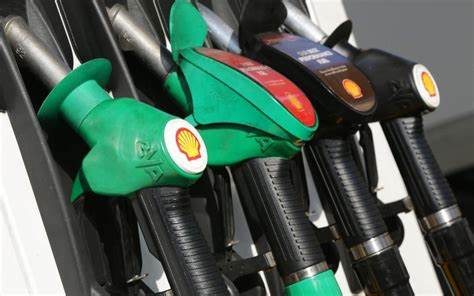
After back-to-back fuel price hikes this week, Filipino motorists might soon catch a break at the pump. According to the Department of Energy (DOE), early market indicators suggest that petroleum prices could roll back next week—though officials remain cautious about confirming anything just yet. “For two days, based on MOPS (Mean of Platts Singapore)… may chance mag roll back (there’s a chance of a rollback),” said DOE Oil Industry Management Bureau Assistant Director Rodela Romero in an interview with GMA News Online. However, Romero emphasized that the situation remains fluid, adding it’s still “too early” to be certain of a price reduction. Local fuel player Jetti Petroleum echoed this sentiment in its own forecast based on early-week trading. The company said price changes may fall within these ranges: Diesel: A rollback between ₱0.80 to ₱1.10 per liter Gasoline: Movement could be either a ₱0.10 increase or a ₱0.20 rollback per liter “Above are still subject to change, depending on the MOPS of the remaining days of the week,” Jetti stated. For context, MOPS (Mean of Platts Singapore) serves as the benchmark for pricing petroleum products across Southeast Asia. It reflects the daily average of transactions between fuel buyers and sellers, as reported by Standard and Poor’s Platts. Jetti linked the potential rollback to global developments, particularly the cooling tensions in the Middle East. The petroleum firm noted that the easing of geopolitical risks helped reduce oil prices globally. It cited the “easing of war risk premium on crude oil following the de-escalation of the conflict…[as] world oil prices further went down after the ceasefire agreement between Israel and Iran, reducing the risk of supply disruption in the Middle East.” This aligns with DOE’s earlier observation. Officer-in-charge Sharon Garin said the average price of crude oil dropped to around $69 per barrel as of Tuesday morning, June 24, following the announcement by US President Donald Trump that a ceasefire between Israel and Iran had taken effect. Still, any relief from high fuel costs would follow a painful week for consumers. On Tuesday, June 24, major fuel companies implemented the second half of a scheduled price increase: Gasoline rose by ₱1.75 per liter Diesel climbed by ₱2.60 per liter Kerosene prices went up by ₱2.40 per liter Whether next week brings a rollback or not will depend on market performance over the coming days—but for now, there’s at least a glimmer of hope for drivers.
P5 Billion Annually: More Power fuels Iloilo City’s economic growth – UA&P Study
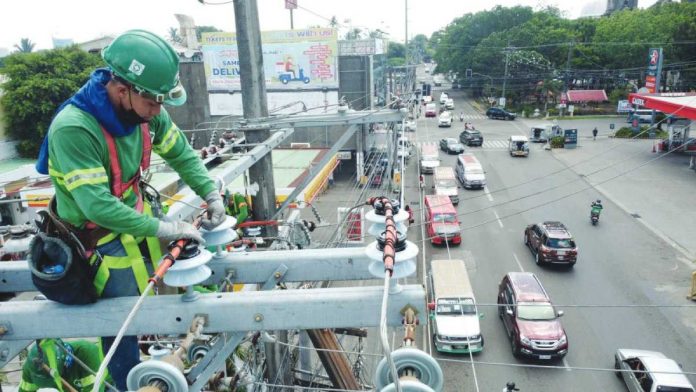
Iloilo City has experienced rapid economic growth over the past five years, significantly contributed by the efficient services of More Electric and Power Corporation (More Power), according to a study by the University of Asia and the Pacific (UA&P). “On average, what is injected into the economy of Iloilo is close to P5 billion, or almost 4% of the city’s economy. That’s quite significant,” stated UA&P President Winston Conrad Padojinog. Padojinog highlighted that strategic investments and operational improvements by More Power, including upgrading equipment and system rehabilitation, were key factors in revenue growth. He noted that More Power contributes approximately 3.8% to the city’s gross domestic product, including 2,200 jobs provided by the company annually, equating to an additional P1.75 billion in income. “A reliable utility infrastructure provider has reverberating effects on an economy. Conversely, an unreliable provider can lead to rent-seeking behavior,” Padojinog added. Iloilo City Mayor Jerry Treñas acknowledged that changing their distribution utility in 2020 was “crucial” to the city’s current economic prosperity, emphasizing that a robust electrical landscape is essential for local governments to unlock economic growth. “Since taking over the city’s power distribution in 2020, MORE Power has played a crucial role in transforming Iloilo City,” Treñas stated. Treñas noted that the “extensive infrastructure improvements” executed by More Power since 2020 have yielded substantial benefits for both consumers and the local economy. Achievements by More Power include the rehabilitation of the Molo Substation, untouched by maintenance for 23 years; the overhaul of the Jaro Substation, which operated for 31 years without proper maintenance; and the repair of the Mandurriao Substation, which had 28 years of deferred maintenance leading to power interruptions. Currently, there has been a 93% reduction in interruption frequency in Iloilo City. More Power also established a new Control Center equipped with mapping software capability, real-time location mapping, and a 24/7 customer query response system. When More Power started its operations in Iloilo City in March 2020, the system loss being shouldered by customers was 30.10%. This was reduced to 18.98% within six months after More Power took over. After five years, it was further lowered to 5.94% due to system improvements made by the utility. Over five years, More Power replaced a total of 6,838 posts; installed 1,376 new transformers; and added 56,794 new electric meters. More Power currently offers the lowest electricity rates in the region, at P11.14 per kWh. The “More Konek” initiative ensures that every household has electricity and no illegal connections exist. With the application process brought down to the barangay level, active customers have increased to 100,070 from 59,940 in 2020. Based on Iloilo City’s economic data, for every P1 invested by More Power, there is a P1.28 contribution to local economic activity.