As Asia accelerates toward an electrified future, a new sustainability race is emerging — not on the roads, but in recycling plants. Across the region, governments and industries are scrambling to build a viable battery recycling ecosystem, recognizing it as the next frontier in both environmental responsibility and economic competitiveness.
The Surge Behind the Shift
Electric vehicles (EVs), energy storage systems (ESS), and portable electronics have fueled Asia’s demand for lithium, nickel, and cobalt — minerals that are finite, expensive, and geopolitically sensitive. The result is a mounting pile of spent lithium-ion batteries that must be processed, not discarded.
According to GlobeNewswire, the Asia-Pacific battery recycling market was valued at around US$2.3 billion in 2024 and is projected to surge to US$14.8 billion by 2034, growing at a rate of more than 20% annually. Much of that growth will come from countries racing to secure raw materials domestically and reduce import dependence.
“The circular economy for batteries is no longer optional — it’s strategic,” notes a recent Metal.com report. “Whoever controls recycling capacity will hold a major advantage in the trillion-dollar clean energy supply chain.”
Southeast Asia Steps In
While China, Japan, and South Korea have long led global recycling capacity, Southeast Asia is rapidly catching up. Singapore, Indonesia, and Malaysia have announced or launched major facilities to process end-of-life lithium-ion batteries.
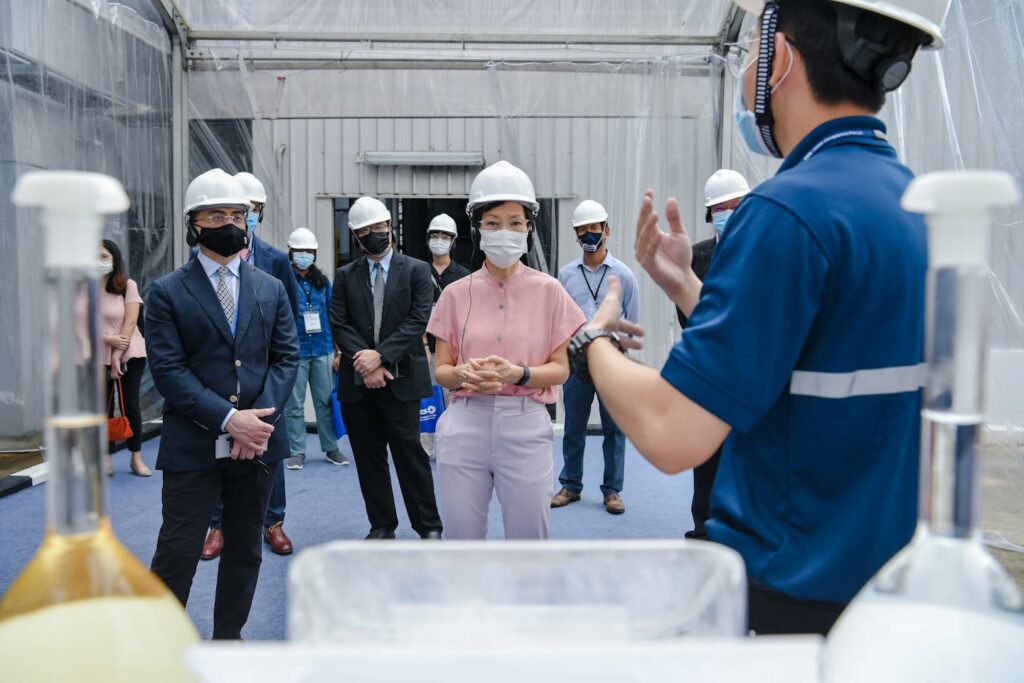
In Singapore, SK tes — a subsidiary of South Korea’s SK Group — opened the region’s first large-scale lithium-ion battery recycling plant in 2025. The facility can process 14 tonnes of batteries per day, recovering nickel, cobalt, and lithium with high purity through advanced hydrometallurgical techniques.
Indonesia, meanwhile, is leveraging its vast nickel reserves to build a full circular supply chain — from mining to cell production to recycling. The country aims to make recycling a core part of its EV industry roadmap, reducing waste while retaining critical minerals for export and domestic use.
“The next phase for Indonesia’s EV push will depend on recycling efficiency,” according to an ASEAN Insights report. “If the country closes its material loop, it could become the region’s dominant EV hub.”
The Philippines’ Missed Opportunity — and New Momentum
In the Philippines, the battery recycling conversation is only beginning. The Department of Environment and Natural Resources (DENR) has expressed interest in developing extended producer responsibility (EPR) frameworks for electronic and battery waste, but large-scale recycling facilities remain scarce.
Industry observers note that without a clear national strategy, the Philippines risks becoming dependent on imported recycled materials from neighboring markets. However, some local energy and electronics companies are exploring partnerships with regional recyclers to pilot collection and pre-processing hubs in Luzon and Cebu.
The Department of Energy’s Renewable Energy Roadmap identifies recycling as a “key enabler” of the country’s green energy ambitions — especially as the Philippines scales up EV incentives and grid battery storage projects.
Why Recycling Matters
Battery recycling is not just an environmental issue; it’s an economic and security priority. Lithium, nickel, and cobalt supplies are increasingly volatile, with geopolitical tensions affecting mining operations in Africa and South America.
By recovering materials domestically, Asian economies can reduce exposure to global price swings, lower emissions associated with mining, and meet their climate goals. Moreover, the recycling industry itself creates high-value jobs in materials science, chemistry, and manufacturing — fields critical to the clean-energy transition.
Barriers to Overcome
Despite strong momentum, Asia’s battery recycling race faces serious hurdles:
-
Collection and logistics: Many countries lack systems to safely collect used batteries from consumers or industrial users. Informal collection remains prevalent, posing environmental and safety risks.
-
Technology costs: Hydrometallurgical processes require significant capital investment and technical expertise. Many recyclers still struggle to achieve economic viability at small scale.
-
Regulatory fragmentation: Countries differ in their classification of battery waste, leading to inconsistent export/import rules for recyclers and OEMs.
-
Supply timing: Many EV batteries have yet to reach end-of-life, meaning large-scale feedstock won’t flood the market until the early 2030s.
Global Partnerships on the Rise
Collaboration is becoming key. Volvo Cars and CATL have announced a preliminary deal to create a recycling loop for EV batteries in Asia, while India’s BatX Energies and Rocklink are building the country’s first magnet and battery recycling hub, with support from the EU’s clean-tech partnership.
In Southeast Asia, cross-border recycling trade — especially in “black mass” (battery scrap material) — is increasing, as countries seek to balance feedstock availability with processing capacity.
The Race Ahead
By 2040, Asia could account for over half of global battery waste, according to estimates from VnExpress. The countries that act early — building infrastructure, standardizing rules, and encouraging innovation — will dominate this new resource economy.
For Southeast Asia, and especially the Philippines, the race is both a challenge and an opportunity. Recycling isn’t just about cleaning up waste — it’s about building resilience in a future where materials, not oil, will define geopolitical power.
In the coming years, the nations that turn their waste into wealth will lead the next chapter of Asia’s clean-energy revolution.
Sources:
-
Metal.com: Battery Recycling – Can Southeast Asia Become the “New Battlefield”?
-
GlobeNewswire: Asia-Pacific Lithium-Ion Battery Recycling Market Forecast 2025–2034
-
VnExpress: Southeast Asia Recycling Plays Catch-Up Ahead of Battery Boom
-
SK tes: Southeast Asia’s First Battery Recycling Facility Opens in Singapore
-
ASEAN Insights: Battery Recycling Revolution in Southeast Asia